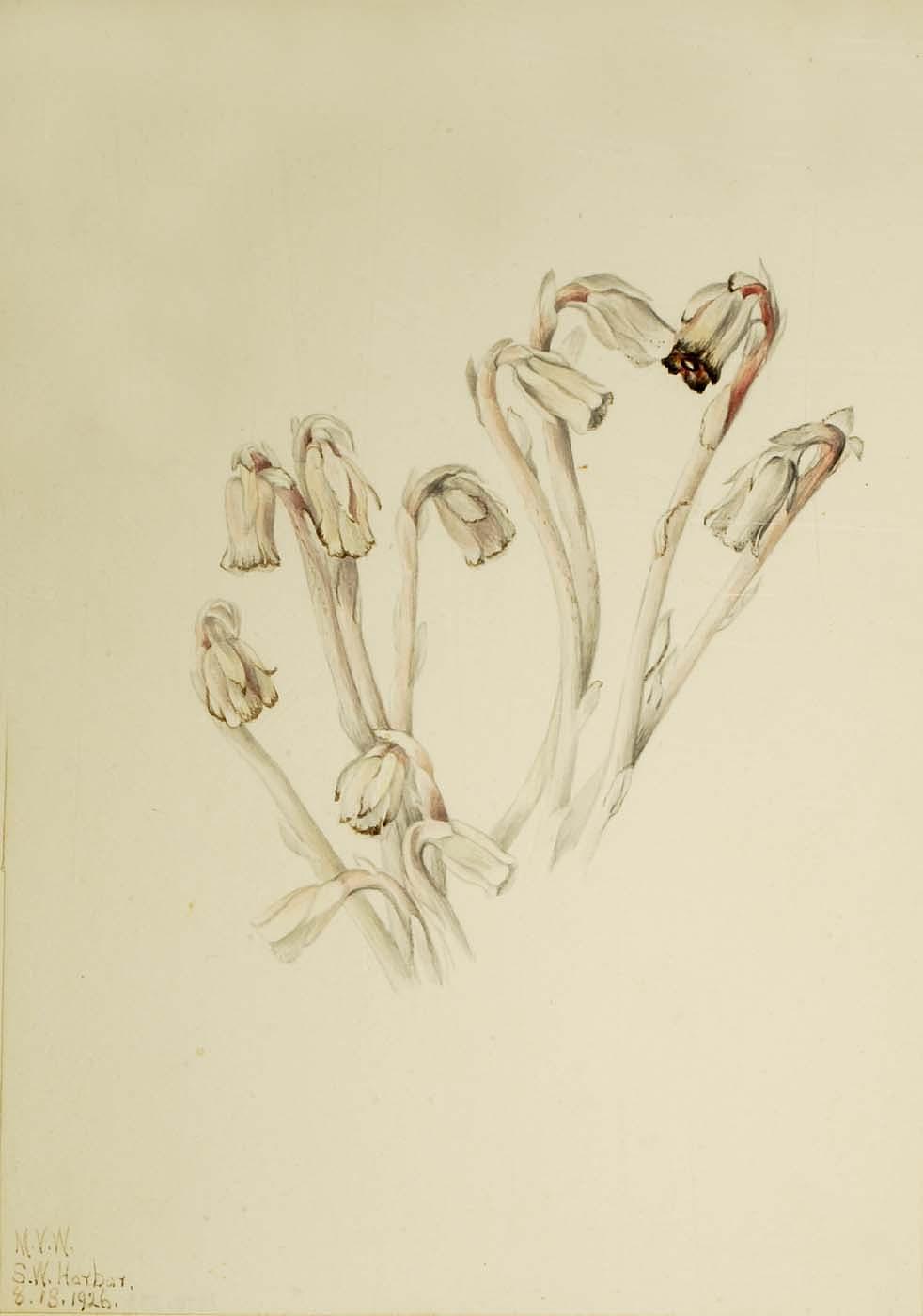
The painting
Indian Pipe (Monotropa uniflora) by
Mary Morris Vaux Walcott is a stunning example of botanical art from the early 20th century. Created in 1926, this watercolor on paper piece measures 25 x 18 cm and is housed at the
Hirshhorn Museum and Sculpture Garden. The painting features a delicate bouquet of Indian Pipe flowers, each with intricate details and varying degrees of prominence.
Artist's Background
Mary Morris Vaux Walcott was an American artist and naturalist known for her watercolor paintings of wildflowers. She has been called the "Audubon of Botany." Born in Philadelphia, Pennsylvania, to a wealthy Quaker family,
Mary Morris Vaux Walcott took an interest in watercolor painting at a young age. Her trips to the Canadian Rockies sparked her interest in geology and botanical illustration.
Painting Style and Technique
The painting
Indian Pipe (Monotropa uniflora) showcases
Mary Morris Vaux Walcott's exceptional skill in watercolor painting. The delicate flowers are rendered with precision and attention to detail, while the background remains minimalist and clean. This style is characteristic of
Mary Morris Vaux Walcott's work, which often features intricate botanical illustrations.
Handmade oil painting reproductions of
Indian Pipe (Monotropa uniflora) are available on ArtsDot, allowing art enthusiasts to own a piece of this beautiful botanical artwork. With its delicate flowers and intricate details, this painting is a must-have for anyone who appreciates the beauty of nature and the skill of
Mary Morris Vaux Walcott.
The
Hirshhorn Museum and Sculpture Garden is one of the many museums that feature
Mary Morris Vaux Walcott's work, showcasing her contribution to the world of botanical art. Visit ArtsDot to learn more about
Mary Morris Vaux Walcott and her stunning paintings, including
Indian Pipe (Monotropa uniflora).