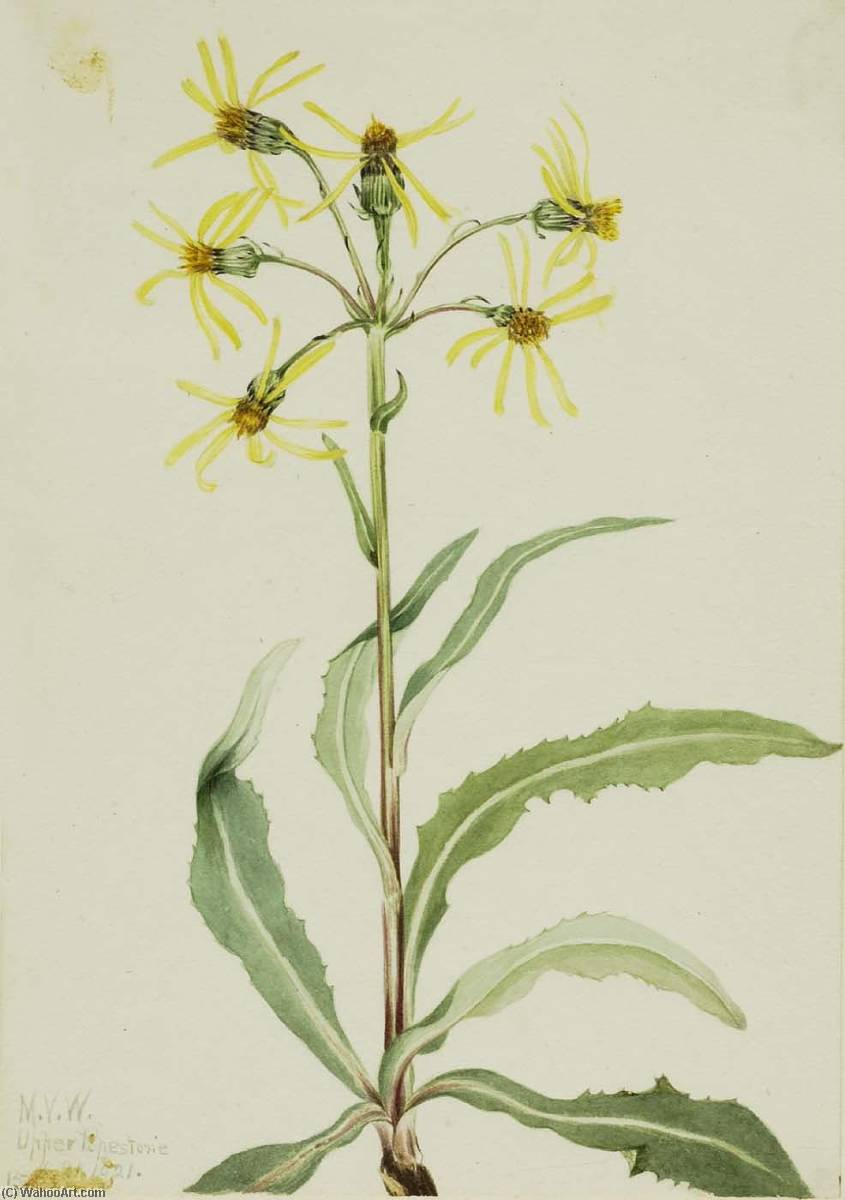
The
Mourning Groundsel (Senecio lugens) painting, created by
Mary Morris Vaux Walcott in 1921, is a stunning example of botanical art. This watercolor piece measures 26 x 18 cm and showcases the artist's exceptional skill in capturing the intricate details of the natural world. As a renowned artist and naturalist,
Mary Morris Vaux Walcott was known for her beautiful and accurate depictions of plants and flowers.
Artistic Style and Technique
The painting features a yellow flower with green leaves, surrounded by other flowers in the background. The long stem and delicate petals of the
Mourning Groundsel (Senecio lugens) are meticulously rendered, demonstrating
Mary Morris Vaux Walcott's mastery of watercolor technique. The use of soft colors and gentle brushstrokes creates a sense of serenity and calmness, drawing the viewer into the natural world.
Key Features: Artist's Background and Inspiration
Mary Morris Vaux Walcott was an American artist and naturalist, known for her contributions to the field of botanical art. Her work was influenced by her love of nature and her desire to accurately depict the beauty of the plant kingdom. For more information on
Mary Morris Vaux Walcott's life and work, visit
Mary Morris Vaux Walcott's page on ArtsDot.com. To learn more about the
Hirshhorn Museum and Sculpture Garden, visit their page on
ArtsDot.com.
The
Mourning Groundsel (Senecio lugens) painting is a testament to
Mary Morris Vaux Walcott's skill and artistry, and it continues to inspire and delight audiences today. As a beautiful example of botanical art, it is a must-see for anyone interested in the natural world and the art that it inspires.