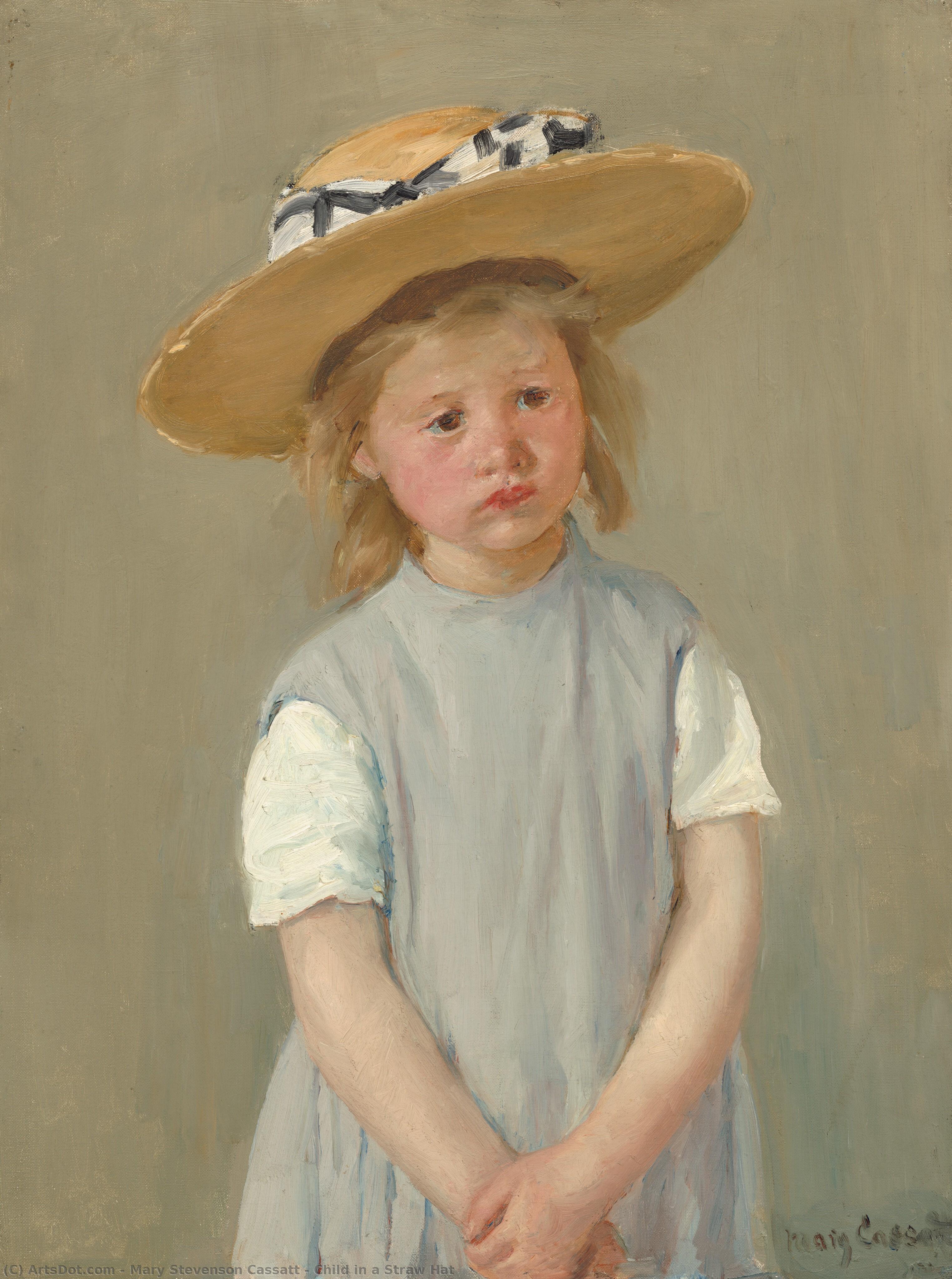
Mary Cassatt’s "Child in a Straw Hat" (1886) captures a poignant moment with loose brushstrokes and pastel hues, depicting a young girl's contemplative gaze within an Impressionistic portrait reflecting domestic tranquility and the artist’s signature style. Discover this beautiful artwork and bring it into your home.
A Moment of Quiet Contemplation: Mary Cassatt’s “Child in a Straw Hat”
Mary Stevenson Cassatt's "Child in a Straw Hat," painted in 1886, is more than just a charming portrait; it’s a poignant meditation on childhood innocence and the subtle complexities of human emotion. This intimate vertical composition captures a young girl – likely Cassatt’s own daughter, Evaletta – with an arresting stillness that draws the viewer into her world. The painting's power resides not in grand gestures or dramatic poses, but in the quiet observation of a single moment, rendered with remarkable sensitivity and technical skill.
- Subject Matter: The subject is a young girl, presented from the waist up, embodying the core themes of Cassatt’s oeuvre – the depiction of women and children within domestic settings.
- Composition: The vertical format emphasizes the child's stature and creates a sense of immediacy, inviting the viewer to share in her perspective.
Impressionistic Technique and Color Palette
Cassatt’s masterful use of Impressionistic technique is immediately apparent. Loose, visible brushstrokes create a textured surface that captures the play of light and shadow with remarkable vibrancy. The color palette is restrained yet evocative, dominated by muted tones – slate gray, peach, and pale lilac – which contribute to the painting's melancholic mood. However, strategically placed dabs of brighter gold and butter yellow inject moments of warmth, particularly around the brim of the hat and in the girl’s hair, suggesting a fleeting ray of sunshine.
- Brushwork: The artist employs short, broken brushstrokes to build up form and create a sense of movement within the figure.
- Color Theory: Cassatt expertly utilizes complementary colors – blue and orange – to enhance visual impact and create depth.
Symbolism and Emotional Resonance
"Child in a Straw Hat" transcends a simple portrait; it’s laden with symbolic meaning. The girl's slightly downturned lips and averted gaze suggest a quiet sadness or perhaps a moment of introspection – a feeling universally relatable across generations. The wide-brimmed straw hat, a fashionable accessory of the era, becomes a symbol of both protection and vulnerability. The checkered bow adds a touch of playful innocence, while the jumper’s intricate patterns hint at the burgeoning complexities of adulthood. The background, painted with vertical strokes, subtly directs the viewer's attention back to the central figure, reinforcing her importance within the composition.
- Expression: The girl’s facial expression is key to the painting’s emotional impact, inviting viewers to contemplate themes of childhood melancholy and fleeting moments.
- Clothing: The details of the clothing – the jumper with its subtle color shifts – reflect Cassatt's meticulous attention to detail and her ability to convey social status through material culture.
Historical Context and Artistic Significance
Painted in 1886, “Child in a Straw Hat” firmly places Cassatt within the context of late 19th-century Impressionism. Cassatt’s work was initially met with skepticism by the predominantly male art establishment, yet she persevered, establishing herself as one of America's leading artists and a significant figure in the international art world. Her intimate portraits challenged conventional representations of women and children, offering a nuanced and deeply personal perspective on domestic life. This piece exemplifies her ability to capture fleeting moments of beauty and emotion with remarkable sensitivity and technical skill, solidifying her legacy as a pioneer of modern portraiture.