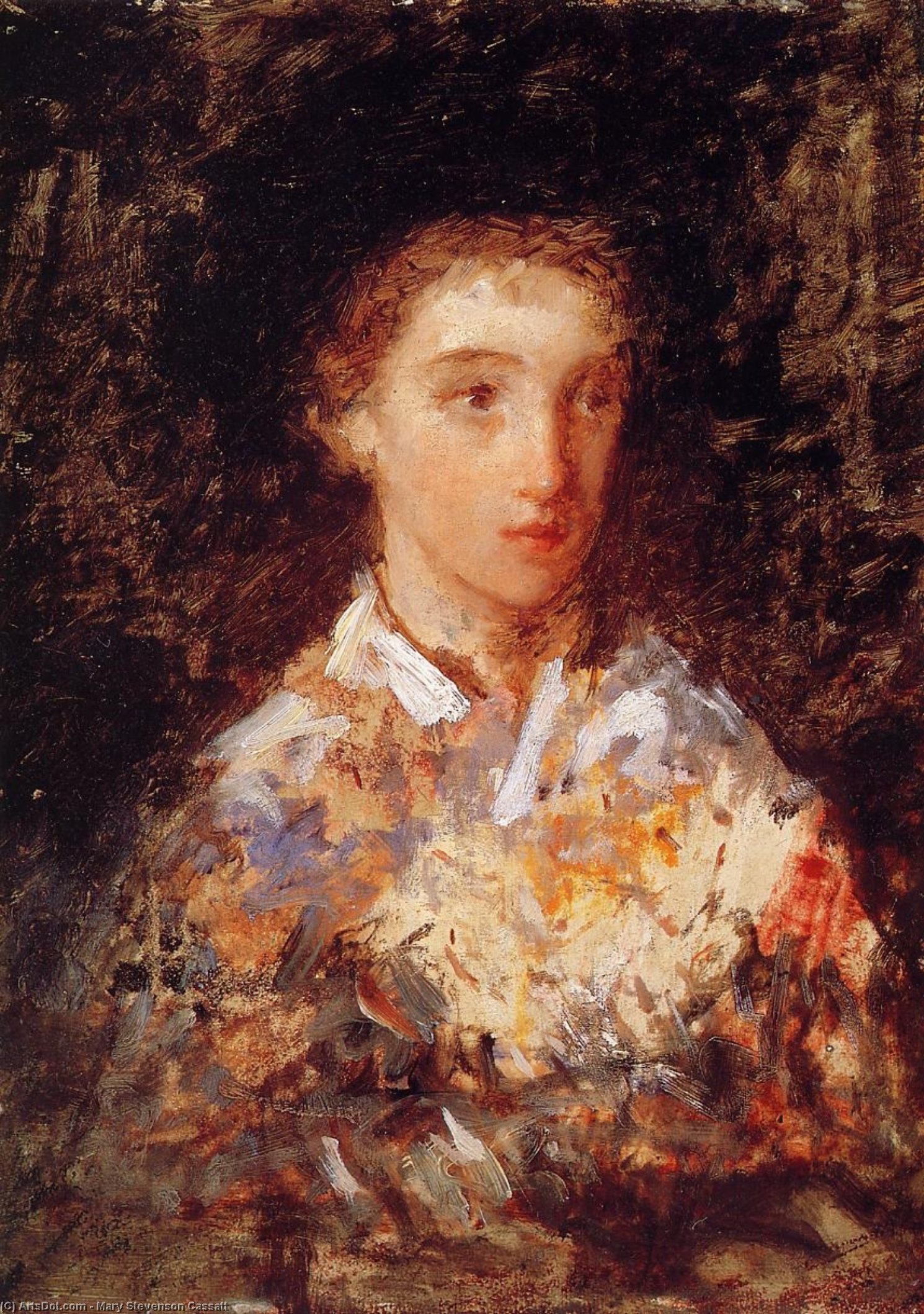
A Moment Frozen in Time: Exploring Mary Cassatt’s ‘Head of a Young Girl’
Mary Stevenson Cassatt's “Head of a Young Girl,” painted in 1876, is more than just a portrait; it’s a poignant distillation of intimacy and quiet contemplation. Housed within the walls of the Museum of Fine Arts in Boston, this oil-on-panel work offers a rare glimpse into the private world of a young girl, captured with Cassatt's signature blend of delicate observation and Impressionistic brushwork. The painting immediately draws the viewer in with its subdued palette – a masterful use of browns, creams, and subtle blues – creating an atmosphere of hushed reverence that belies the vibrant energy of the Impressionist movement.
Cassatt’s genius lay not merely in replicating appearances but in conveying emotion. The young girl's gaze, directed squarely at the viewer, is remarkably direct and engaging. It’s a look that suggests both vulnerability and an unspoken awareness, inviting us to share in her silent thoughts. The background, featuring a simple wall adorned with a clock – a detail often overlooked – subtly anchors the scene within time and domesticity, hinting at the fleeting nature of childhood and the passage of moments.
Impressionism’s Delicate Touch: Cassatt's Technique
“Head of a Young Girl” exemplifies Cassatt’s distinctive approach to Impressionism. Unlike some of her contemporaries who focused on capturing outdoor scenes bathed in sunlight, Cassatt preferred the intimacy of interior life and the subtleties of human emotion. Her brushstrokes are remarkably loose and fluid, creating an almost hazy effect that softens the edges and emphasizes the ephemeral quality of light. This technique, combined with her careful attention to color and texture, results in a painting that feels both immediate and deeply considered.
The use of oil on panel allowed Cassatt to build up layers of paint gradually, creating rich textures and subtle gradations of tone. She skillfully employed *sfumato*, a technique borrowed from Renaissance masters, to soften the contours of the girl’s face and create an atmospheric depth that adds to the painting's overall sense of mystery. The careful modeling of light and shadow is particularly noteworthy, highlighting the delicate planes of her cheekbones and forehead.
A Window into Victorian Life: Context and Symbolism
To fully appreciate “Head of a Young Girl,” it’s essential to understand the social context in which it was created. The late 19th century was a period of significant change, with women increasingly challenging traditional roles and seeking greater independence. Cassatt's work often explored themes related to female identity, domesticity, and motherhood – subjects that were rarely addressed directly by male artists at the time.
The inclusion of the clock in the background is particularly intriguing. Clocks were symbols of time, order, and societal expectations—a subtle reminder of the constraints placed upon women during this era. The girl’s contemplative gaze can be interpreted as a quiet resistance to these pressures, suggesting a yearning for freedom and self-expression. Furthermore, Cassatt's frequent depictions of children often served as a commentary on the changing role of women in society – moving away from solely domestic roles towards more active participation in public life.
Echoes of Renoir and Courbet: Artistic Connections
“Head of a Young Girl” resonates with the artistic sensibilities of other prominent figures of the era. The directness of Cassatt’s gaze, reminiscent of Pierre-Auguste Renoir's portraits, shares a similar intimacy and emotional depth. Similarly, the careful observation of light and shadow, characteristic of Gustave Courbet’s *chiaroscuro*, adds to the painting’s dramatic effect. Studying these connections provides valuable insight into Cassatt’s artistic influences and her place within the broader context of 19th-century art.