A Quiet Moment of Domesticity: Mary Cassatt’s “Mary Ellison Embroidering”
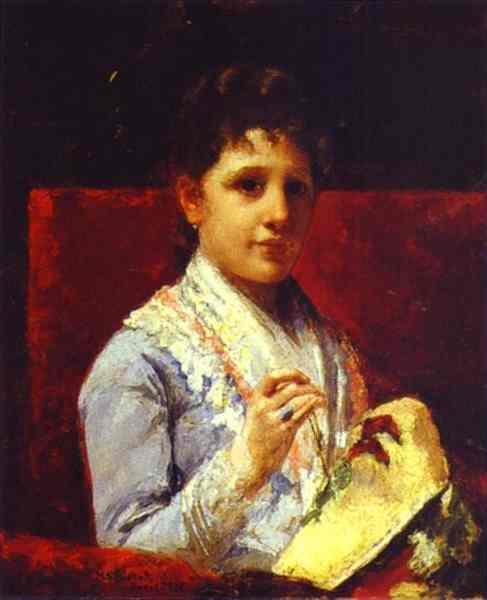
Mary Stevenson Cassatt's "Mary Ellison Embroidering," painted in 1877 and now residing within the hallowed halls of the Philadelphia Museum of Art, is more than just a portrait; it’s a poignant meditation on womanhood, domesticity, and the quiet beauty of everyday life. This oil-on-canvas masterpiece captures a fleeting moment – Mary Ellison, a friend of Cassatt's, absorbed in the meticulous craft of embroidery, bathed in the soft light of an afternoon room. The painting immediately draws the viewer into a scene of serene intimacy, a refuge from the bustling world outside.
Cassatt’s signature Impressionistic style is exquisitely evident here. She eschews dramatic poses and theatrical lighting, instead favoring a muted palette of browns, creams, and subtle greens – colors that evoke the warmth of domesticity and the gentle textures of fabric. Her brushstrokes are remarkably delicate, almost hesitant, creating an atmosphere of stillness and contemplation. This deliberate softness contrasts beautifully with the sharp detail she applies to her subject’s hands, folded with focused concentration as they guide the needle through the linen. The artist's ability to render the subtle nuances of light and shadow is particularly noteworthy, lending a remarkable sense of realism to this seemingly simple scene.
The Setting: A Sanctuary of Comfort
The background of “Mary Ellison Embroidering” isn’t merely decorative; it actively contributes to the painting's overall mood. Two couches – one positioned behind Mary on the left, and another further back on the right – establish a sense of comfortable seclusion. These aren’t opulent furnishings; they suggest a modest, yet well-appointed home, reflecting the realities of middle-class life in late 19th-century America. The inclusion of a cup near the center of the scene subtly hints at a moment of respite, perhaps a pause for refreshment while Mary dedicates herself to her craft. It’s a small detail that speaks volumes about the rhythms of daily life and the importance of simple pleasures.
The choice of setting is crucial to understanding Cassatt's artistic vision. She frequently depicted women engaged in domestic activities – sewing, reading, playing with children – not as subjects of grand narratives or heroic deeds, but as individuals navigating the complexities of their lives within the confines of the home. This focus on the private sphere was a deliberate challenge to the prevailing artistic conventions of the time, which largely favored depictions of historical events and mythological scenes. Cassatt’s work offered a fresh perspective, celebrating the dignity and significance of women's roles in society.
Symbolism and Emotional Resonance
Embroidery itself carries significant symbolic weight within the painting. It represents not just a practical skill but also an act of creation, patience, and quiet devotion. The intricate patterns and delicate stitches speak to Mary’s attention to detail and her ability to transform simple materials into something beautiful. Furthermore, the act of creating – of bringing order out of chaos – can be interpreted as a metaphor for the broader themes of motherhood and nurturing that are central to Cassatt's oeuvre.
“Mary Ellison Embroidering” is profoundly moving precisely because it captures a moment of genuine human connection. It’s not a grand, sweeping statement; rather, it’s a quiet affirmation of the beauty and value of everyday life. The painting invites us to slow down, to appreciate the simple pleasures, and to recognize the dignity in the ordinary tasks that define our lives. It's a testament to Cassatt’s remarkable ability to imbue her subjects with empathy and understanding, creating works that resonate deeply with viewers across generations.
A Legacy of Impressionism
Mary Stevenson Cassatt stands as a pivotal figure in the development of Impressionism, not only for her distinctive style but also for her courageous exploration of female subjects. Her work challenged traditional artistic norms and paved the way for future generations of women artists. Alongside fellow Impressionists like Edgar Degas and Berthe Morisot, Cassatt helped to redefine the role of the artist and expand the boundaries of what was considered acceptable subject matter.
Today, “Mary Ellison Embroidering” continues to captivate audiences with its quiet beauty and profound emotional resonance. It serves as a poignant reminder of the importance of appreciating the small moments in life and celebrating the dignity of everyday experiences. ArtsDot offers exquisite hand-painted reproductions that faithfully capture the essence of this iconic masterpiece, allowing you to bring its timeless charm into your own home.