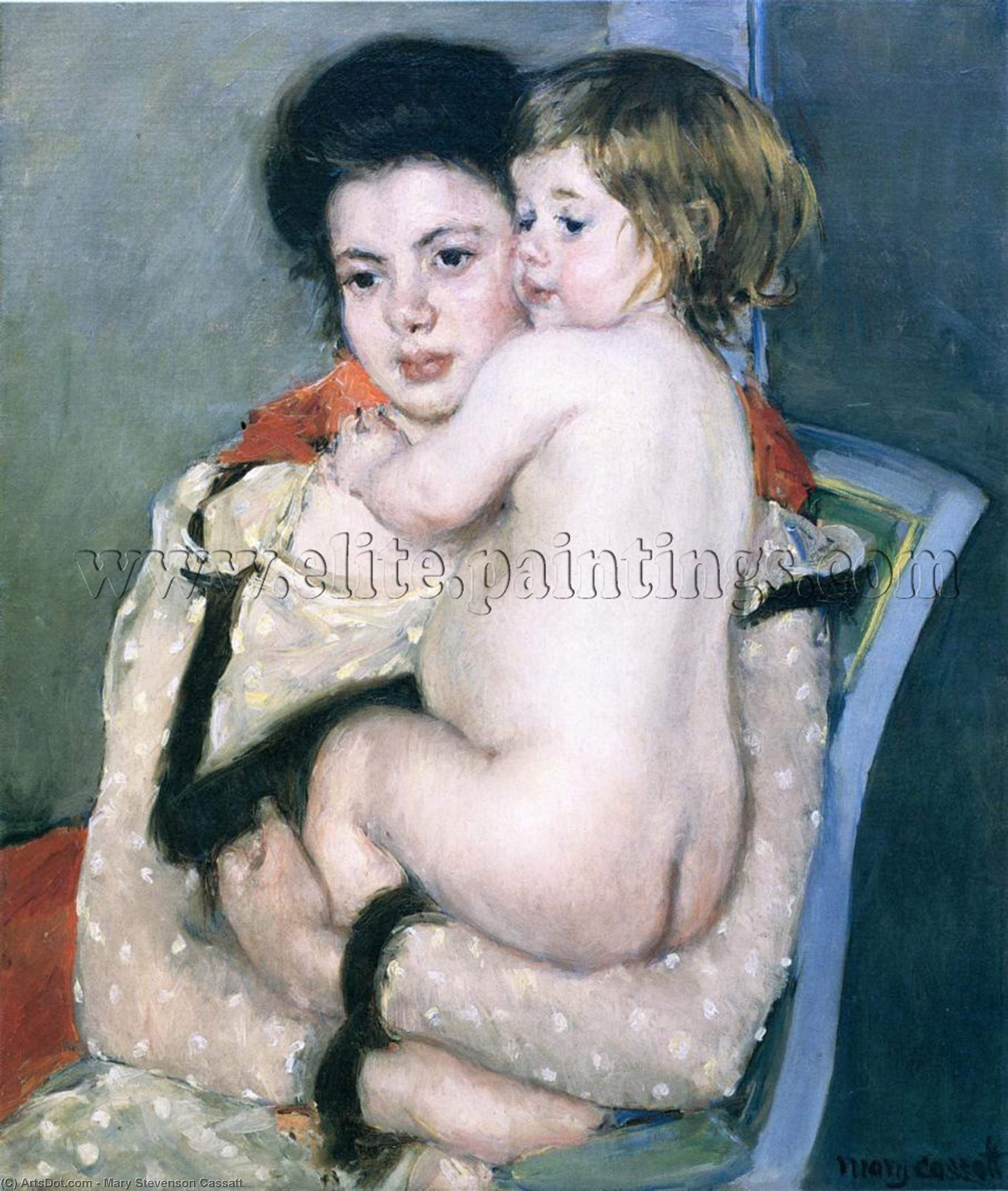
Reine Lefebvre Holding a Nude Baby: An Intimate Reflection of Impressionist Domesticity
Mary Stevenson Cassatt’s “Reine Lefebvre Holding a Nude Baby,” painted in 1902, stands as a cornerstone of American Impressionism and embodies the movement's fascination with capturing fleeting moments of everyday life—specifically, the profound connection between mother and child. More than just a portrait, it’s an exquisitely rendered meditation on femininity, vulnerability, and maternal tenderness, executed with Cassatt’s signature pastel technique that lends an ethereal glow to its serene composition.
- Subject Matter: The painting depicts Reine Lefebvre, a wealthy American socialite, cradling her newborn son in her arms. This deliberate choice of subject—a woman nurturing her offspring—was revolutionary for its time, challenging societal expectations surrounding motherhood and presenting women as subjects worthy of artistic contemplation rather than mere decorative figures.
- Style & Technique: Cassatt’s masterful use of pastel crayons distinguishes “Reine Lefebvre” from the dominant oil painting style prevalent in Impressionism. Pastels offer unparalleled subtlety and luminosity, allowing Cassatt to achieve a remarkable level of tonal gradation—a technique crucial for conveying the softness and warmth of domestic interiors. The delicate blending creates an atmosphere of quiet intimacy, mirroring the tenderness of the depicted scene.
- Composition & Color Palette: The painting’s composition is deceptively simple yet powerfully effective. Lefebvre occupies the central space, positioned slightly off-center, while her son rests comfortably on her lap. Cassatt employs a restrained color palette dominated by muted pinks and creams—colors associated with maternal care and nurturing—further enhancing the painting's emotional resonance.
- Historical Context: Created during Cassatt’s Parisian exile following the Franco-Prussian War, “Reine Lefebvre” reflects the broader artistic currents of the period. Impressionists sought to capture the immediacy of sensory experience, prioritizing light and color over meticulous detail—a stylistic approach that aligns perfectly with Cassatt's desire to portray women as subjects of genuine emotional depth.
- Symbolism & Emotional Impact: Beyond its aesthetic beauty, “Reine Lefebvre” carries significant symbolic weight. The nude infant symbolizes purity and innocence, while Lefebvre’s embrace embodies unconditional love and protection—themes central to the Victorian era's idealized vision of motherhood. Viewing this artwork evokes feelings of warmth, compassion, and a poignant appreciation for the sacred bond between mother and child.
The Worcester Art Museum houses a stunning reproduction of “Reine Lefebvre Holding a Nude Baby,” allowing visitors to experience Cassatt’s artistic brilliance firsthand. Its luminous pastel hues and masterful depiction of domestic tranquility continue to inspire admiration and resonate with audiences today, cementing its place as an enduring masterpiece of Impressionist art.