Mary Cassatt
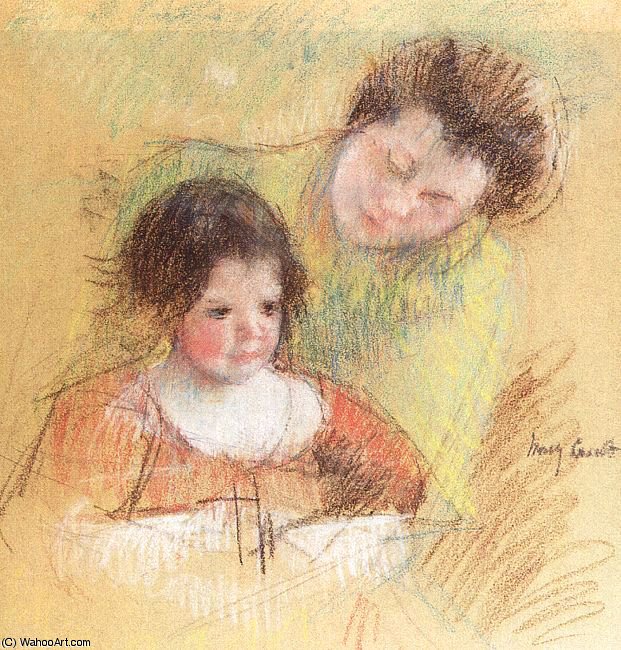
Admire Mary Cassatt's captivating portrait depicting motherhood and tenderness. This Impressionist masterpiece captures the intimacy of family life, showcasing a woman cradling her child with serene grace.
Explore the life & art of Mary Cassatt, a pivotal American Impressionist renowned for intimate portrayals of women & children. Discover her unique style & legacy.
A Tender Glance into Domestic Life: Exploring Mary Cassatt’s “Untitled (6156)”
Mary Stevenson Cassatt, a luminary of Impressionism and a champion for portraying the quiet beauty of women's experiences, remains an artist whose work continues to resonate with audiences today. Born in Allegheny City, Pennsylvania, Cassatt’s formative years were marked by familial encouragement towards artistic pursuits—a rare privilege within Victorian society—that would ultimately propel her toward a remarkable career spent honing her craft in Paris. Her connection with fellow Impressionists like Edgar Degas fostered an environment ripe for experimentation and observation, resulting in paintings that capture fleeting moments of intimacy and maternal devotion. “Untitled (6156),” created circa 1893-94, exemplifies Cassatt’s signature style—a deceptively simple composition brimming with nuanced detail and imbued with a profound emotional depth.
Subject Matter and Composition
The painting depicts a woman seated beside her child, bathed in soft light emanating from an unseen window. The woman gently holds the baby in her arms, her gaze directed outwards – perhaps contemplating the world beyond their immediate surroundings. This deliberate positioning speaks volumes about Cassatt’s artistic intention: she wasn't merely documenting a scene; she was conveying a feeling—a quiet serenity born of maternal love and connection. Two additional figures appear subtly within the frame, one positioned at the upper right corner and another near the bottom right, adding to the sense of an unfolding narrative without explicitly defining its characters or storyline. These elements invite contemplation on the broader context of domestic life during Cassatt’s era.
Style and Technique: Impressionistic Precision
Cassatt's approach aligns perfectly with the tenets of Impressionism—a movement dedicated to capturing the ephemeral qualities of light and atmosphere. Unlike academic painting, which prioritized meticulous realism, Cassatt favored loose brushstrokes and blended pigments to achieve a luminous effect that prioritizes sensation over precise representation. The artist skillfully utilizes tonal variations – delicate washes of color layered upon each other – to sculpt form and create depth within the canvas. Notice how Cassatt’s attention to detail extends beyond mere depiction; she subtly renders textures—the folds of fabric, the softness of skin—to heighten the painting's realism and evoke tactile experience for the viewer.
Historical Context: Feminine Voices in Art
“Untitled (6156)” emerges from a pivotal moment in art history – the burgeoning feminist movement of the late 19th century. Cassatt’s work challenged prevailing societal expectations regarding women’s roles and artistic endeavors, presenting female subjects as active participants in daily life rather than passive objects of admiration. Her depictions of mothers and children weren't simply sentimental; they were a deliberate assertion of women’s intellectual and emotional capacity—a powerful counterpoint to the dominant narratives of Victorian culture. By portraying women engaged in intimate relationships, Cassatt subtly questioned the limitations imposed upon female artists and contributed to a broader dialogue about gender equality within the artistic realm.
Symbolism and Emotional Resonance
The painting's symbolism transcends its surface appearance. The woman’s gaze outward symbolizes her awareness of the world beyond the domestic sphere—a subtle nod to Cassatt’s own ambition to transcend societal constraints. Similarly, the baby represents innocence and vulnerability, embodying the nurturing role traditionally associated with motherhood. Together, these elements convey a profound emotional resonance – a celebration of familial bonds and a quiet affirmation of feminine strength and compassion. “Untitled (6156)” continues to captivate viewers because it speaks directly to universal themes of love, connection, and maternal devotion—themes that resonate powerfully across generations.