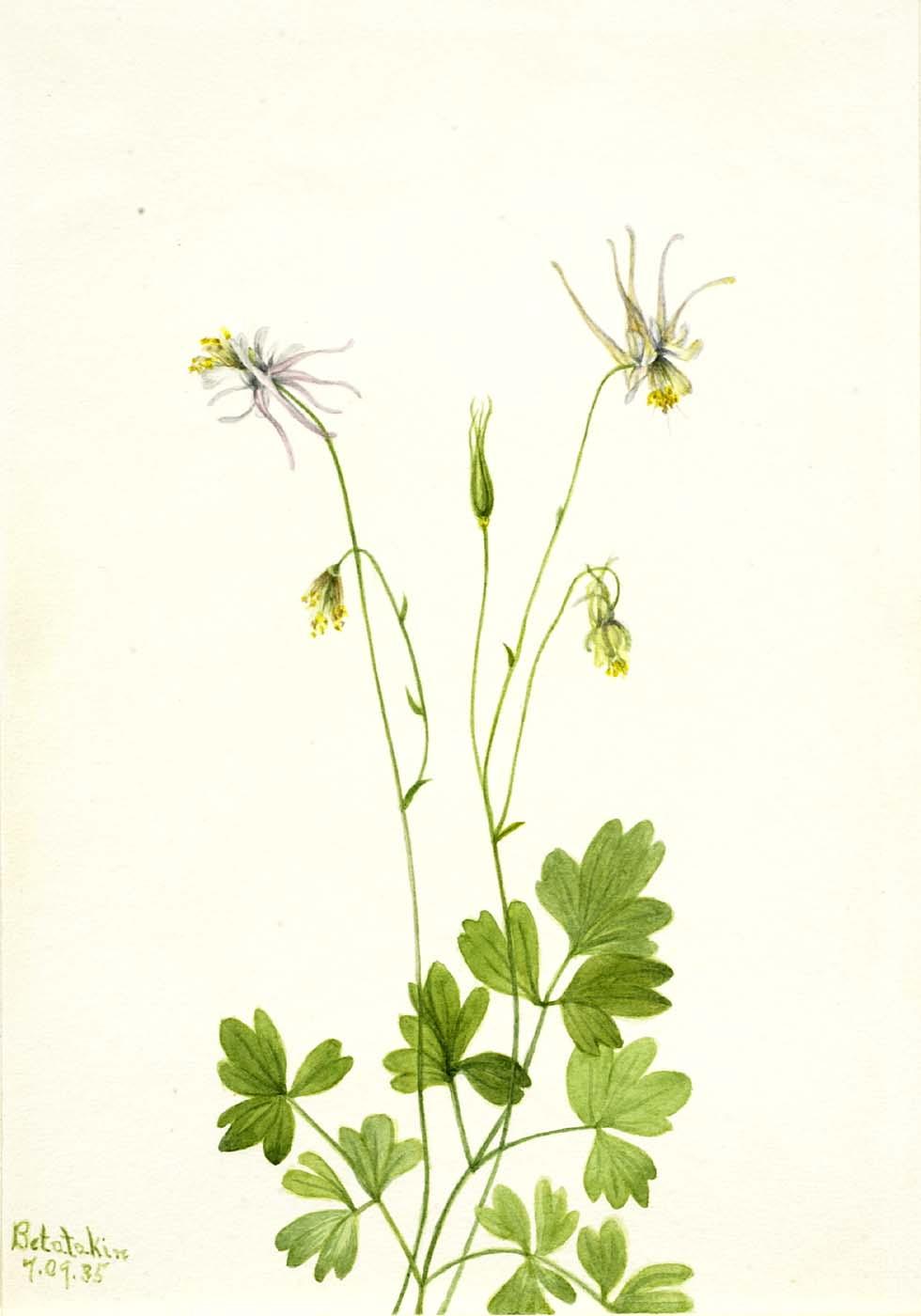
The
Aquilegia ecalcarata painting by
Mary Vaux Walcott is a stunning example of botanical art. Created in 1935, this watercolor on paper piece measures 26 x 18 cm and is part of the esteemed collection at the
Smithsonian American Art Museum. The painting features two delicate flowers with long stems, positioned in a way that creates an impression of depth and natural beauty.
Artist Background
Mary Vaux Walcott was an American artist and naturalist known for her exceptional skill in botanical art. She was born in 1860 in Philadelphia, Pennsylvania, and developed a passion for botany and watercolor painting at a young age. Her work is characterized by meticulous attention to detail and a deep understanding of the natural world.
Key Features of the
Aquilegia ecalcarata painting include:
- The use of delicate, feathery brushstrokes to capture the texture and color of the flowers
- The careful placement of the stems and leaves to create a sense of movement and energy
- The subtle play of light and shadow on the petals and foliage
The result is a painting that is both beautiful and informative, showcasing the unique characteristics of the
Aquilegia ecalcarata plant.
Availability at ArtsDot.com
For art lovers and collectors,
handmade oil painting reproductions of the
Aquilegia ecalcarata are available at ArtsDot.com. These high-quality reproductions capture the essence and beauty of the original piece, making it possible for anyone to own a piece of botanical art history.
To learn more about
Mary Vaux Walcott and her work, visit the
ArtsDot.com artist page. For more information on the
Smithsonian American Art Museum, visit their website at https://wikipedia.org/wiki/Smithsonian_American_Art_Museum.