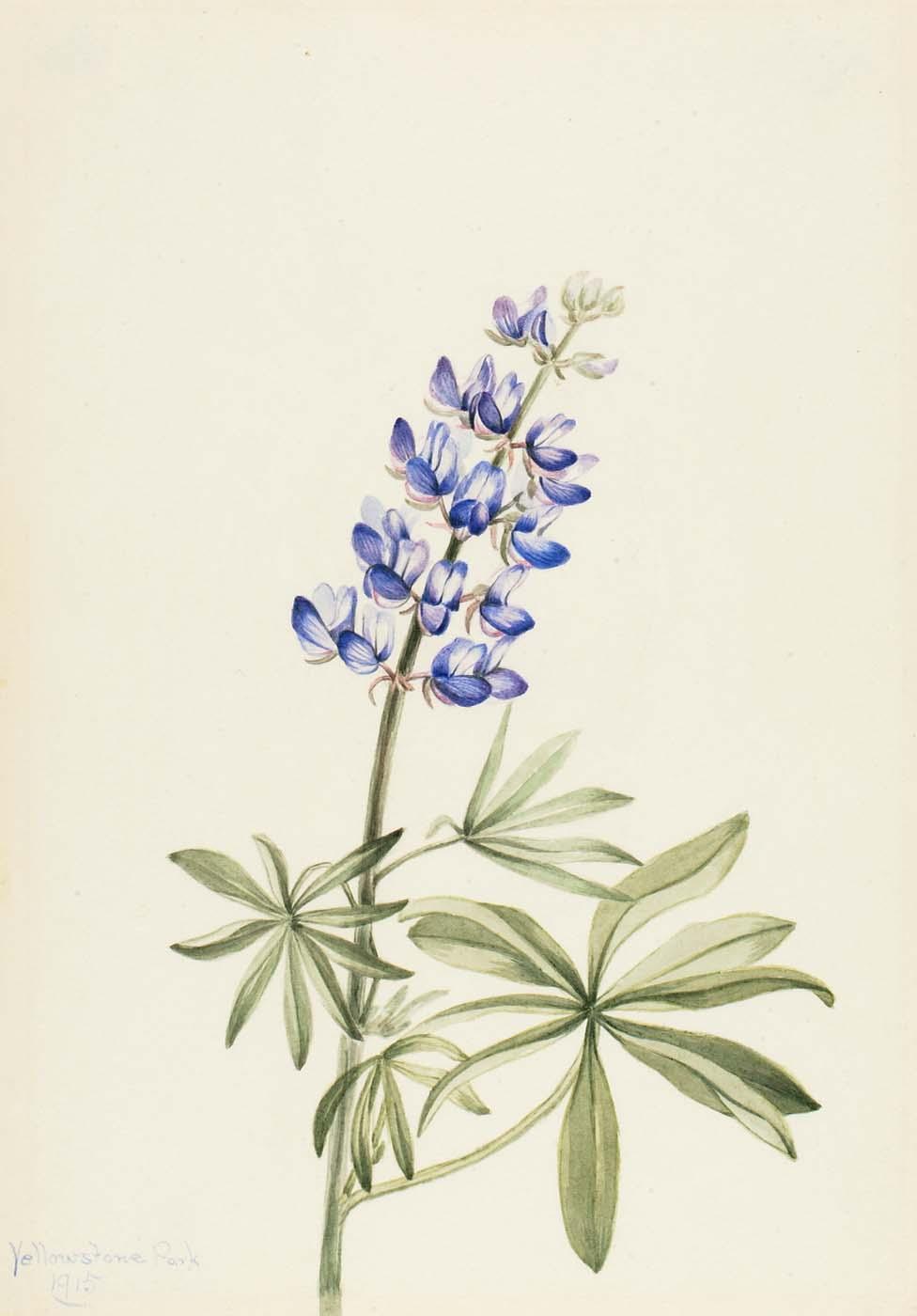
The
Mary Vaux Walcott painting,
Blue Lupine (Lupinus argenteus), is a stunning example of botanical art. Created in 1915, this watercolor piece showcases the beauty and detail of the blue lupine flower. The painting is part of the collection at the
Smithsonian American Art Museum in the United States.
The Artist's Style
Mary Vaux Walcott was a talented artist known for her botanical illustrations. Her style is characterized by precise and delicate renderings of flowers and plants. In
Blue Lupine (Lupinus argenteus), she uses soft colors and gentle brushstrokes to capture the intricate details of the flower.
Key Features of the painting include:
- The use of watercolor, which gives the piece a sense of transparency and lightness
- The attention to detail in the rendering of the flowers and leaves
- The soft, pastel colors used to depict the blue lupine
BR
Conservation and Preservation
The
Smithsonian American Art Museum is dedicated to preserving and conserving its collection of artworks, including
Blue Lupine (Lupinus argenteus). The museum's conservation team uses state-of-the-art techniques to ensure the long-term preservation of the painting. For more information on the museum's conservation efforts, visit
The Smithsonian Museums and their Art Collections. BR To learn more about
Mary Vaux Walcott and her artwork, visit
Mary Vaux Walcott on ArtsDot.com. You can also explore other botanical artworks, such as
Pentstemon (Pentstemon procerus) and
Northern Bedstraw (Galium boreale), by visiting the website.