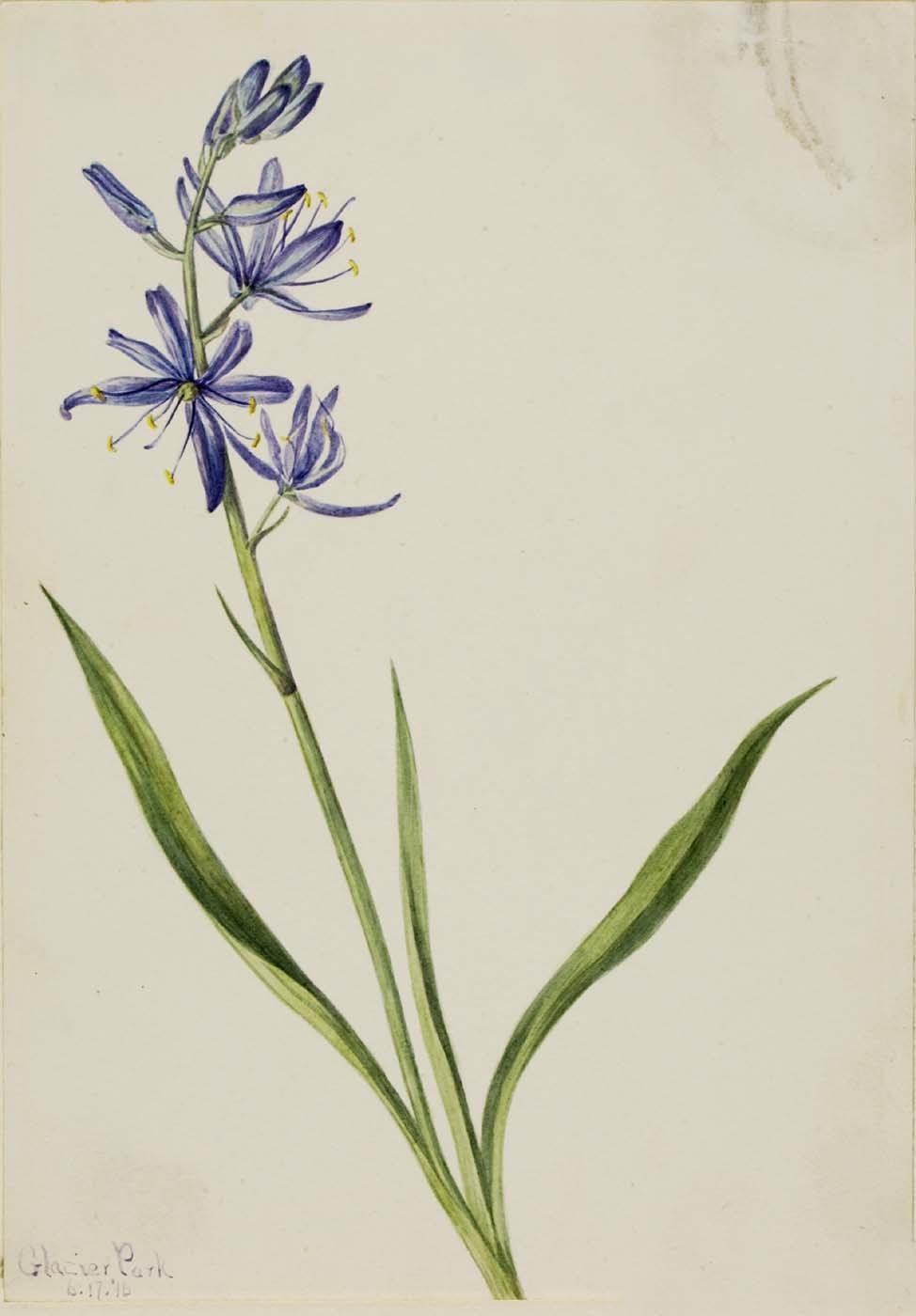
The painting
Camas (Quamasia quamash) by
Mary Vaux Walcott is a stunning example of botanical art. Created in 1916, this watercolor on paper piece measures 25 x 18 cm and is currently housed at the
Smithsonian American Art Museum. The artwork showcases the artist's exceptional skill in capturing the delicate details of the camas plant, also known as Quamasia quamash.
The Artist's Background
Mary Vaux Walcott was an American artist and naturalist known for her watercolor paintings of wildflowers. She has been called the "Audubon of Botany" due to her remarkable contributions to the field of botanical illustration. With a career spanning several decades,
Mary Vaux Walcott created numerous artworks that continue to inspire and educate art enthusiasts today.
Key Features of the Painting
The painting
Camas (Quamasia quamash) features a beautiful blue flower with green leaves, showcasing the artist's mastery of color and composition. The watercolor technique used by
Mary Vaux Walcott gives the artwork a vibrant and natural appearance, making it seem as if the plant is about to bloom off the page.
- The use of soft colors and delicate brushstrokes creates a sense of serenity and calmness in the painting.
- The attention to detail in the depiction of the camas plant's leaves and flowers demonstrates the artist's dedication to accuracy and realism.
Handmade oil paintings reproductions of
Camas (Quamasia quamash) are available on
https://ArtsDot.com, allowing art lovers to own a piece of history and beauty. For more information on
Mary Vaux Walcott and her artworks, visit
https://en.wikipedia.org/wiki/Mary_Vaux_Walcott.
The
Smithsonian American Art Museum is home to an extensive collection of American art, including works by
Mary Vaux Walcott. To explore more artworks and learn about the museum's collections, visit
/art/list/?Filter=AQU7SR-Mary-Morris-Vaux-Walcott-Camas-(Quamasia-quamash).