The
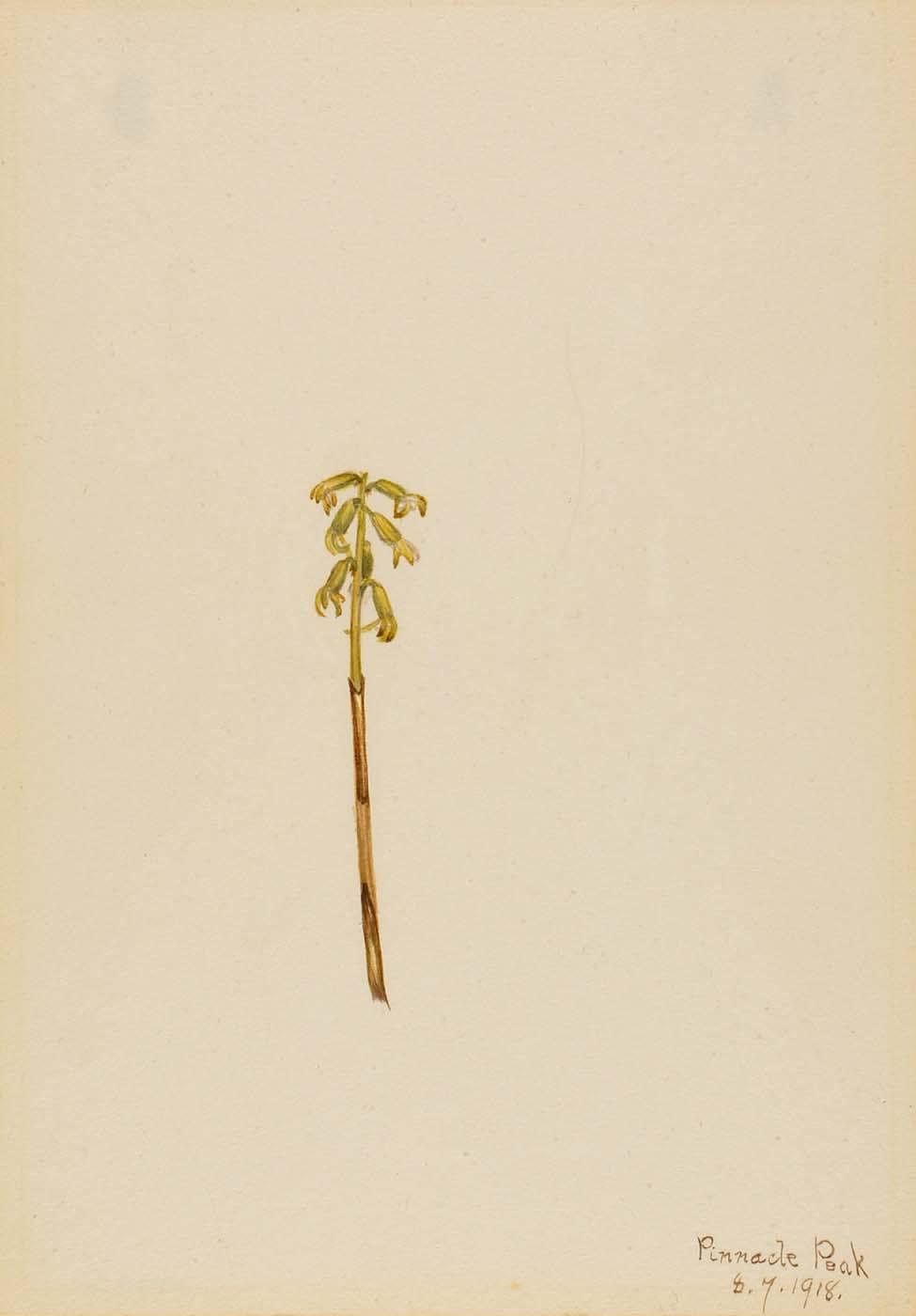
Corathorhiza corallorhiza painting by
Mary Vaux Walcott is a stunning example of botanical art, showcasing the artist's exceptional skill and attention to detail. Created in 1918, this watercolour piece measures 26 x 18 cm and is part of the
Smithsonian American Art Museum's collection.
Artistic Style and Technique
Mary Vaux Walcott's style is characteristic of precise botanical illustration, prioritizing accurate representation over stylistic flourishes. The painting centers on a single specimen of the
Corallorhiza corallorhiza plant, rendered with remarkable precision. The slender stem and delicate flowers are masterfully shaded to suggest three-dimensionality, enhancing their realism without sacrificing the overall simplicity of the piece.
Key Features: - The painting's restrained color palette and subtle shading create a sense of elegance and sophistication.
- The absence of strong shadows or highlights emphasizes the delicate nature of the subject.
- The small inscription in the bottom right corner adds a touch of context without distracting from the central subject.
Artist and Museum
Mary Vaux Walcott was a talented artist and botanist, known for her exceptional skill in botanical illustration. Her work can be found in the
Smithsonian American Art Museum, which is home to an extensive collection of American art from the colonial period to the present. Visit https://ArtsDot.com to explore more artworks by
Mary Vaux Walcott and other notable artists, including
Corathorhiza corallorhiza and
Phlox.
For more information on the
Smithsonian American Art Museum and its collection, visit https://ArtsDot.com or check out Wikipedia's page on the museum: https://en.wikipedia.org/wiki/Smithsonian_American_Art_Museum.