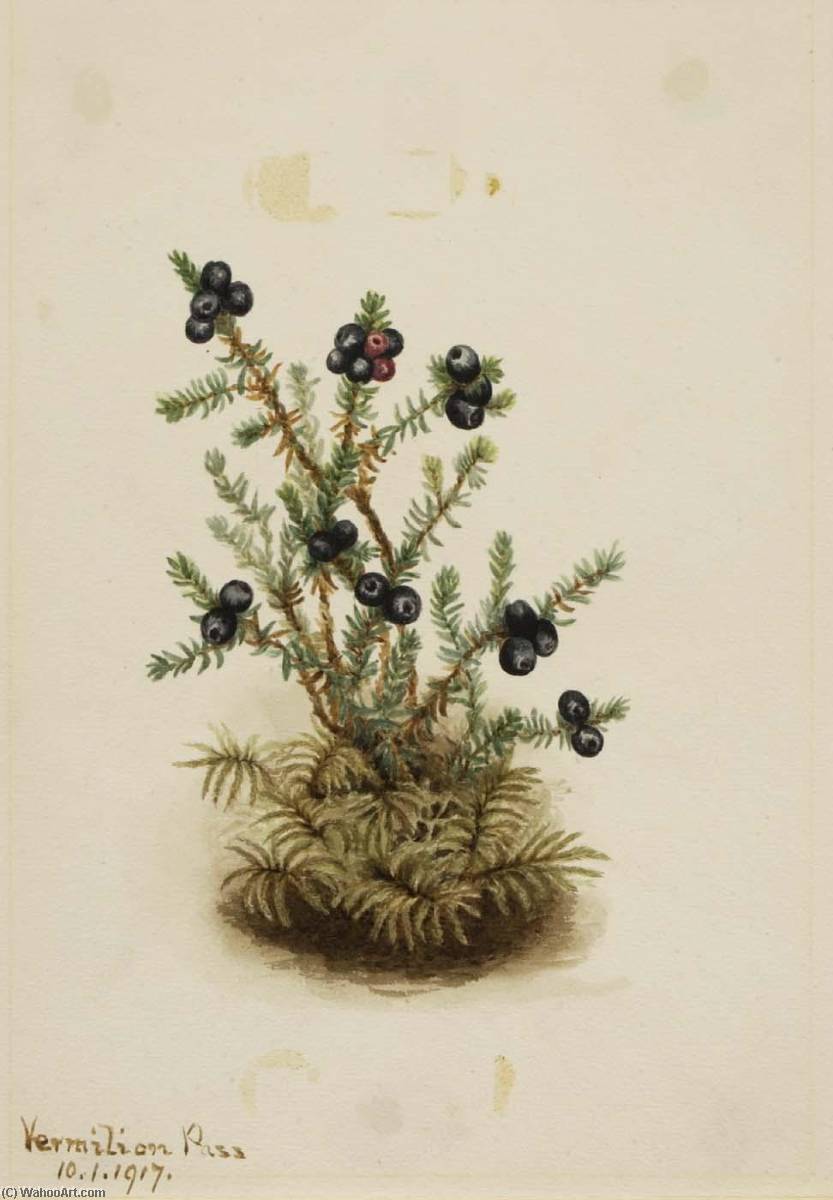
The
Mary Vaux Walcott painting,
Crowberry (Empetrum nigrum), is a stunning example of botanical art that showcases the delicate beauty of the crowberry plant. Created in 1917, this watercolor piece measures 25 x 18 cm and is currently housed at the
Smithsonian American Art Museum.
The Artist's Background
Mary Vaux Walcott was an American artist and naturalist known for her watercolor paintings of wildflowers. She has been called the "Audubon of Botany" due to her exceptional talent in capturing the intricate details of plants. Her work is characterized by its precision, elegance, and attention to detail.
The Painting's Significance
The
Crowberry (Empetrum nigrum) painting is significant not only for its beauty but also for its scientific accuracy.
Mary Vaux Walcott was a skilled botanist who spent many years studying and painting the flora of the Canadian Rockies. Her paintings, including
Crowberry (Empetrum nigrum), are highly regarded for their precision and attention to detail.
- Watercolor technique: The painting showcases Mary Vaux Walcott's mastery of watercolor techniques, with delicate washes and subtle color gradations.
- Botanical accuracy: The painting is notable for its scientific accuracy, capturing the intricate details of the crowberry plant.
- Aesthetic appeal: The painting's beauty and elegance make it a standout piece in the world of botanical art.
Handmade oil paintings reproductions of
Crowberry (Empetrum nigrum) are available at https://ArtsDot.com, allowing art lovers to own a piece of this beautiful painting. For more information on
Mary Vaux Walcott and her work, visit /art/list/?Filter=AQSAG8-Mary-Vaux-Walcott-Crowberry-(Empetrum-nigrum).
The
Smithsonian American Art Museum is home to many of
Mary Vaux Walcott's paintings, including
Crowberry (Empetrum nigrum). To learn more about the museum's collection, visit /en/art/show/art-aqsag8-en/