The
Mary Vaux Walcott painting,
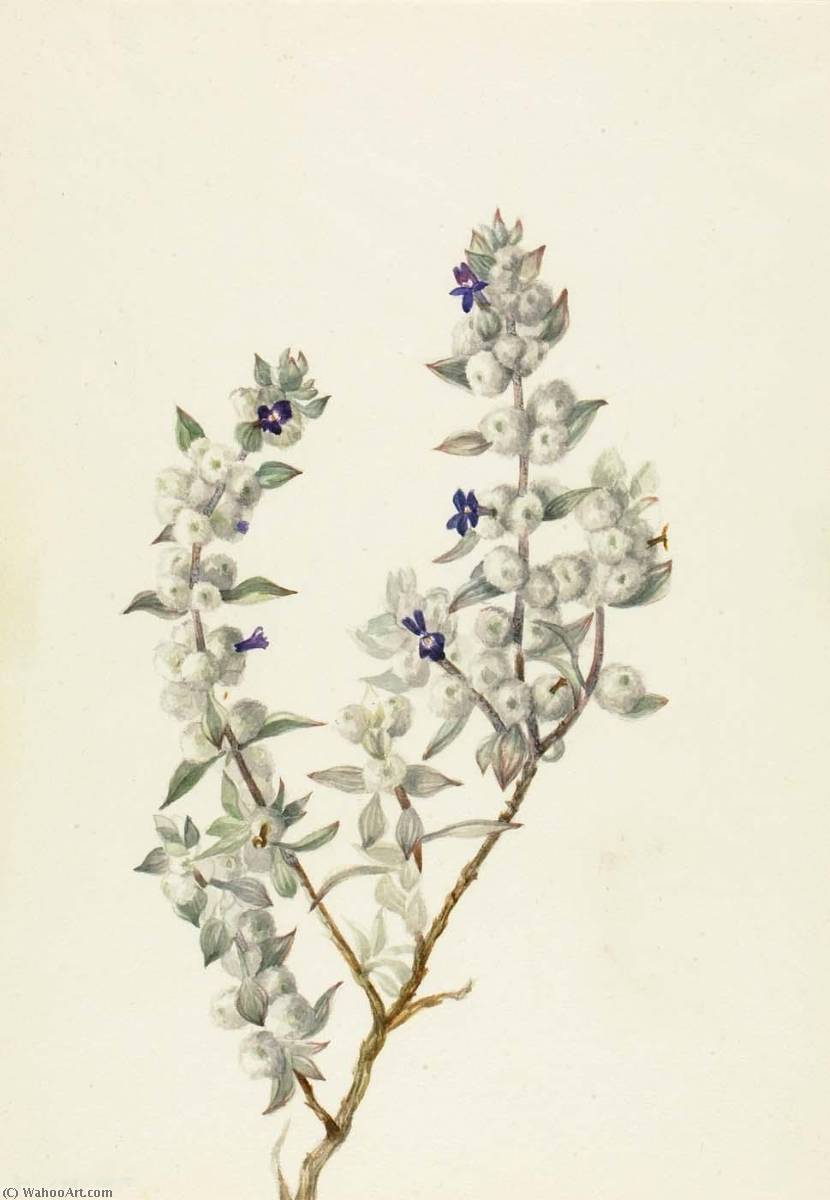
Death Valley Sage (Salvia funerea), is a stunning example of botanical art. Created in 1930, this watercolor piece measures 26 x 18 cm and is part of the esteemed collection at the
Smithsonian American Art Museum. As a professional expert in Art and https://ArtsDot.com salesman, I can appreciate the intricate details and beauty of this painting.
Botanical Accuracy and Artistic Skill
Mary Vaux Walcott was a skilled artist and botanist, known for her accurate and detailed depictions of plants. In
Death Valley Sage (Salvia funerea), she showcases her exceptional skill in capturing the delicate white flowers and blue leaves of the Salvia funerea plant. The painting is a testament to her dedication to botanical art and her ability to convey the beauty of nature through her work.
Key Features of the painting include:
- The use of watercolor, which allows for subtle color gradations and delicate textures
- The attention to detail in depicting the plant's flowers, leaves, and stems
- The overall composition, which creates a sense of balance and harmony
As seen on https://ArtsDot.com,
Mary Vaux Walcott has created many other notable works, including
Blazing Star (Mentzelia laevicaulis) and
Gilia linanthus parviflorus. These paintings demonstrate her range and expertise in botanical art.
The
Smithsonian American Art Museum is home to many other notable works of art, including pieces by prominent artists such as
Emmanuel Pereire. As a https://ArtsDot.com salesman, I can provide more information on these artists and their works, as well as offer hand-made oil painting reproductions of famous artworks. For more information, visit /en/art/show/art-aqs9x4-en/