The
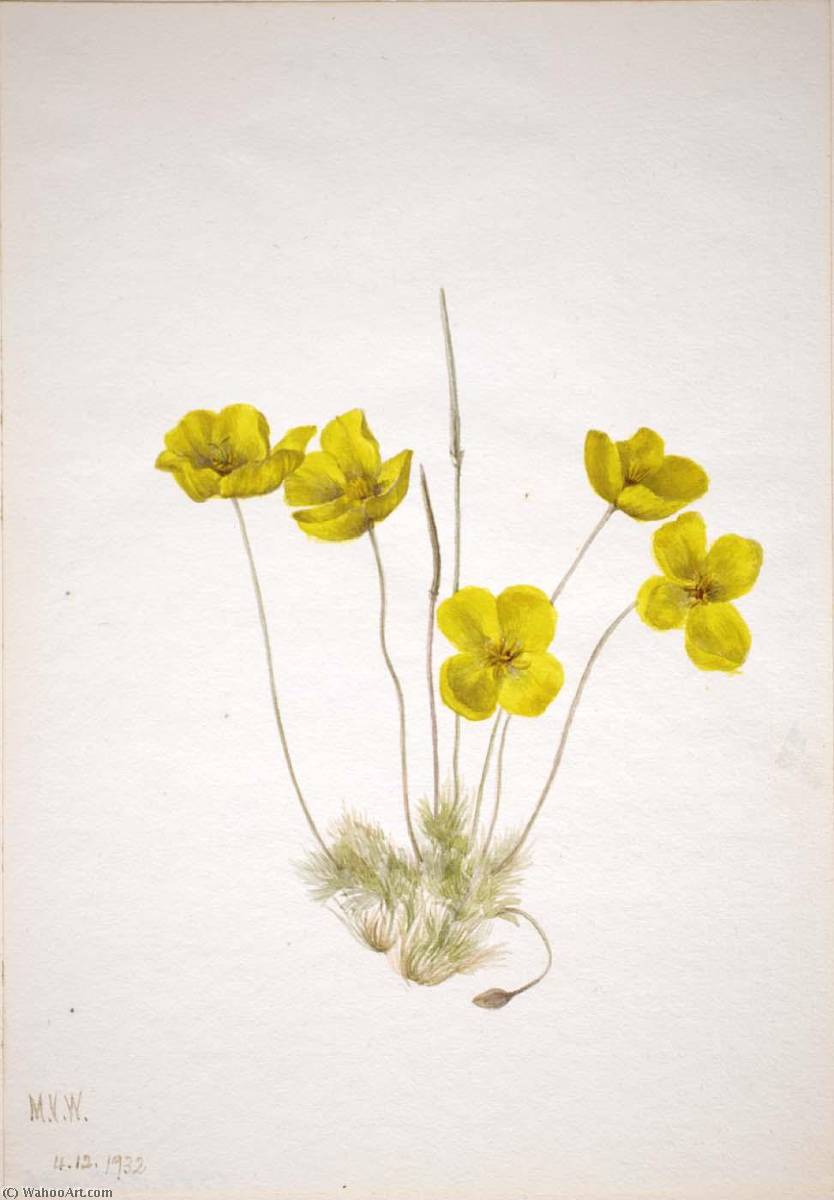
Desert Poppy (Eschscholtzia glyptosperma) is a stunning watercolor painting by
Mary Vaux Walcott, an American artist and botanist. Created in 1932, this beautiful piece is part of the collection at the
Smithsonian American Art Museum. The painting measures 25 x 18 cm and is a prime example of Walcott's exceptional skill in capturing the delicate details of botanical specimens.
The Artist and Her Work
Mary Vaux Walcott was a talented artist who dedicated her life to painting and studying the natural world. Her work is characterized by its precision, beauty, and attention to detail. The
Desert Poppy (Eschscholtzia glyptosperma) is one of her most notable pieces, showcasing her ability to convey the intricate textures and colors of the desert poppy.
Key Features of the Painting The painting features a beautiful arrangement of yellow flowers in a vase, surrounded by leaves and stems. The
Desert Poppy (Eschscholtzia glyptosperma) is rendered in exquisite detail, with delicate petals and intricate textures that seem to come alive on the page.
- The painting's composition is balanced and harmonious, with a clear focus on the central flowers.
- The use of color is subtle yet effective, with shades of yellow and green dominating the palette.
- The level of detail in the painting is remarkable, with each petal and leaf carefully rendered to create a sense of depth and dimensionality.
For those interested in learning more about
Mary Vaux Walcott and her work, https://ArtsDot.com offers a range of resources, including information on her life and career, as well as high-quality reproductions of her paintings. Additionally, the
Smithsonian American Art Museum website provides further insight into the museum's collection and exhibitions.
To explore more of Walcott's work, visit https://ArtsDot.com and discover the beauty of her botanical art. With its stunning detail and delicate colors, the
Desert Poppy (Eschscholtzia glyptosperma) is a must-see for anyone interested in botanical art or the natural world.