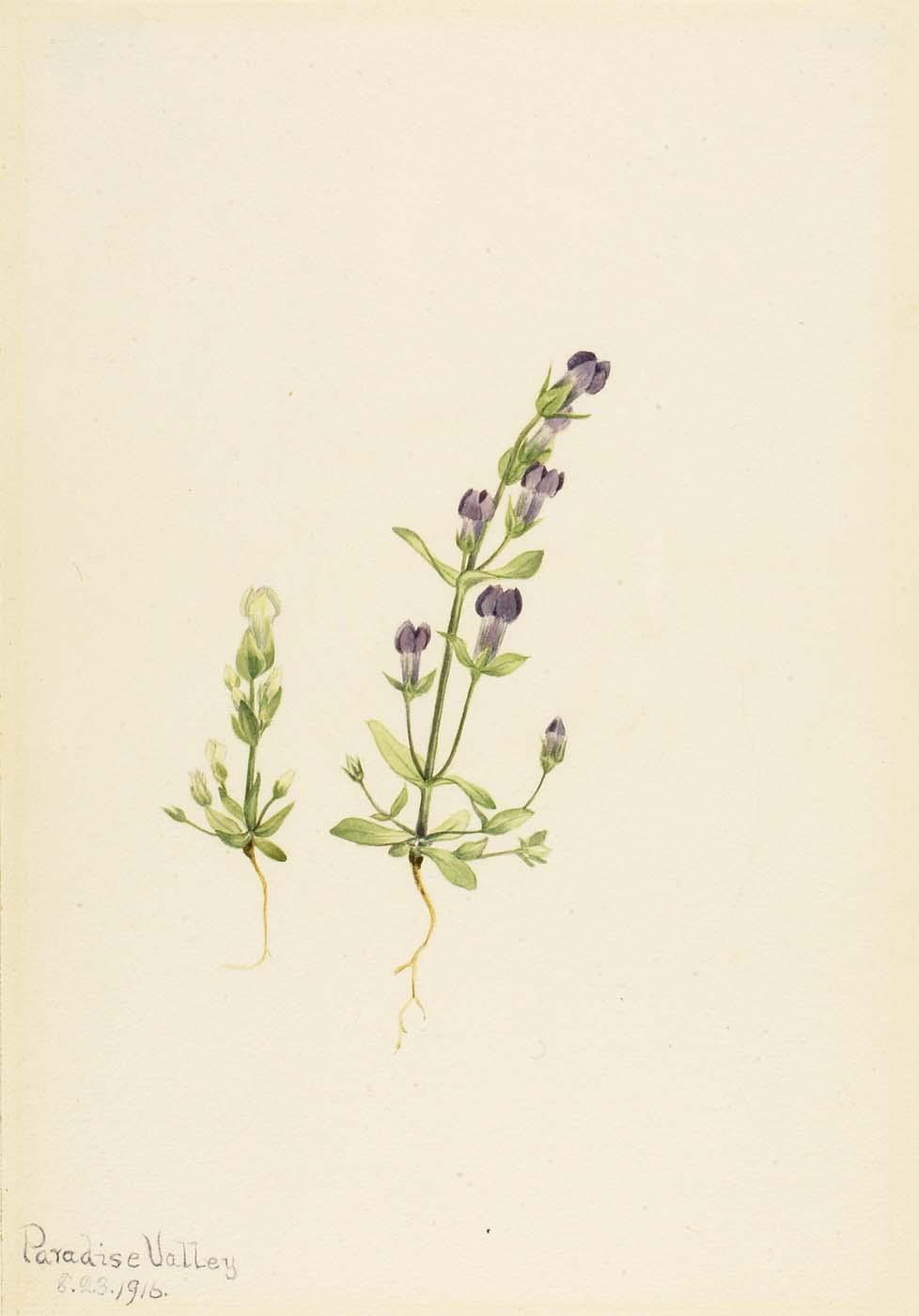
The
Mary Vaux Walcott painting,
Gentiana propingua, is a stunning example of botanical art. Created in 1916, this watercolor on paper piece measures 25 x 18 cm and is currently housed at the
Smithsonian American Art Museum. This beautiful artwork showcases the artist's attention to detail and her ability to capture the essence of the natural world.
The Artist's Background
Mary Vaux Walcott was an American artist and naturalist known for her watercolor paintings of wildflowers. She was born in Philadelphia, Pennsylvania, to a wealthy Quaker family and developed an interest in art and nature from an early age. Her work is characterized by its accuracy and beauty, earning her the nickname "the Audubon of Botany".
The Painting's Significance
The
Gentiana propingua painting is significant not only for its artistic value but also for its botanical importance. The gentian plant is a rare and beautiful species, and
Mary Vaux Walcott's depiction of it is both accurate and stunning. The painting showcases the artist's ability to capture the delicate details of the plant, from the shape of its leaves to the color of its flowers.
Gentiana propingua is a must-see for anyone interested in botanical art or the natural world. The painting's beauty and significance make it a valuable addition to any collection, and its availability on
ArtsDot.com makes it accessible to art lovers around the world.
The
Mary Vaux Walcott painting,
Gentiana propingua, is a true masterpiece of botanical art, and its beauty and significance continue to inspire and educate audiences today.