A Botanical Masterpiece: The Delicate Allure of the Hybrid Pitcherplant
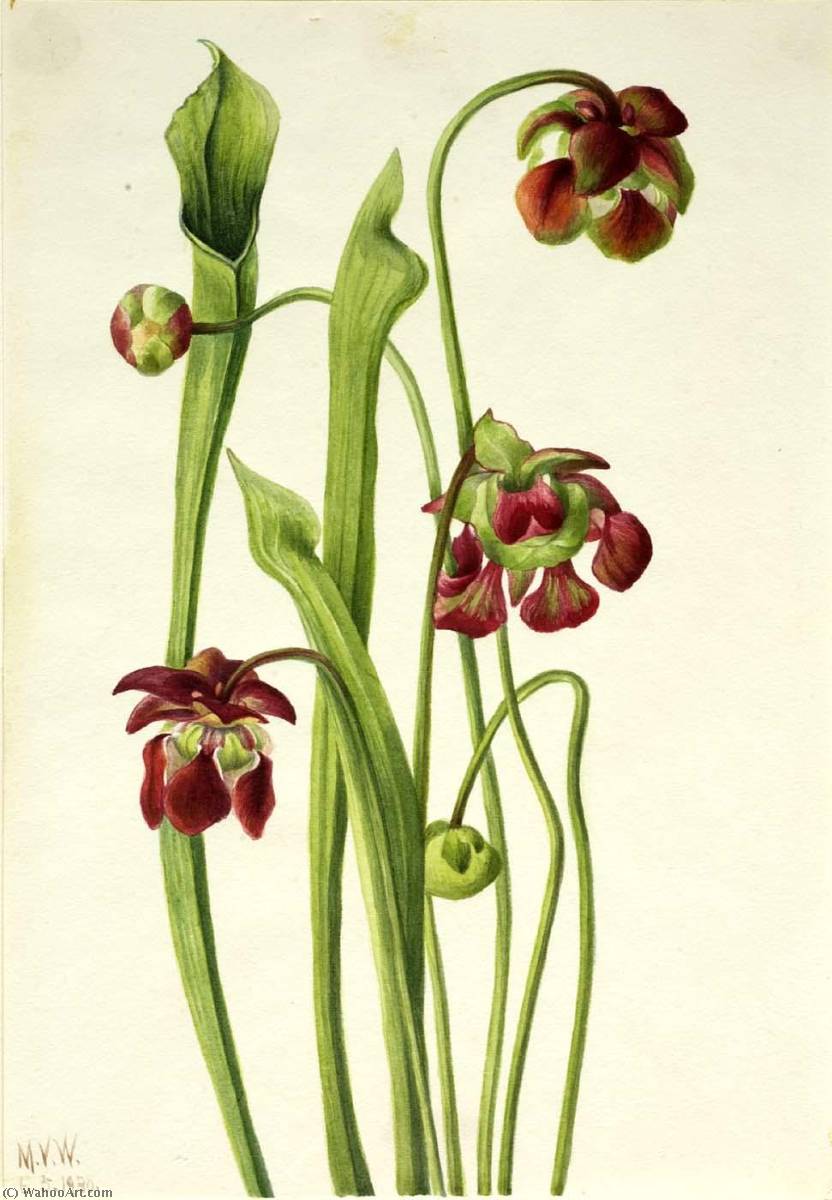
In the quiet intersection of scientific precision and poetic grace lies Mary Vaux Walcott’s 1930 watercolor, Hybrid Pitcherplant. To gaze upon this work is to step into a miniature, vibrant world where the boundaries between botanical documentation and fine art dissolve. As one of the most celebrated figures in American naturalism, Walcott—often whispered about in art circles as the “Audubon of Botany”—possesses a rare ability to breathe life into the stationary. This particular piece captures the enigmatic essence of the pitcher plant, a carnivorous marvel of the natural world, rendering its predatory nature with a softness that belies its biological complexity.
The composition is a masterclass in balance and organic movement. Through her expert use of watercolor, Walcott guides the eye across a landscape of deep reds, lush greens, and subtle, sun-kissed yellows. The painting does not merely depict a specimen; it captures a moment of vitality. The way the light seems to filter through the translucent petals and the curved, sculptural leaves suggests a humid, living atmosphere. For the collector or interior designer, this piece offers more than just decoration; it provides a window into a meticulously observed reality, making it an ideal centerpiece for spaces that value tranquility, organic elegance, and the timeless beauty of the natural sciences.
Technique and the Art of Naturalism
The technical brilliance of Hybrid Pitcherplant lies in Walcott’s mastery over the unpredictable medium of watercolor. Unlike oil, which allows for heavy layering and correction, watercolor demands a decisive hand and an intimate understanding of moisture and pigment. Walcott utilizes this fluidity to mimic the delicate, almost fragile textures of the plant's anatomy. The transitions between the deep, saturated tones of the pitcher’s throat and the pale, ethereal hues of its floral accents are seamless, creating a sense of depth that pulls the viewer into the heart of the specimen.
Every brushstroke serves a dual purpose: to define form and to convey texture. One can almost feel the waxy surface of the leaves and the velvety softness of the blooms. This level of detail was not merely an aesthetic choice but a scientific necessity, as Walcott’s work was intended to document North American flora with unparalleled accuracy. For those seeking a high-quality reproduction, such as a hand-painted oil version from ArtsDot.com, this intricate detail is what makes the artwork so enduringly captivating. The painting retains its impact whether viewed closely in a study or as part of a larger gallery wall, offering a sophisticated touch to any curated collection.
A Legacy of Scientific Beauty
Historically, Walcott’s work represents a pivotal era where art and science were deeply intertwined. Created during a period when the exploration of North American biodiversity was reaching new heights, this painting serves as a historical record of a species captured with both the eye of a naturalist and the soul of an artist. There is a profound symbolism in her choice of subject; the pitcher plant, with its unique ability to thrive in challenging environments through its specialized form, mirrors the resilience and pioneering spirit that defined Walcott’s own life.
Bringing a reproduction of this masterpiece into a home or professional space does more than fill a void on a wall; it invites a conversation about our connection to the earth. It evokes a sense of nostalgia for the golden age of botanical illustration while remaining strikingly modern in its clean, vibrant execution. Whether you are an art enthusiast drawn to the historical significance of the Smithsonian American Art Museum’s collection or a designer looking to infuse a room with the serene energy of the natural world, the Hybrid Pitcherplant stands as a testament to the enduring power of botanical beauty.