The
Smithsonian American Art Museum is home to a stunning collection of botanical watercolors, including
Mary Vaux Walcott's exquisite piece,
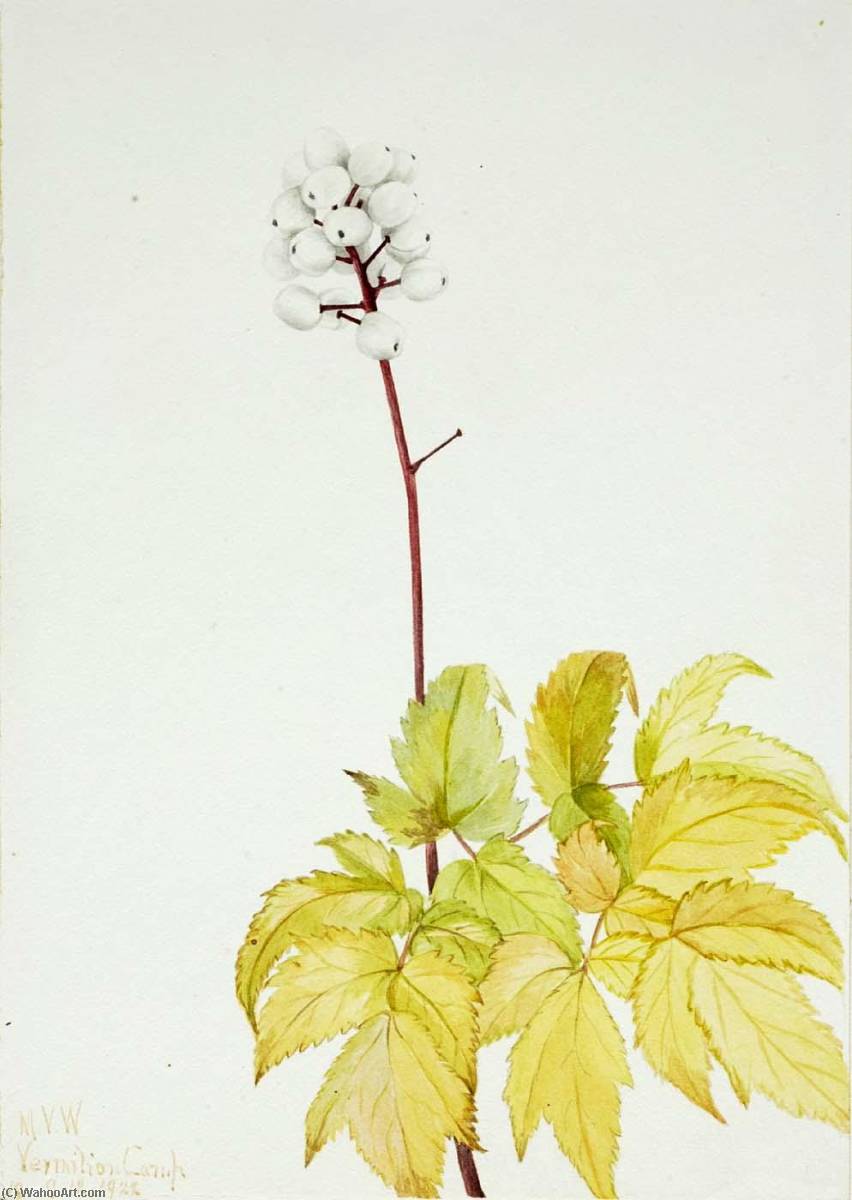
Ivory Baneberry (Actaea arguta). Created in 1922, this delicate painting showcases the artist's mastery of watercolor techniques and her deep appreciation for the natural world.
Botanical Illustration at its Finest
Mary Vaux Walcott's
Ivory Baneberry (Actaea arguta) is a prime example of botanical illustration, where accuracy and detail are paramount. The painting features a single stalk of ivory baneberry, with its cluster of small, round, white berries taking center stage against a soft, off-white background. The berries are rendered with incredibly fine brushstrokes, appearing almost translucent, while the deep reddish-brown stem provides a striking contrast.
Artistic and Scientific Merit
The simplicity of the composition, focusing solely on the baneberry, allows the viewer to fully appreciate the plant's inherent elegance and intricate structure. The small size of the painting, approximately 18.1 cm by 25.4 cm, further emphasizes the intimacy and detail.
Mary Vaux Walcott's style is a perfect blend of artistic expression and scientific accuracy, making
Ivory Baneberry (Actaea arguta) a standout piece in the world of botanical illustration.
Some other notable works by
Mary Vaux Walcott include:
Handmade oil painting reproductions of
Mary Vaux Walcott's works, including
Ivory Baneberry (Actaea arguta), can be found on
ArtsDot.com, allowing art lovers to appreciate these beautiful pieces in their own homes.