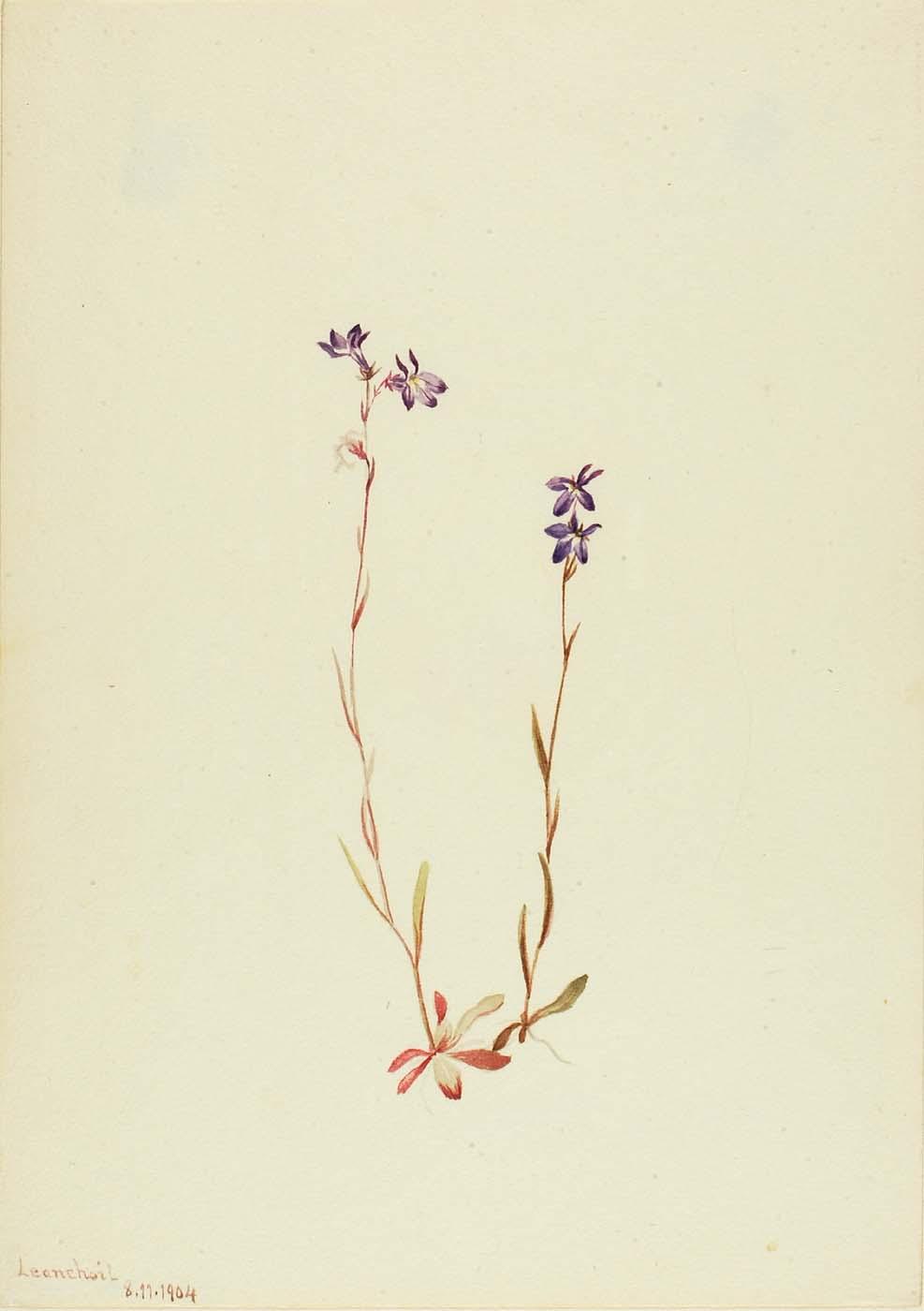
The world of botanical art is a fascinating one, where artists use their skills to capture the beauty and detail of the natural world. One such artist is
Mary Vaux Walcott, a talented watercolorist who created stunning paintings of plants and flowers. Her painting,
Lobelia Kalmii, is a prime example of her skill and attention to detail.
Artist Background
Mary Vaux Walcott was born on July 31, 1860, in Philadelphia, Pennsylvania. She developed a passion for botany and art at an early age, which led her to create beautiful and accurate drawings of wild flowers. Her work was instrumental in the development of a new technique for printing, known as the
Smithsonian Process.
The Painting
Lobelia Kalmii is a watercolor painting that measures 26 x 18 cm. It is part of the collection at the
Smithsonian American Art Museum in the United States. The painting features a close-up view of the Lobelia Kalmii plant, showcasing its delicate purple flowers and intricate details. The artist's use of watercolor brings a sense of softness and elegance to the painting, making it a joy to behold.
ArtsDot.com offers handmade oil painting reproductions of
Mary Vaux Walcott's works, including
Lobelia Kalmii. These reproductions are created by skilled artists who use high-quality materials to ensure that the final product is both beautiful and durable. Visit
ArtsDot.com to learn more about their collection of botanical art reproductions.
For more information on
Mary Vaux Walcott and her work, visit the
Smithsonian American Art Museum website or check out
ArtsDot.com's artist profile.