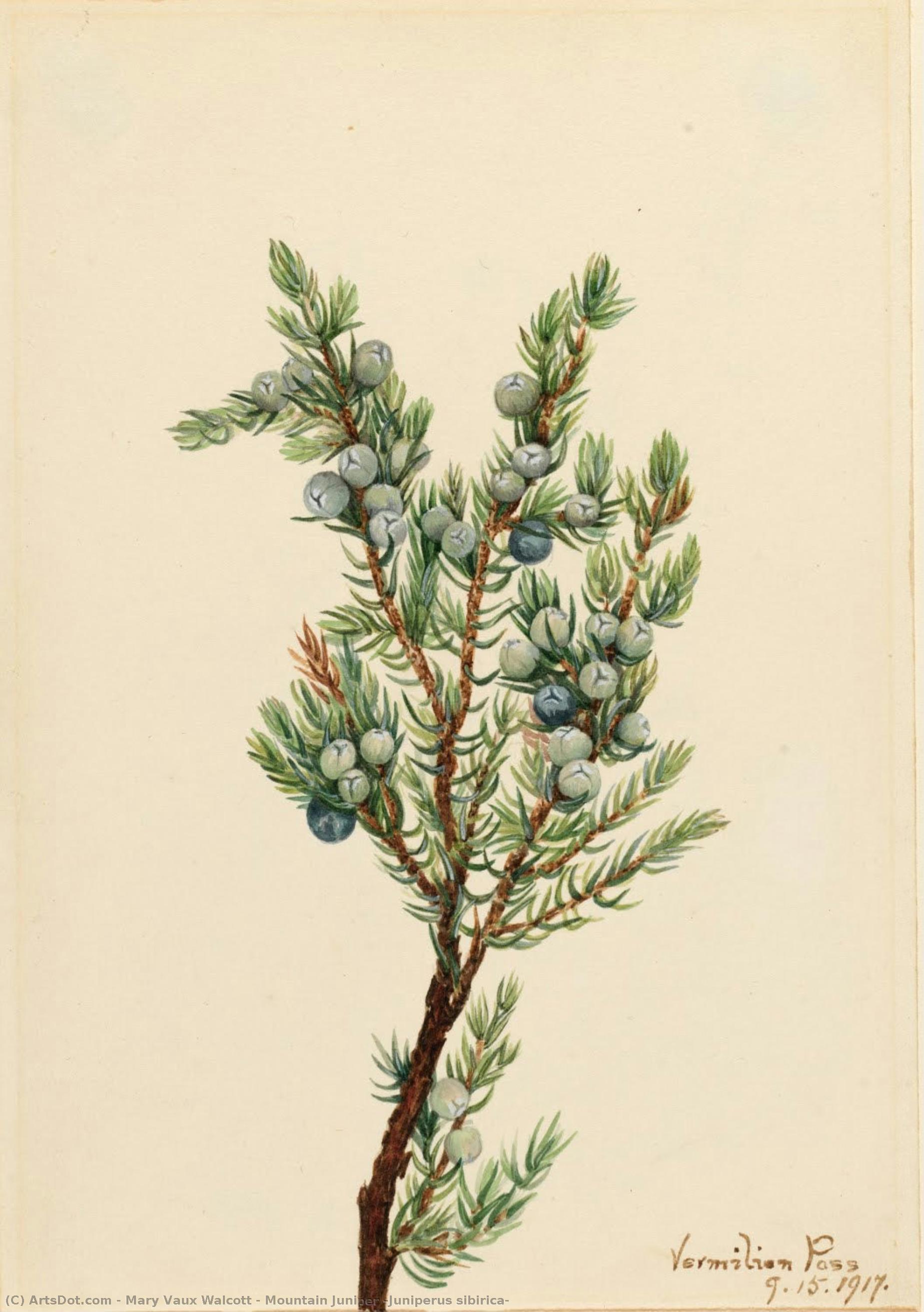
Mary Vaux Walcott’s 1917 watercolor ‘Mountain Juniper’ celebrates botanical beauty with delicate washes and a resilient spirit, capturing the essence of nature's grace. Discover this stunning reproduction and bring its timeless charm into your home.
Mary Vaux Walcott (1860-1940) was the "Audubon of Botany," renowned for her exquisite watercolor wildflower paintings and contributions to naturalism. Explore her detailed botanical art!
Discover American art's rich history at the Smithsonian American Art Museum! Explore iconic works, diverse traditions & captivating exhibitions within the Old Patent Office Building.
A Celebration of Botanical Beauty: Mary Vaux Walcott’s “Mountain Juniper”
Mary Vaux Walcott's "Mountain Juniper" (Juniperus sibirica), painted in 1917, stands as a testament to the transformative power of watercolor and a profound connection with the natural world. More than just a depiction of a tree adorned with vibrant blue berries—a striking visual element that immediately draws the eye—the painting embodies Walcott’s unwavering dedication to botanical illustration and her pioneering role in advocating for conservation during an era marked by rapid industrial expansion. Located at the Smithsonian American Art Museum, this artwork offers a glimpse into the artistic vision of a woman who defied societal constraints to pursue her passion for capturing ephemeral beauty.
The Artist's Vision: Watercolor’s Delicate Embrace
Mary Vaux Walcott possessed an unparalleled ability to translate the intricacies of plant life onto paper using watercolor paint—a medium she championed throughout her prolific career. Unlike oil paints, which offer rich textures and bold colors, watercolor relies on translucent pigments layered upon one another, allowing for subtle gradations and capturing the luminosity characteristic of wildflowers bathed in sunlight. Walcott meticulously observed juniper trees in their mountainous habitat, painstakingly recreating their form and color palette with remarkable accuracy. Her technique involved applying thin washes of pigment, building up layers gradually to achieve depth and tonal variation—a process that demanded patience and precision. The resulting image is imbued with a sense of ethereal grace, mirroring the delicate beauty of its subject matter.
A Symbol of Resilience and Renewal
Beyond its artistic merit, “Mountain Juniper” carries symbolic significance rooted in Walcott’s broader philosophical outlook. Juniper trees are known for their resilience—capable of surviving harsh conditions such as drought and frost—representing perseverance and enduring strength. The blue berries themselves symbolize purity and regeneration, mirroring the cycle of life and death inherent in the natural world. Walcott's artistic endeavors were driven by a fervent belief in the importance of preserving botanical specimens and educating the public about their ecological significance. Her work served as an inspiration for future generations of botanists and artists alike, cementing her legacy as “the Audubon of Botany.”
Historical Context: Embracing Modernity Amidst Tradition
Painted during World War I—a period marked by upheaval and uncertainty—Walcott’s artwork reflects the broader cultural landscape of its time. While she adhered to traditional artistic conventions rooted in Romanticism—characterized by idealized landscapes and emotive depictions of nature—she simultaneously embraced scientific inquiry and championed the pursuit of knowledge. Her unwavering commitment to botanical illustration stood apart from many other artists of her generation, who favored more conventional subjects. “Mountain Juniper” serves as a poignant reminder that beauty can be found even amidst conflict and change, demonstrating the enduring power of artistic expression to convey profound ideas about humanity’s relationship with the environment.
Emotional Resonance: Capturing the Essence of Wildflower Wonder
Ultimately, "Mountain Juniper" succeeds in evoking an emotional response—a feeling of awe and wonder at the splendor of wildflower beauty. The painting's luminous colors and meticulous detail transport viewers to a remote mountain landscape, immersing them in the sensory experience of observing a juniper tree teeming with vibrant berries. Walcott’s masterful technique captures not only the visual appearance of her subject but also its underlying spirit—a celebration of resilience, renewal, and the profound interconnectedness between humans and nature. It is an artwork that lingers in the memory long after viewing, inspiring contemplation and fostering appreciation for the natural world's enduring magnificence.