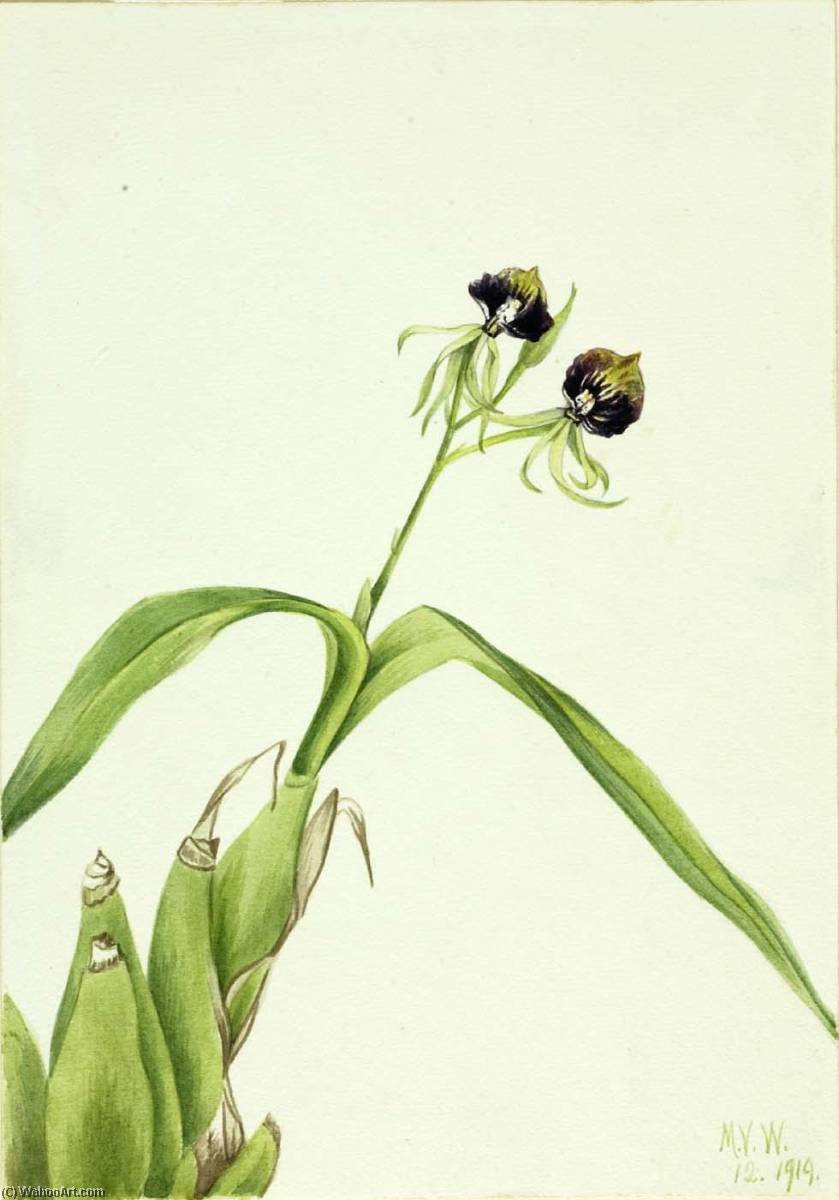
The
Orchid (Epidendrum cochleatum) painting by
Mary Vaux Walcott is a stunning example of botanical art. Created in 1919, this watercolor piece measures 26 x 18 cm and is currently housed at the
Smithsonian American Art Museum. The delicate orchid is depicted with intricate details, showcasing the artist's exceptional skill and attention to detail.
The Artist's Background
Mary Vaux Walcott was a talented American artist and naturalist, known for her passion for the natural world. Her work was heavily influenced by her summer trips to the Canadian Rockies, where she would hunt for rare specimens of wildflowers, including orchids. You can find more information about
Mary Vaux Walcott and her work on
ArtsDot.com.
The Painting's Significance
The
Orchid (Epidendrum cochleatum) painting is not only a beautiful piece of art but also an important example of botanical illustration. The level of detail and accuracy in the painting makes it a valuable resource for scientists and botanists. The use of watercolor as a medium adds to the delicate and ethereal quality of the orchid, making it a truly captivating piece.
The intersection of art and science is perfectly exemplified in the
Orchid (Epidendrum cochleatum) painting. The level of detail and accuracy in the piece makes it a valuable resource for scientists and botanists, while the beauty and delicacy of the orchid make it a captivating piece of art.
The
Orchid (Epidendrum cochleatum) painting is a must-see for anyone interested in botanical art or the natural world. With its delicate details and beautiful watercolor medium, it is a truly unique and captivating piece. You can find more information about
Mary Vaux Walcott and her work on
ArtsDot.com.