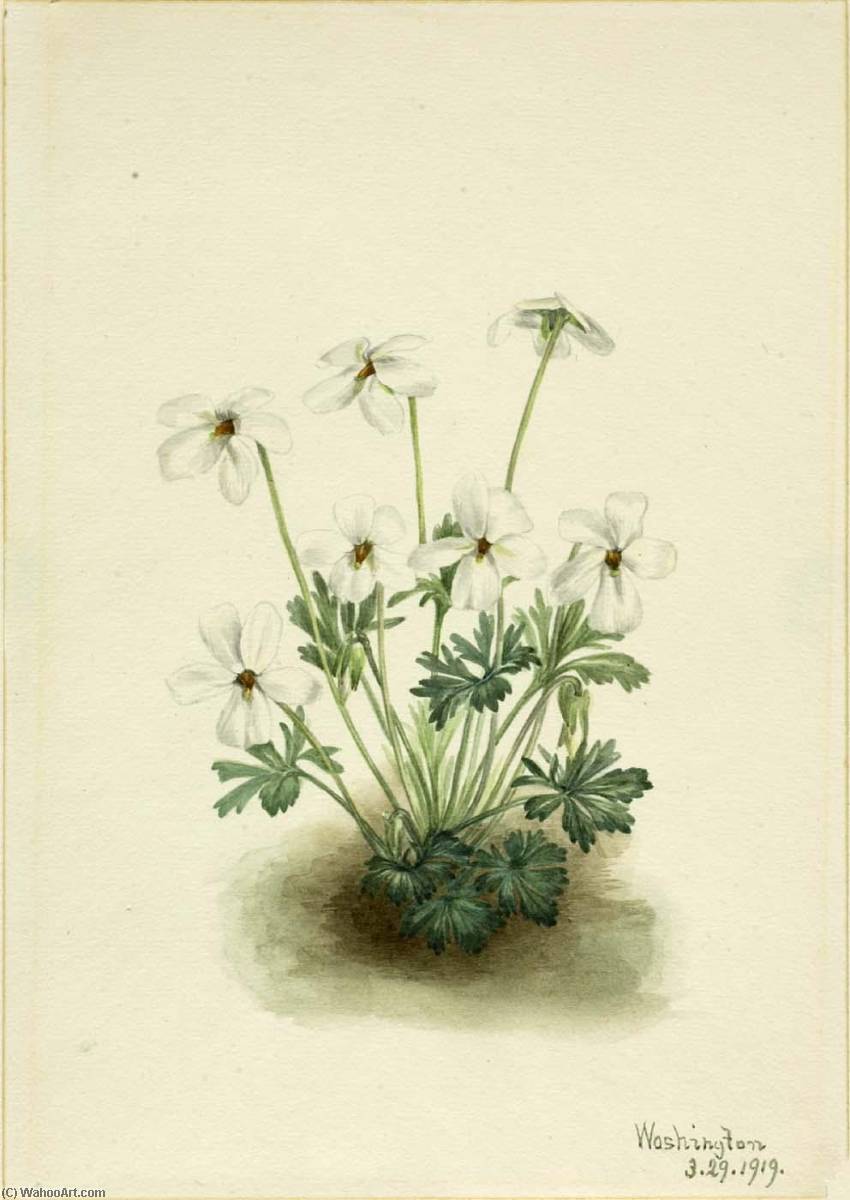
The
Pansy Violet (Viola pedata) is a beautiful watercolor painting created by
Mary Vaux Walcott in 1919. This stunning piece of art is part of the collection at the
Smithsonian American Art Museum in the United States. Measuring 26 x 18 cm, the painting showcases the artist's exceptional skill in capturing the delicate details of the flower.
Artistic Style and Technique
Mary Vaux Walcott's watercolor technique is characterized by soft, gentle brushstrokes and a muted color palette. The
Pansy Violet (Viola pedata) painting features various shades of white and green, giving the flower a natural and delicate appearance. The artist's use of watercolor adds depth and texture to the artwork, making it a truly unique piece.
Key Features of the painting include:
- The delicate petals of the flower, intricately detailed by the artist
- The subtle color palette, which gives the painting a sense of serenity
- The exceptional use of watercolor technique, which adds depth and texture to the artwork
The
Smithsonian American Art Museum is home to many other notable works by
Mary Vaux Walcott, including
Showy Pyrolla (Pyrola asarifolia) and
Trailing Houstonia (Houstonia procumbens). These paintings showcase the artist's talent for capturing the beauty of nature.
For art enthusiasts and collectors, ArtsDot.com offers handmade oil painting reproductions of famous artworks, including those by
Mary Vaux Walcott. Visit
The Smithsonian Museums and their Art Collections to learn more about the museum's collection and exhibitions.