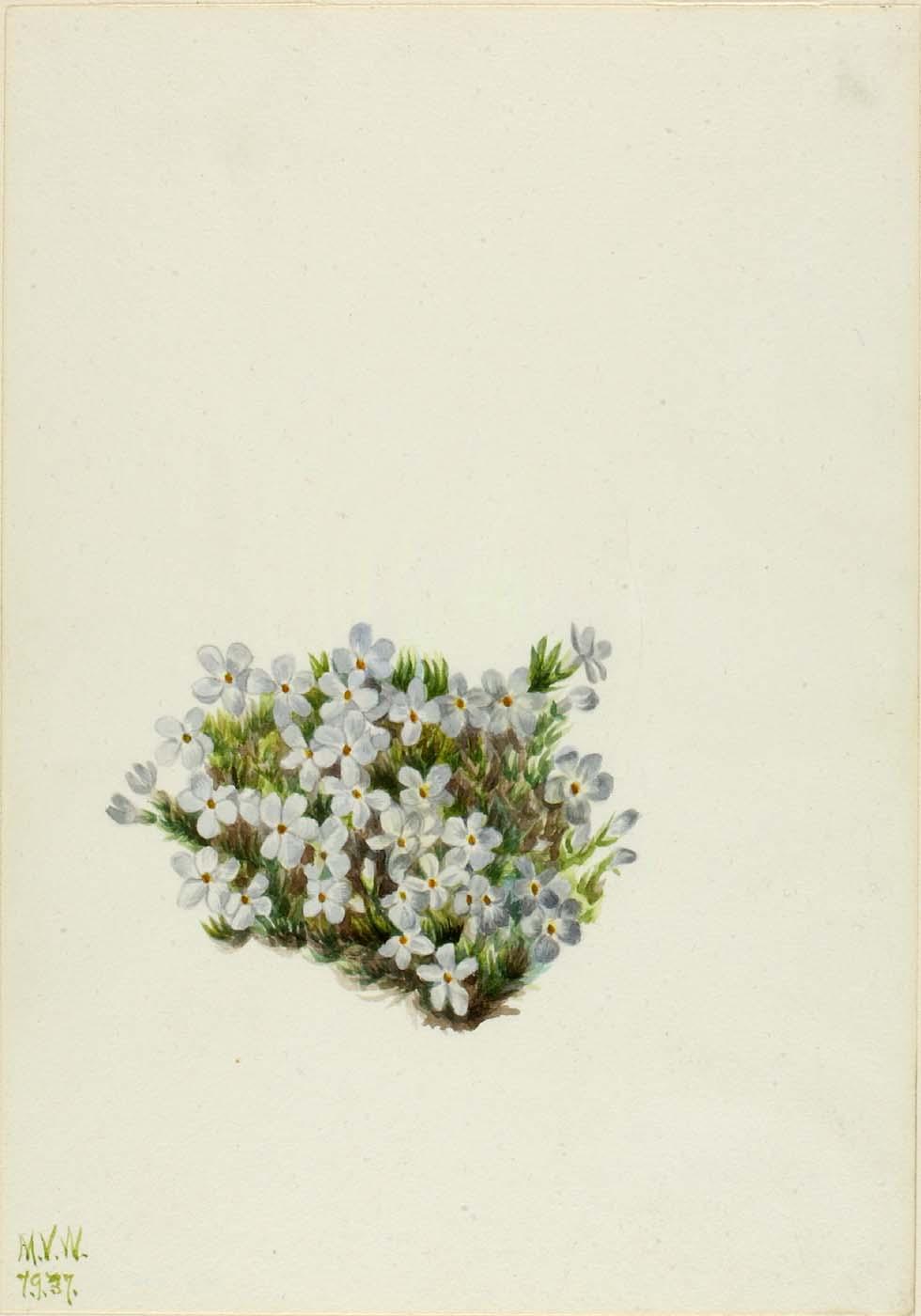
The
Smithsonian American Art Museum is home to a stunning collection of watercolor paintings, including the beautiful
Phlox (Phlox caespitosa) by
Mary Vaux Walcott. This delicate piece, created in 1937, showcases the artist's exceptional skill in capturing the intricate details of wildflowers.
A Brief Overview of the Artist
Mary Vaux Walcott was a talented American artist and naturalist, often referred to as the "Audubon of Botany". Her work is characterized by its precision and beauty, making her one of the most renowned botanical artists of her time.
The Painting
The
Phlox (Phlox caespitosa) painting measures 26 x 18 cm and is a prime example of
Mary Vaux Walcott's ability to convey the intricate details of wildflowers. The piece is rendered in watercolor on paper, showcasing the artist's mastery of this medium.
Some of the key features of this painting include:
- Delicate petals and intricate flower details
- Vibrant colors that bring the subject to life
- A sense of movement and energy, as if the flowers are swaying in the breeze
Handmade oil paintings reproductions of this piece can be found on
ArtsDot.com, allowing art lovers to own a piece of history.
For more information on the
Smithsonian American Art Museum and its collection, visit
The Smithsonian Museums and their Art Collections. To learn more about
Mary Vaux Walcott and her work, see her biography on
Wikipedia.