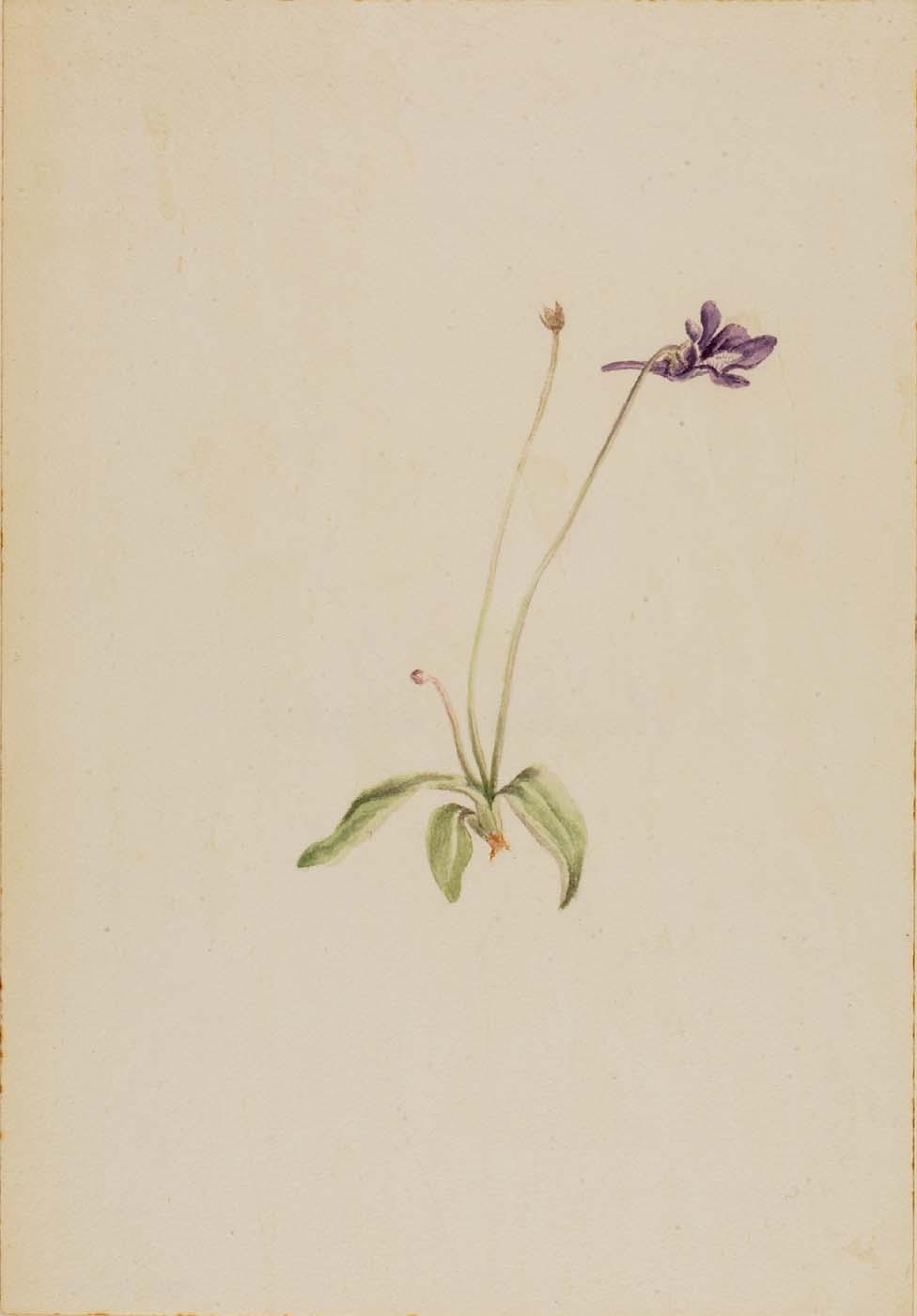
The
Pinguicula vulgaris is a captivating watercolor painting by
Mary Vaux Walcott, an American artist known for her botanical illustrations. Created in the early 1930s, this piece is part of the collection at the
Smithsonian American Art Museum. Measuring 25 x 18 cm, the painting showcases Walcott's exceptional skill in capturing the intricate details of the natural world.
Artistic Technique and Style
Walcott's use of watercolor is characterized by delicate, soft brushstrokes and a muted color palette. The
Pinguicula vulgaris plant is depicted with precision, its purple flowers and green leaves rendered in exquisite detail. The artist's technique creates a sense of depth and texture, drawing the viewer's eye into the heart of the plant. This level of craftsmanship is a hallmark of Walcott's work, as seen in other pieces like
Northern Bedstraw (Galium boreale) and
Jacob's Ladder (Polemonium viscosum), also available on
ArtsDot.com.
Botanical Accuracy and Artistic Expression
The
Pinguicula vulgaris is not only a beautiful work of art but also a testament to Walcott's botanical knowledge. Her illustrations are renowned for their accuracy, making them valuable resources for botanists and art lovers alike. This blend of science and art is a key aspect of Walcott's oeuvre, as she sought to capture the essence of the natural world through her paintings. For more information on
Mary Vaux Walcott and her work, visit
ArtsDot.com's artist page.
- Watercolor on paper: The medium used by Walcott to create the Pinguicula vulgaris.
- Smithsonian American Art Museum: The institution where the original painting is housed.
- Botanical illustration: A genre of art that combines scientific accuracy with artistic expression, exemplified by Walcott's work.
Handmade oil paintings reproductions of Walcott's works, including the
Pinguicula vulgaris, can be found on
ArtsDot.com, offering art enthusiasts a unique opportunity to own a piece of history.
For those interested in learning more about the
Smithsonian American Art Museum and its collections, visit
ArtsDot.com's documentation page.