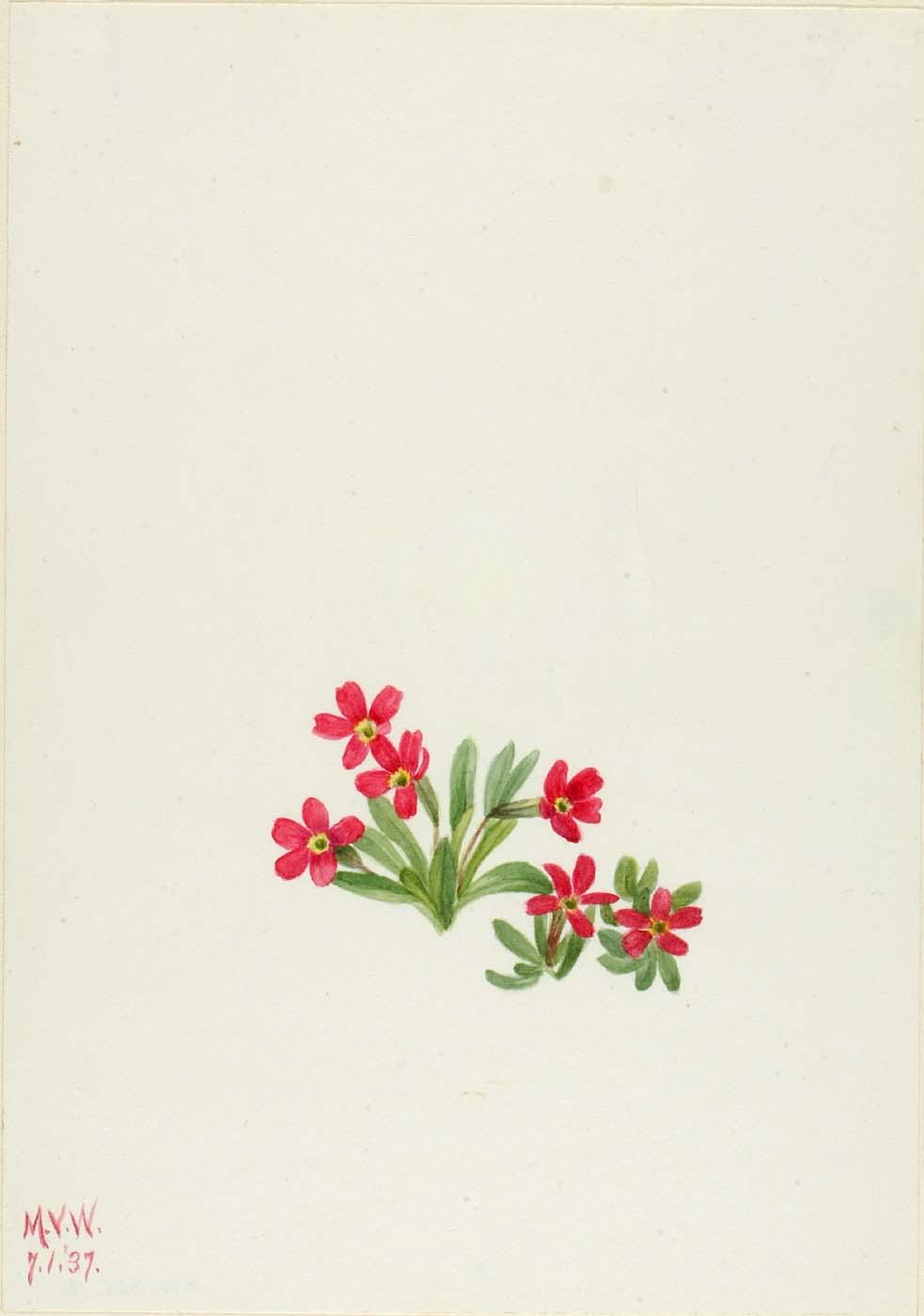
The painting
Primrose (Primula angustifolia) by
Mary Vaux Walcott is a stunning example of botanical art, showcasing the delicate beauty of the primrose flower. Created in 1937, this watercolor piece measures 26 x 18 cm and is currently housed at the
Smithsonian American Art Museum in the United States.
About the Artist
Mary Vaux Walcott was a talented artist known for her detailed and accurate depictions of flowers and plants. Her work is characterized by its precision and delicacy, making her one of the most renowned botanical artists of her time. To learn more about
Mary Vaux Walcott and her artwork, visit
ArtsDot.com.
The Painting
The painting
Primrose (Primula angustifolia) is a beautiful representation of the primrose flower, with its delicate red petals and green leaves. The level of detail in the painting is impressive, showcasing the artist's skill and attention to detail. To see more paintings by
Mary Vaux Walcott, including
Primrose Violet (Viola primulifolia) and
Alberta Primrose (Primula maccalliana), visit
ArtsDot.com.
Importance of the Painting
The painting
Primrose (Primula angustifolia) is not only a beautiful work of art but also an important example of botanical illustration. It showcases the artist's ability to accurately depict the natural world, making it a valuable resource for scientists and researchers. To learn more about the importance of botanical illustration, visit
ArtsDot.com.
The painting
Primrose (Primula angustifolia) by
Mary Vaux Walcott is a stunning example of botanical art, showcasing the delicate beauty of the primrose flower. Its level of detail and accuracy make it an important resource for scientists and researchers, as well as a beautiful work of art. To see more paintings like this, visit
ArtsDot.com.