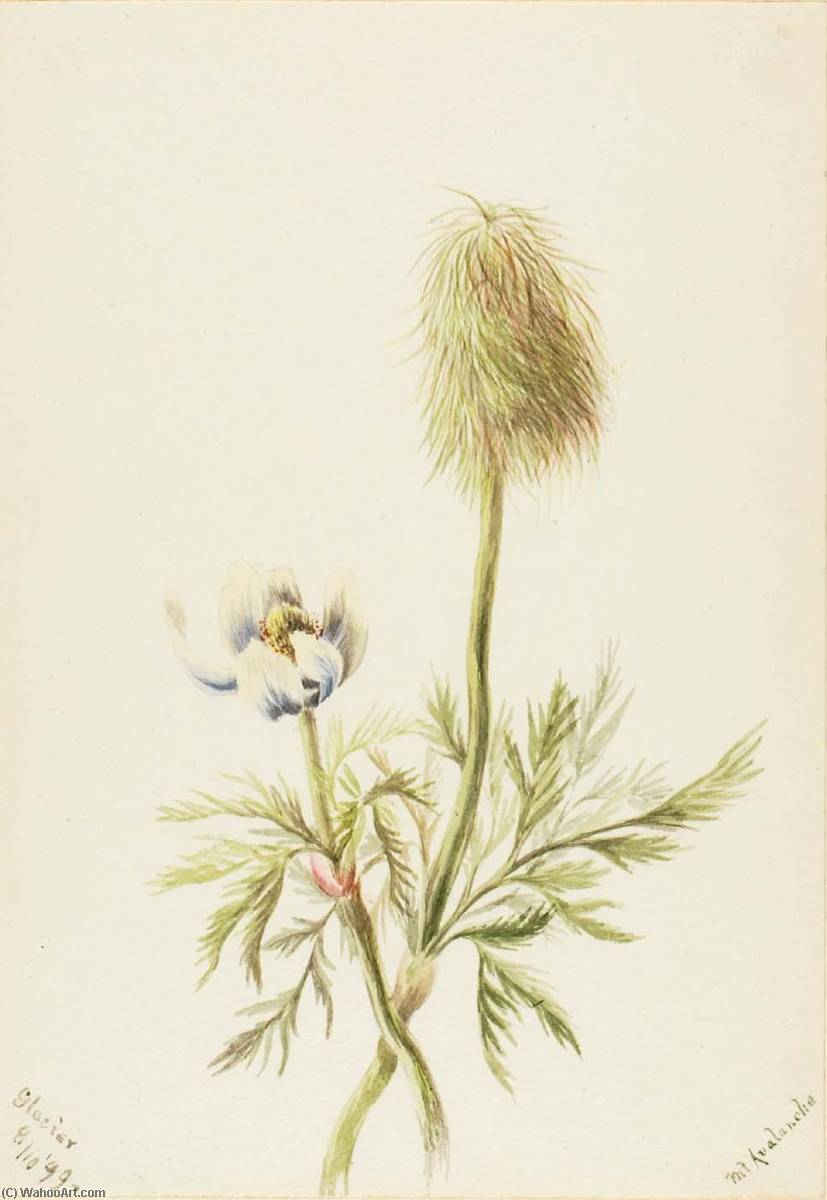
The
Mary Vaux Walcott painting,
Pulsatilla occidentalis, is a stunning example of botanical art that showcases the beauty and detail of the natural world. Created in 1899, this watercolor on paper piece is a testament to the artist's skill and attention to detail. The painting is part of the collection at the
Smithsonian American Art Museum, where it continues to inspire and educate visitors.
The Artist and Her Work
Mary Vaux Walcott was a talented watercolor painter who specialized in botanical art. Her paintings are characterized by their accuracy and beauty, making her one of the most respected artists in her field.
Pulsatilla occidentalis is just one example of her impressive body of work, which can be found on
ArtsDot.com.
Technique and Style
The painting features two plants of
Pulsatilla occidentalis in the foreground, set against a soft white background. The artist's use of color is subtle yet effective, with shades of green dominating the foliage and delicate white and cream hues used for the flowers. The overall effect is one of serenity and tranquility. The technique used by
Mary Vaux Walcott is characterized by meticulous attention to detail, as seen in the delicate rendering of the leaves and petals.
Importance and Significance
Pulsatilla occidentalis is more than just a beautiful painting; it represents a significant contribution to the field of botanical art. The work of
Mary Vaux Walcott is highly regarded for its scientific accuracy and artistic elegance, reflecting the growing interest in natural history during the late 19th century. To learn more about the artist and her work, visit
ArtsDot.com or explore the collection at the
Smithsonian American Art Museum.
Some of her notable works include:
These paintings demonstrate the artist's exceptional skill and attention to detail, making her one of the most respected botanical artists of her time.