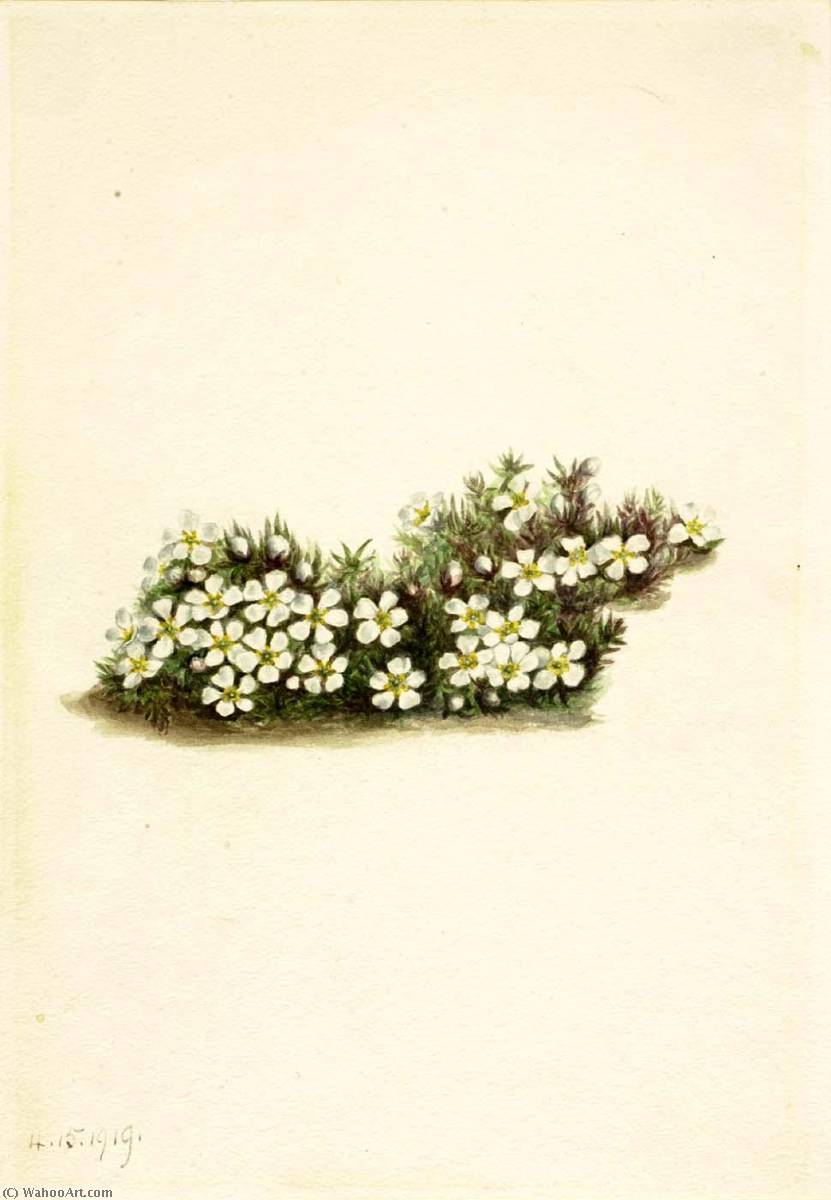
The painting
Pyxie (Pyxidanthera barbulata) by
Mary Vaux Walcott is a stunning example of botanical art, showcasing the beauty and delicacy of nature. Created in 1919, this watercolor on paper piece measures 10 1/8 x 7 inches and is part of the collection at the
Smithsonian American Art Museum.
Artistic Style and Technique
Mary Vaux Walcott's work is characterized by its meticulous attention to detail and its ability to capture the essence of the natural world. The use of watercolor as a medium adds a sense of fragility and ephemeralness to the piece, underscoring the fleeting nature of botanical life. The
delicate brushstrokes and
soft colors employed by
Mary Vaux Walcott create a sense of intimacy and immediacy, drawing the viewer into the world of the painting.
Botanical Accuracy and Artistic Expression
The
Pyxie (Pyxidanthera barbulata) is not only a beautiful work of art but also a testament to
Mary Vaux Walcott's botanical knowledge. The painting showcases the plant's unique characteristics, from the shape of its leaves to the color of its flowers. This blend of scientific accuracy and artistic expression makes the piece a standout example of botanical art. For more information on
Mary Vaux Walcott and her work, visit
ArtsDot.com.
Handmade oil painting reproductions of
Pyxie (Pyxidanthera barbulata) can be found on
ArtsDot.com, allowing art lovers to bring a piece of this beautiful botanical art into their own homes.
For those interested in learning more about the artist and her techniques, visiting the
Smithsonian American Art Museum or exploring the resources available on
ArtsDot.com can provide valuable insights into the world of botanical art.