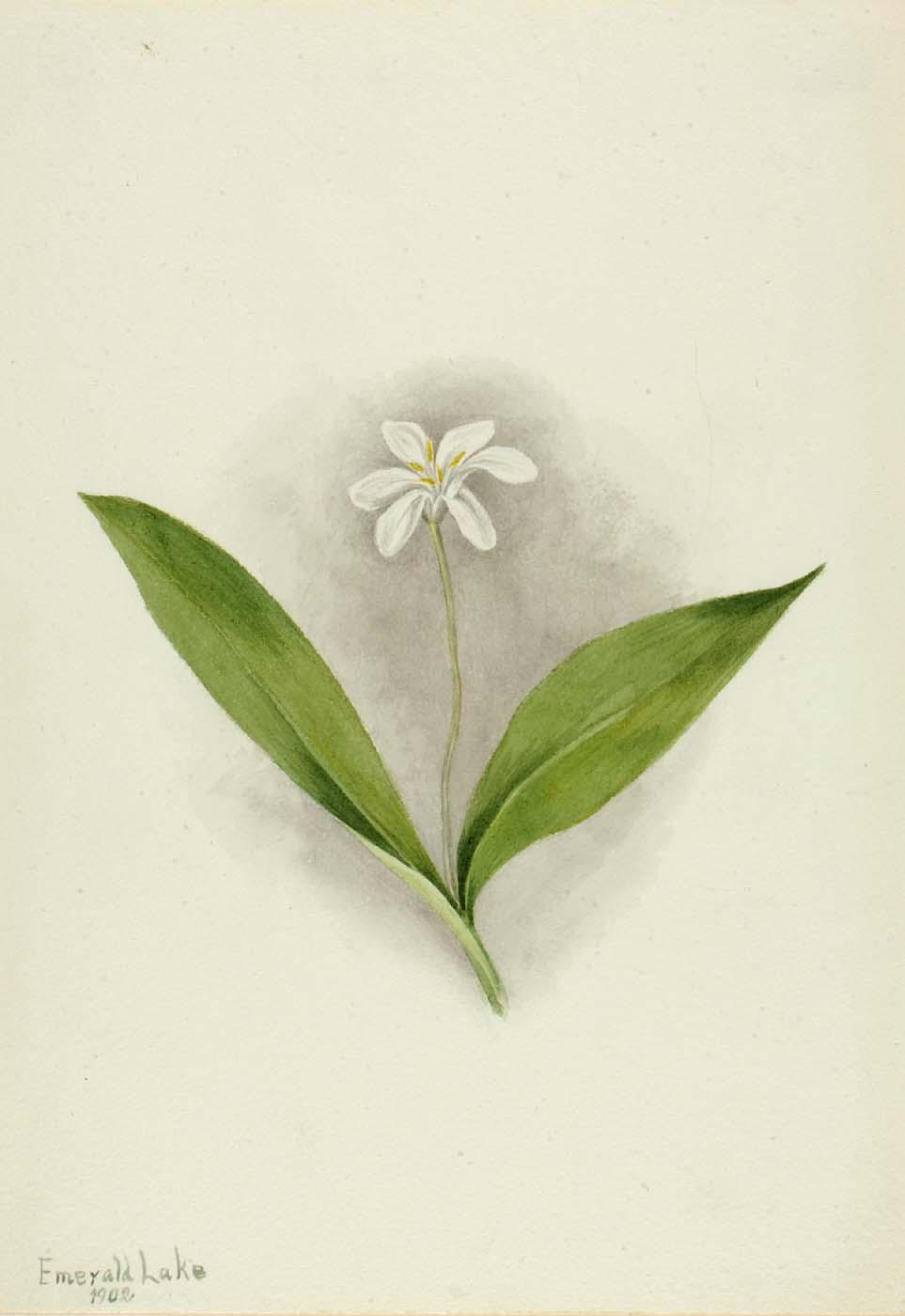
The painting
Queencup (Clintonia uniflora) by
Mary Vaux Walcott is a stunning example of botanical art, showcasing the delicate beauty of the queencup flower. Created in 1922, this watercolor on paper piece is a testament to the artist's skill and attention to detail.
About the Artist
Mary Vaux Walcott was an American artist and naturalist known for her exquisite watercolor paintings of wildflowers. Her work has been compared to that of
Audubon, and she is often referred to as the "Audubon of Botany." The
Smithsonian American Art Museum has an extensive collection of her work, including
Queencup (Clintonia uniflora).
The Painting
The painting measures 25 x 18 cm and is rendered in delicate watercolors on paper. The queencup flower is depicted in exquisite detail, with intricate petals and leaves. The background of the painting is a soft, white paper that provides a clean and uncluttered backdrop for the main subject. This style is reminiscent of other botanical artists, such as
Zhai Jichang, who was known for his meticulous brushwork and attention to detail.
Importance of the Painting
Queencup (Clintonia uniflora) is not only a beautiful painting but also an important example of botanical art. The queencup flower is a rare and delicate species, and
Mary Vaux Walcott's painting provides a detailed and accurate representation of the plant. This type of artwork is essential for
botanical research and
conservation efforts, as it helps to document and preserve knowledge of rare and endangered species.
The
Queencup (Clintonia uniflora) painting is a stunning example of botanical art and an important contribution to the field of botany. Its delicate beauty and attention to detail make it a must-see for anyone interested in art, nature, or conservation.