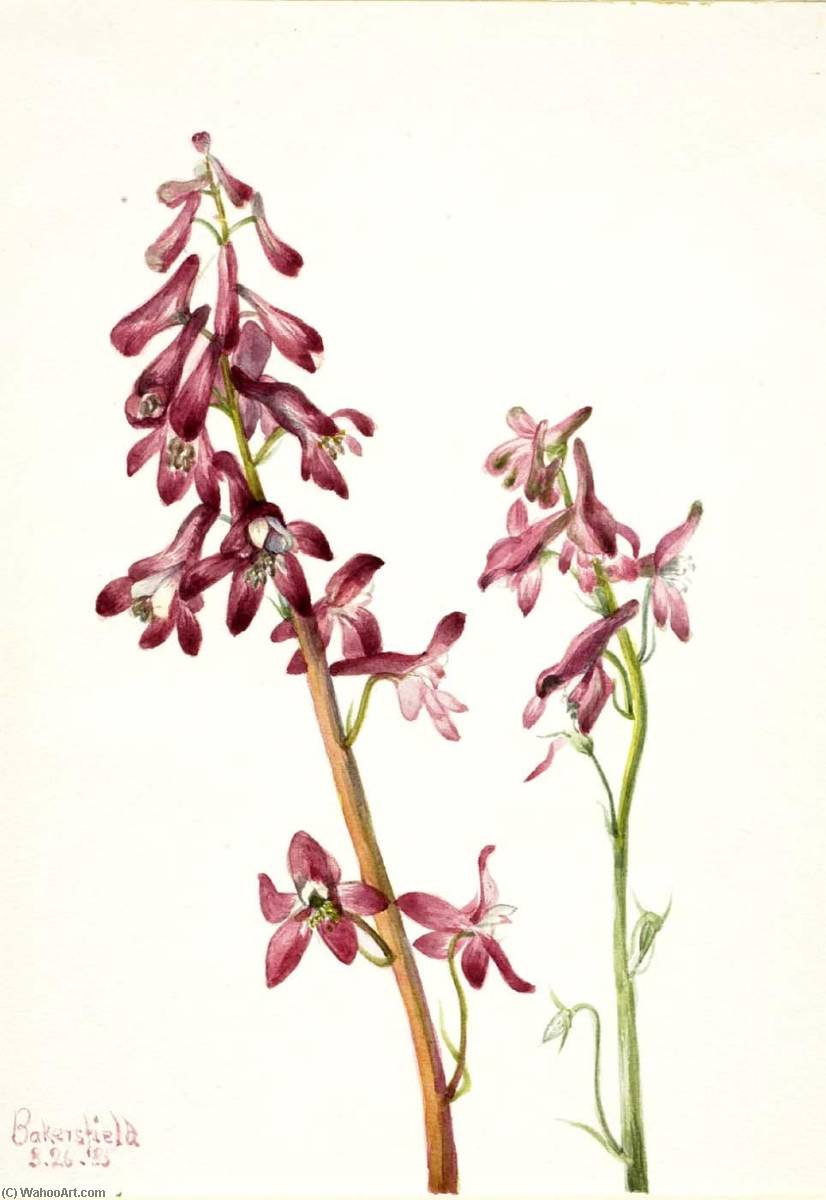
The painting
Red Larkspur (Delphinium nudicale) by
Mary Vaux Walcott is a stunning example of botanical art, showcasing the beauty of nature through delicate and intricate details. Created in 1935, this watercolor on paper piece measures 26 x 18 cm and is currently housed at the
Smithsonian American Art Museum.
Artistic Style and Technique
Mary Vaux Walcott's artistic style is characterized by her use of soft colors and gentle brushstrokes, which bring a sense of serenity to her paintings. In
Red Larkspur (Delphinium nudicale), she employs a range of techniques to capture the texture and color of the flowers, from the delicate petals to the subtle nuances of the stems.
The use of watercolor as a medium allows for a level of transparency and fluidity that is perfectly suited to capturing the ethereal quality of the flowers. As seen in other works by
Mary Vaux Walcott, such as
Delphinium (Delphinium scopulorum) and
Phacelia (Phacelia parryi), her attention to detail and commitment to botanical accuracy are unwavering.
Importance of the Painting
The painting
Red Larkspur (Delphinium nudicale) is not only a beautiful work of art but also an important example of botanical illustration. It highlights the significance of documenting and preserving the natural world through art, a tradition that continues to inspire artists today.
- Botanical accuracy: The painting showcases Mary Vaux Walcott's commitment to accurately depicting the natural world.
- Artistic technique: The use of watercolor and delicate brushstrokes creates a sense of serenity and beauty.
- Historical significance: The painting is an important example of botanical illustration and its role in preserving the natural world.
For more information on
Mary Vaux Walcott and her works, visit /art/list/?Filter=AQSAFQ-Mary-Vaux-Walcott-Red-Larkspur-(Delphinium-nudicale). To explore more artworks and learn about the artists, check out https://ArtsDot.com.