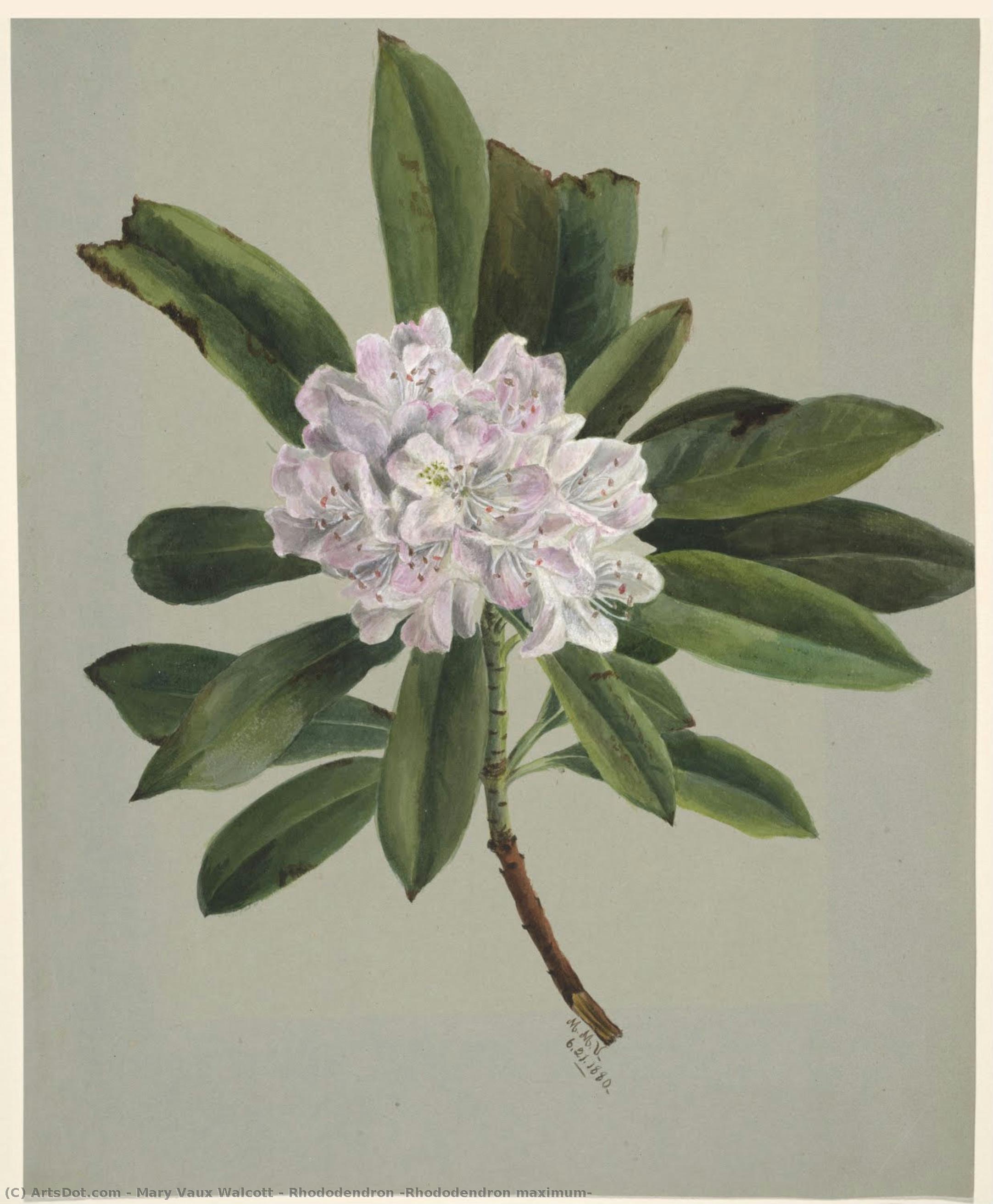
Delicate 1880 watercolor by Mary Vaux Walcott, ‘the Audubon of Botany,’ captures the exquisite beauty of a Rhododendron maximum with layered washes and meticulous detail – a timeless botanical masterpiece to admire or own.
Mary Vaux Walcott (1860-1940) was the "Audubon of Botany," renowned for her exquisite watercolor wildflower paintings and contributions to naturalism. Explore her detailed botanical art!
Discover American art's rich history at the Smithsonian American Art Museum! Explore iconic works, diverse traditions & captivating exhibitions within the Old Patent Office Building.
A Delicate Ode to Rhododendron Beauty: Mary Vaux Walcott’s Botanical Masterpiece
Mary Vaux Walcott, born in Philadelphia's Quaker community in 1860, possessed a spirit that defied convention – a passion for capturing the exquisite subtleties of nature’s artistry. This fascination began early, nurtured by a simple gift: a set of watercolor paints at eight years old, transforming idle curiosity into a lifelong vocation. Her artistic journey wouldn’t be merely about aesthetic pleasure; it would become inextricably linked to scientific observation and an unwavering determination to honor the natural world with unparalleled accuracy. It's this dedication that earned her the deserved moniker “the Audubon of Botany,” cementing her legacy as one of America’s foremost botanical illustrators.
The Botanical Precision of Watercolor Technique
Walcott’s celebrated painting, "Rhododendron (Rhododendron maximum)," exemplifies the meticulous approach characteristic of 19th-century botanical art. Executed in watercolor on paper around 1880, the artwork isn't simply a depiction of a flower; it’s a testament to painstaking scientific observation combined with artistic sensitivity. The artist skillfully employs layering washes of color – a technique honed through years of experience – to build up tonal depth and create subtle gradations that faithfully reproduce the plant’s textures and hues. Fine brushstrokes delicately delineate petal edges and leaf contours, conveying an astonishing level of detail unattainable by other mediums. This dedication to realism speaks volumes about Walcott's commitment to preserving botanical knowledge for future generations.
A Symphony of Color: Purple Hues and Verdant Greens
The painting’s color palette is dominated by shades of purple – ranging from palest lavender to rich violet – mirroring the flower’s captivating blossoms. These hues are juxtaposed with a spectrum of greens, capturing the vibrancy of rhododendron foliage. From pale yellowish-greens to deeper olive tones, each shade contributes to an immersive visual experience. Subtle accents of pink and cream add complexity and luminosity, enhancing the overall impression of natural beauty. The artist's masterful use of color isn’t merely decorative; it serves as a crucial element in conveying the flower’s essence—a symbol of resilience, grace, and the transformative power of observation.
Historical Context: Victorian Era Botanical Illustration
“Rhododendron (Rhododendron maximum)” resides firmly within the Victorian era's fascination with scientific exploration and artistic representation. During this period, botanical illustration flourished as a genre, driven by advancements in microscopy and fueled by a burgeoning interest in classifying and documenting plant species. Artists like Walcott sought to elevate scientific knowledge through aesthetically pleasing artworks, demonstrating that beauty and accuracy could coexist harmoniously. The painting reflects the Victorian ethos of meticulous detail combined with reverence for the natural world—a legacy that continues to inspire artists and collectors alike.
Symbolism Beyond Beauty: Tranquility and Appreciation
Beyond its visual splendor, “Rhododendron (Rhododendron maximum)” carries symbolic weight. The rhododendron itself represents purity, renewal, and enduring beauty – qualities deeply valued during the Victorian era. Walcott’s portrayal captures not only the flower's physical form but also evokes feelings of serenity and gratitude for nature’s magnificence. Like all great art, it invites contemplation—a reminder that even in scientific rigor lies an opportunity to connect with something profoundly beautiful and emotionally resonant.