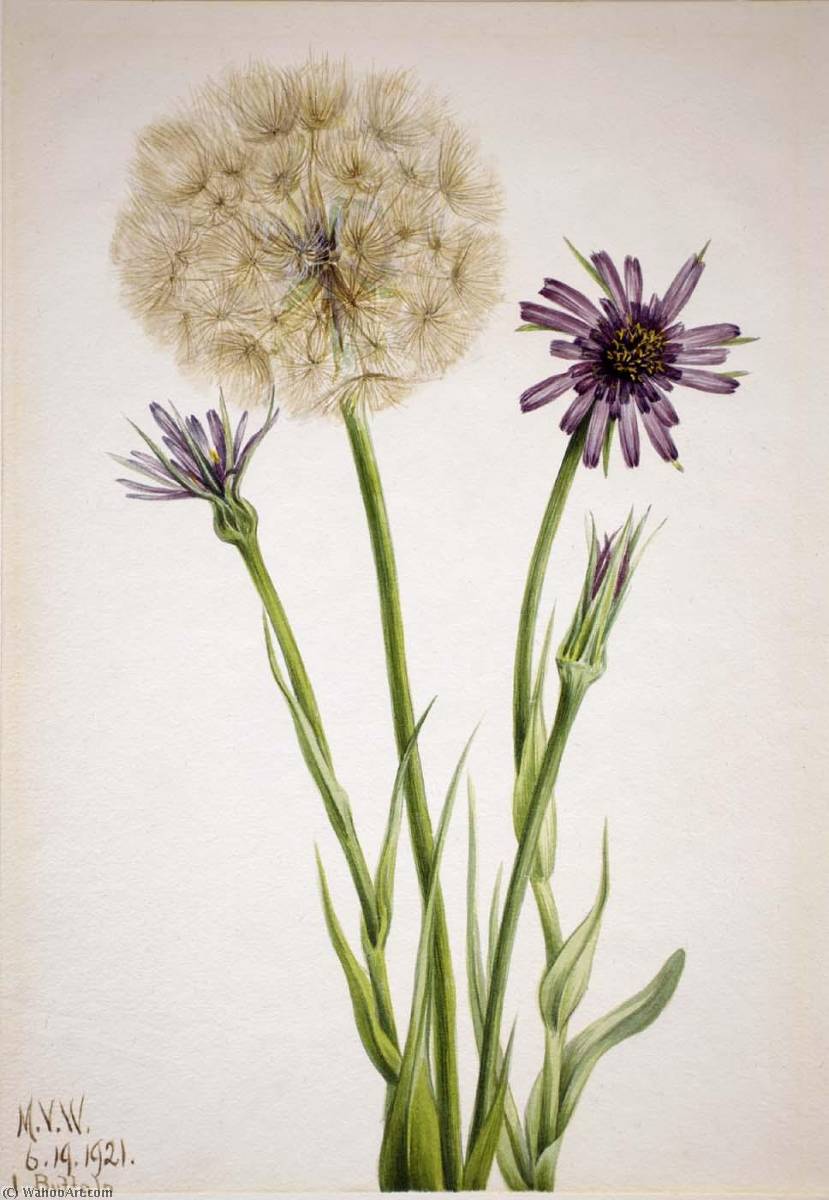
The world of botanical art is filled with intricate details and beautiful representations of nature. One such example is the painting
Salsify (Tragopogon porrifolius) by
Mary Vaux Walcott, a renowned American artist. This captivating watercolor piece, created in 1921, is part of the collection at the
Smithsonian American Art Museum.
A Closer Look at the Painting
The painting measures 26 x 18 cm and showcases three salsify plants in various stages of life. The central focus is a mature seed head, with delicate, light beige and tan seed parachutes radiating outwards. Flanking this are two other plants: one a closed, cool lavender bud, and the other a fully opened, rich purple flower with a dark center. The slender stems and long, narrow leaves are rendered in varying shades of green, creating a sense of depth and vibrancy against the plain, off-white background.
Key Features of the painting include:
- Precise and naturalistic technique, characteristic of botanical illustration
- Delicate brushstrokes capturing subtle variations in color and texture
- Soft, diffused natural light enhancing the overall clarity and precision of the artwork
Artist and Museum
Mary Vaux Walcott was a talented artist who contributed significantly to the genre of botanical art. Her work can be found in various collections, including the
Smithsonian American Art Museum. To learn more about her artwork, visit
Mary Vaux Walcott: Salsify (Tragopogon porrifolius) on ArtsDot.com. For more information about the museum, check out
The Museum San Niccolo al Carmine (Siena, Italy).
The painting
Salsify (Tragopogon porrifolius) by
Mary Vaux Walcott is a beautiful example of botanical art, showcasing the artist's keen observation and artistic skill. With its precise technique and delicate details, this piece is a must-see for anyone interested in the world of botanical illustration. Visit ArtsDot.com to explore more artwork by
Mary Vaux Walcott and other talented artists.