The world of botanical art is a fascinating one, where artists use their skills to capture the beauty and detail of the natural world. One such artist is
Mary Vaux Walcott, a talented watercolorist who created stunning paintings of plants and flowers. One of her notable works is
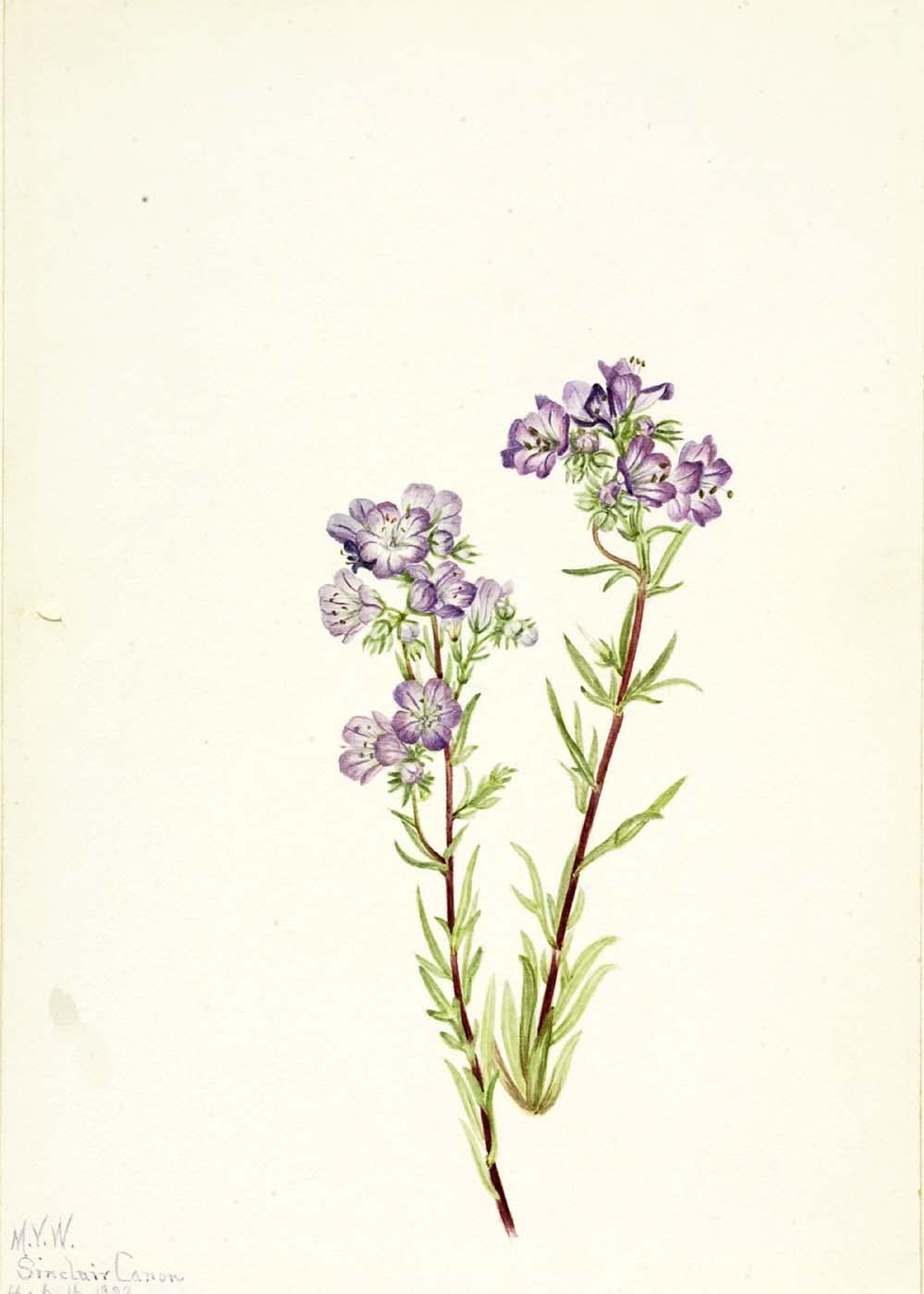
Sand Phacelia (Phacelia linearis), a beautiful watercolor painting that showcases her skill and attention to detail.
The Painting
Sand Phacelia (Phacelia linearis) is a watercolor painting that measures 25 x 18 cm, created in 1923. The painting features two purple flowers with long stems, positioned in the center of the picture, surrounded by green leaves. The painting is signed
Mary Vaux Walcott, indicating that it was created by her. The painting is part of the esteemed collection at the
Smithsonian American Art Museum in the United States.
The Artist
Mary Vaux Walcott was an American artist and botanist, known for her beautiful watercolor paintings of plants and flowers. She was one of the few women artists of her time to gain recognition for her work.
Mary Vaux Walcott was also a talented illustrator, and her work can be found in various publications and collections.
Importance of the Painting
Sand Phacelia (Phacelia linearis) is an important painting because it showcases the beauty of botanical art. The painting highlights the detail and precision that
Mary Vaux Walcott brought to her work, and demonstrates her skill as a watercolorist. The painting is also significant because it is part of the collection at the
Smithsonian American Art Museum, which is one of the most prestigious museums in the United States.
Handmade oil paintings reproductions of
Sand Phacelia (Phacelia linearis) are available on
ArtsDot.com. These reproductions are created by talented artists who use high-quality materials to ensure that the painting is identical to the original.
The beauty of
Sand Phacelia (Phacelia linearis) lies in its intricate details and precise brushstrokes, which showcase the skill and talent of
Mary Vaux Walcott. The painting is a testament to the beauty of botanical art and the importance of preserving our natural world.