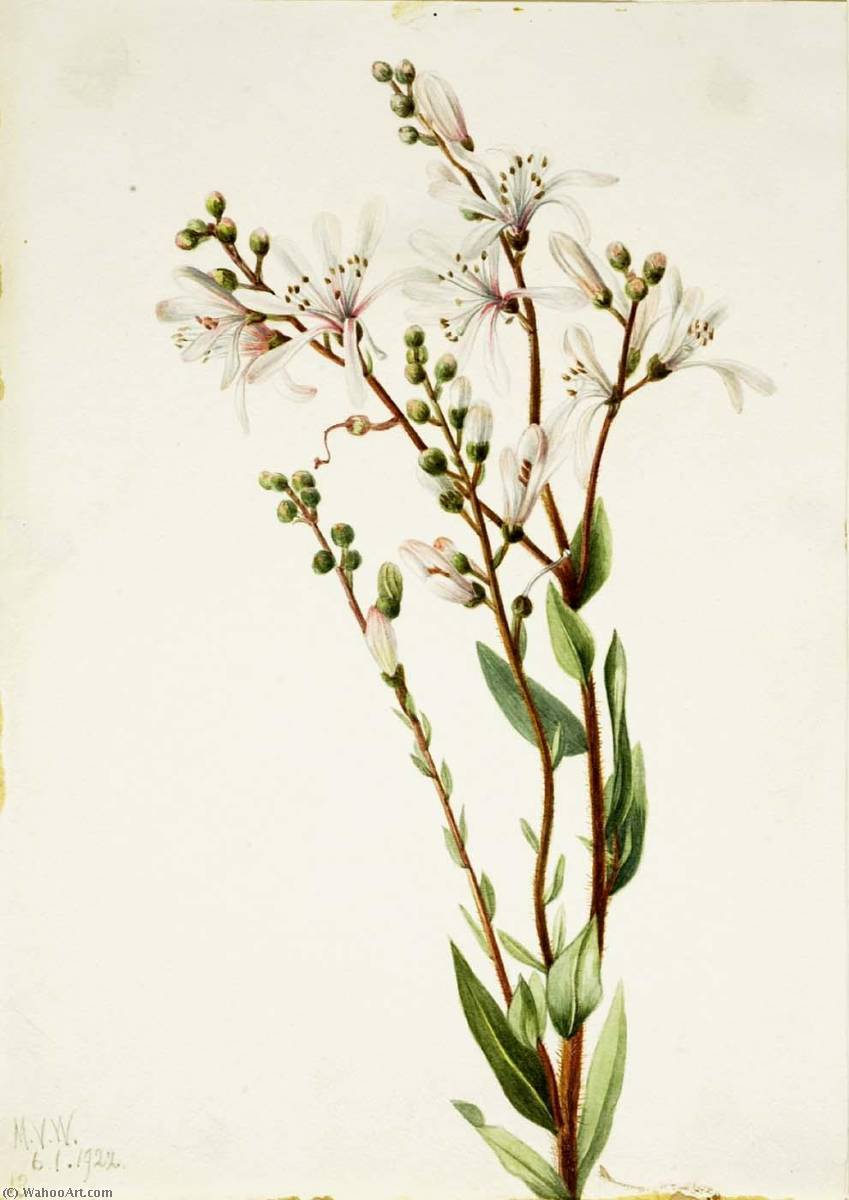
The world of botanical art is a fascinating one, where artists use their skills to capture the beauty and detail of the natural world. One such artist is
Mary Vaux Walcott, a talented watercolor painter who created stunning works of art featuring flowers and plants. Her painting,
Tarflower (Befaria racemosa), is a prime example of her skill and attention to detail.
A Brief Overview of the Artist
Mary Vaux Walcott was an American artist and naturalist known for her watercolor paintings of wildflowers. She has been called the "Audubon of Botany." Born in Philadelphia, Pennsylvania, she took an interest in watercolor painting at a young age and went on to become one of the most renowned botanical artists of her time.
The Painting: Tarflower (Befaria racemosa)
The painting
Tarflower (Befaria racemosa) is a beautiful example of
Mary Vaux Walcott's work. Created in 1922, this watercolor on paper piece measures 25 x 18 cm and is currently housed at the
Smithsonian American Art Museum. The painting features a delicate tarflower plant with white petals and purple stems, set against a backdrop of green leaves.
Key Features of the Painting: - Delicate watercolor technique
- Intricate details of the tarflower plant
- Beautiful color palette
Conclusion
The painting
Tarflower (Befaria racemosa) by
Mary Vaux Walcott is a stunning example of botanical art. With its delicate watercolor technique and intricate details, this painting is a must-see for anyone interested in the natural world. You can view more of
Mary Vaux Walcott's work on
ArtsDot.com and learn more about her life and career on
Wikipedia.
For art lovers and collectors,
Tarflower (Befaria racemosa) is a rare opportunity to own a piece of botanical art history. Visit
ArtsDot.com to explore more artworks by
Mary Vaux Walcott and other renowned artists.