The world of botanical art is a fascinating one, where artists use their skills to capture the beauty and detail of the natural world. One such artist is
Mary Vaux Walcott, an American artist and naturalist known for her stunning watercolor paintings of wildflowers. Her painting,
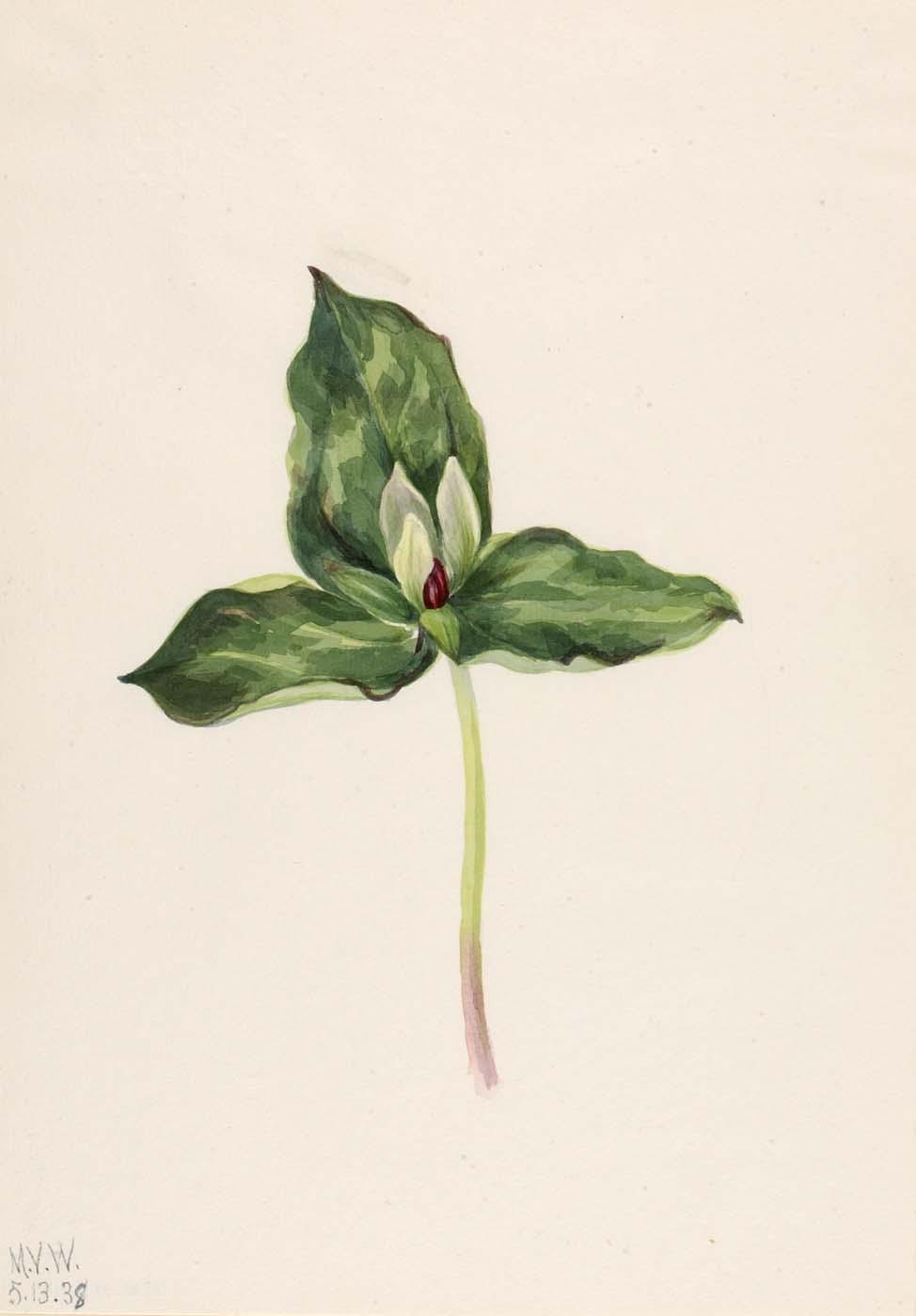
Trillium Discolor, is a prime example of her skill and attention to detail.
A Brief History of the Artist
Mary Vaux Walcott was born in 1860 in Philadelphia, Pennsylvania, to a wealthy Quaker family. She developed an interest in watercolor painting at a young age and went on to become one of the most renowned botanical artists of her time. Her work took her to the Canadian Rockies, where she would spend hours studying and painting the local flora.
The painting
Trillium Discolor is a beautiful example of
Mary Vaux Walcott's skill as a botanical artist. The painting features a delicate trillium flower, surrounded by lush green leaves and stems. The level of detail in the painting is impressive, with each petal and leaf carefully rendered to create a sense of realism.
- The painting is done in watercolor on paper, measuring 26 x 18 cm.
- It was created in 1938 and is now part of the collection at the Smithsonian American Art Museum.
- The painting is a testament to Mary Vaux Walcott's skill as a botanical artist and her ability to capture the beauty of the natural world.
Handmade oil paintings reproductions of
Mary Vaux Walcott's work, including
Trillium Discolor, are available at https://ArtsDot.com. These reproductions are created using the same techniques and materials as the original painting, ensuring that they are of the highest quality.
For more information on
Mary Vaux Walcott and her work, visit https://ArtsDot.com or check out the
Smithsonian American Art Museum's website. You can also learn more about other botanical artists and their work on Wikipedia, including
Mary Vaux Walcott: Trillium Discolor.