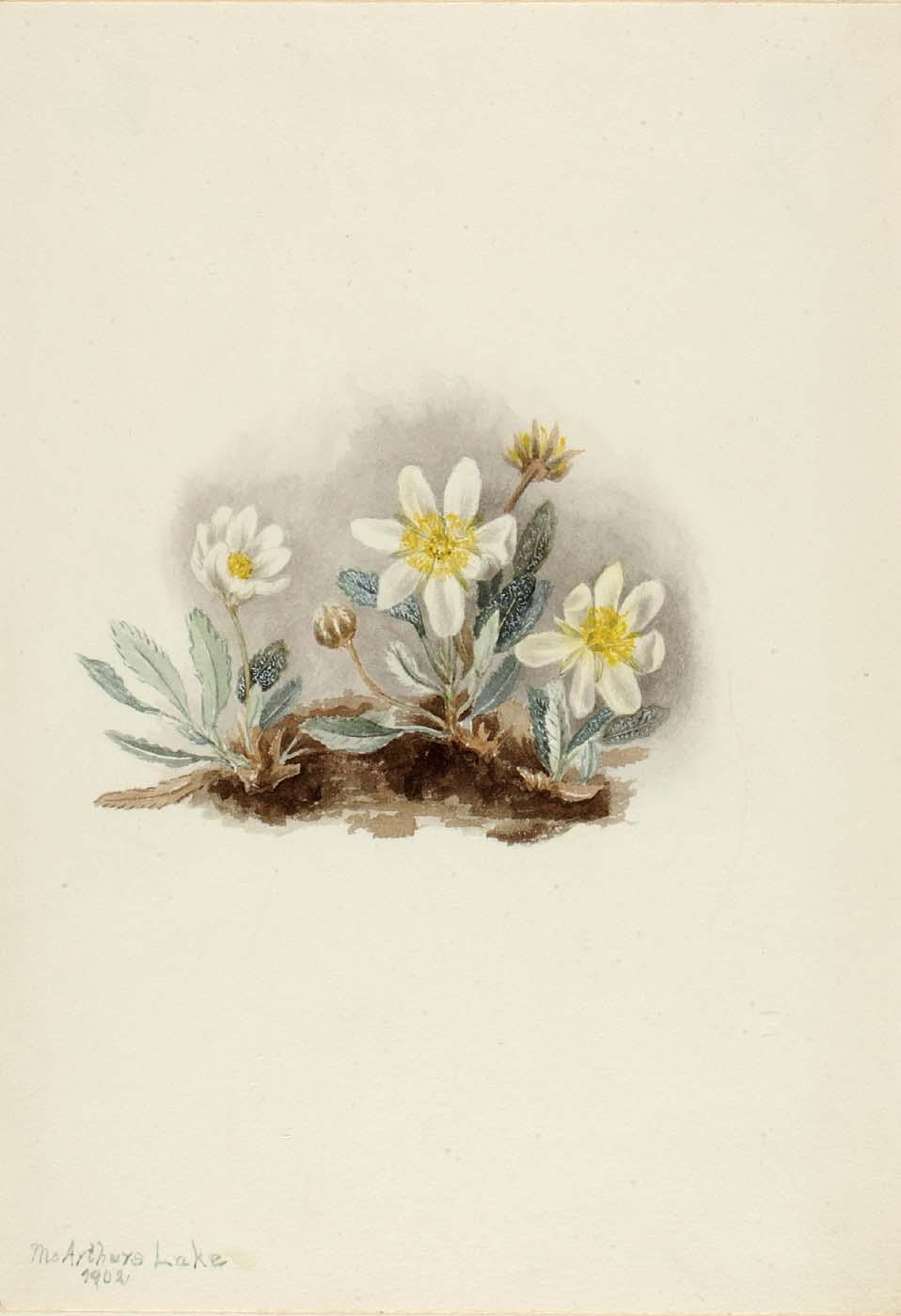
White Dryad (Dryas octopetala): A Botanical Masterpiece
Mary Vaux Walcott's White Dryad (Dryas octopetala), painted in 1902, is a captivating example of botanical art that showcases the delicate beauty and intricate detail found within the natural world. This watercolor on paper measures 25 x 18 cm and resides within the esteemed collection of the Smithsonian American Art Museum. The artwork presents a close-up view of the White Dryad flower (Dryas octopetala), capturing its essence with remarkable precision and artistic grace.
The Artist: Mary Vaux Walcott – "The Audubon of Botany"
Mary Vaux Walcott (1860-1940) was a truly exceptional artist and botanist, celebrated for her meticulous and scientifically accurate depictions of plants and flowers. She earned the affectionate title “the Audubon of Botany,” a testament to her skill in portraying flora with the same dedication and artistry that John James Audubon brought to birds. Born into a wealthy Quaker family in Philadelphia, Walcott’s artistic journey began with watercolor painting. Her passion for botany blossomed during expeditions to the Canadian Rockies alongside her brothers, where she meticulously documented the region's diverse plant life. Her marriage to paleontologist Charles Doolittle Walcott further fueled her scientific pursuits and provided opportunities to contribute significantly to botanical knowledge through her detailed illustrations.
Artistic Technique and Style
White Dryad (Dryas octopetala) exemplifies Walcott’s signature style – a blend of scientific accuracy and artistic sensitivity. The watercolor technique allows for subtle gradations of color and delicate washes, creating a luminous quality that enhances the flower's ethereal beauty. Walcott employed a meticulous approach, carefully rendering each petal, leaf, and stem with precise detail. Notice how she uses layering to create depth and texture within the plant’s structure and the surrounding soil. The composition is tightly cropped, focusing entirely on the subject matter, which emphasizes the intricate details of the flower. This close-up perspective, combined with a flattened sense of space, is characteristic of botanical illustrations that prioritize accurate representation over dramatic spatial effects.
Symbolism and Emotional Impact
While primarily a scientific record, White Dryad (Dryas octopetala) evokes a sense of quiet beauty and reverence for nature. The delicate white flowers symbolize purity and resilience, thriving even in harsh environments like the alpine meadows where the White Dryad is commonly found. The painting’s soft color palette and meticulous detail create a calming and contemplative atmosphere. It invites viewers to appreciate the subtle wonders of the natural world and recognize the artistry inherent within botanical forms. The work serves as a timeless reminder of the importance of observation, documentation, and artistic expression in understanding and celebrating our planet's biodiversity.
Reproductions & Availability
For those who admire White Dryad (Dryas octopetala) and wish to bring its beauty into their own homes or collections, ArtsDot.com offers high-quality, handmade oil painting reproductions of this exquisite artwork. Our skilled artists meticulously recreate Walcott’s original watercolor techniques using premium materials, ensuring that each reproduction captures the essence and charm of the original masterpiece. Alongside White Dryad, explore other stunning botanical works by Mary Vaux Walcott, including Cholla Opuntia whipplei and Mistmaiden (Romanzoffia sitchensis), also available as reproductions.