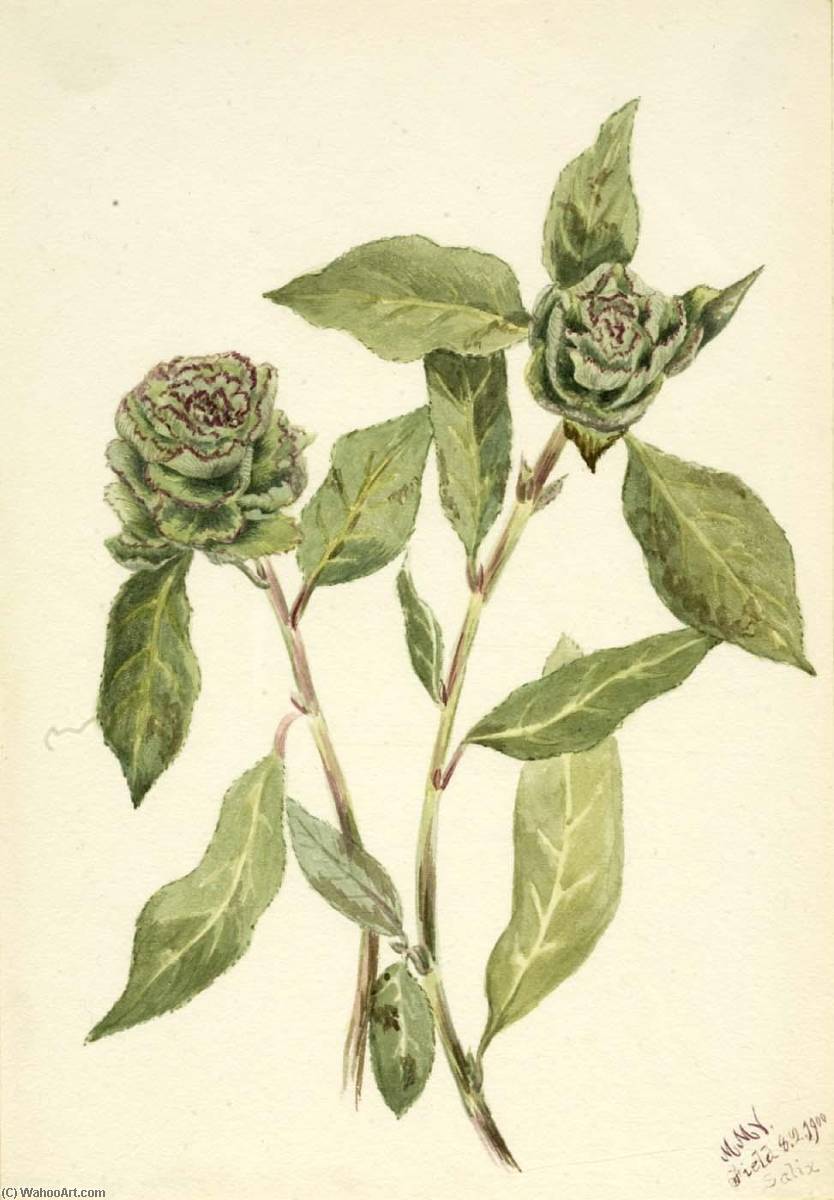
The
Smithsonian American Art Museum is home to a stunning collection of watercolor paintings, including the beautiful
Willow (Salix) by
Mary Vaux Walcott. This delicate piece, created in 1900, showcases the artist's exceptional skill and attention to detail. Measuring 26 x 18 cm, the painting is a masterpiece of botanical illustration, capturing the intricate beauty of the willow flower.
Artist Background
Mary Vaux Walcott was an American artist and naturalist, known for her exquisite watercolor paintings of wildflowers. Born in Philadelphia in 1860, she developed a passion for art and nature from an early age. Her work is characterized by its precision and delicacy, earning her the nickname "the Audubon of Botany." You can find more information about
Mary Vaux Walcott and her artwork on
ArtsDot.com.
Painting Details
The
Willow (Salix) painting is a prime example of
Mary Vaux Walcott's skill as a botanical illustrator. The watercolor technique used in the piece creates a soft, ethereal effect, drawing the viewer's eye to the delicate flowers. The painting is signed by the artist and is part of the permanent collection at the
Smithsonian American Art Museum. To learn more about the museum's collection, visit
ArtsDot.com.
Key Features: The
Willow (Salix) painting is a testament to
Mary Vaux Walcott's talent and dedication to her craft. As a prominent figure in the world of botanical illustration, her work continues to inspire and delight art lovers to this day. For more information on
Mary Vaux Walcott and her artwork, visit
ArtsDot.com.