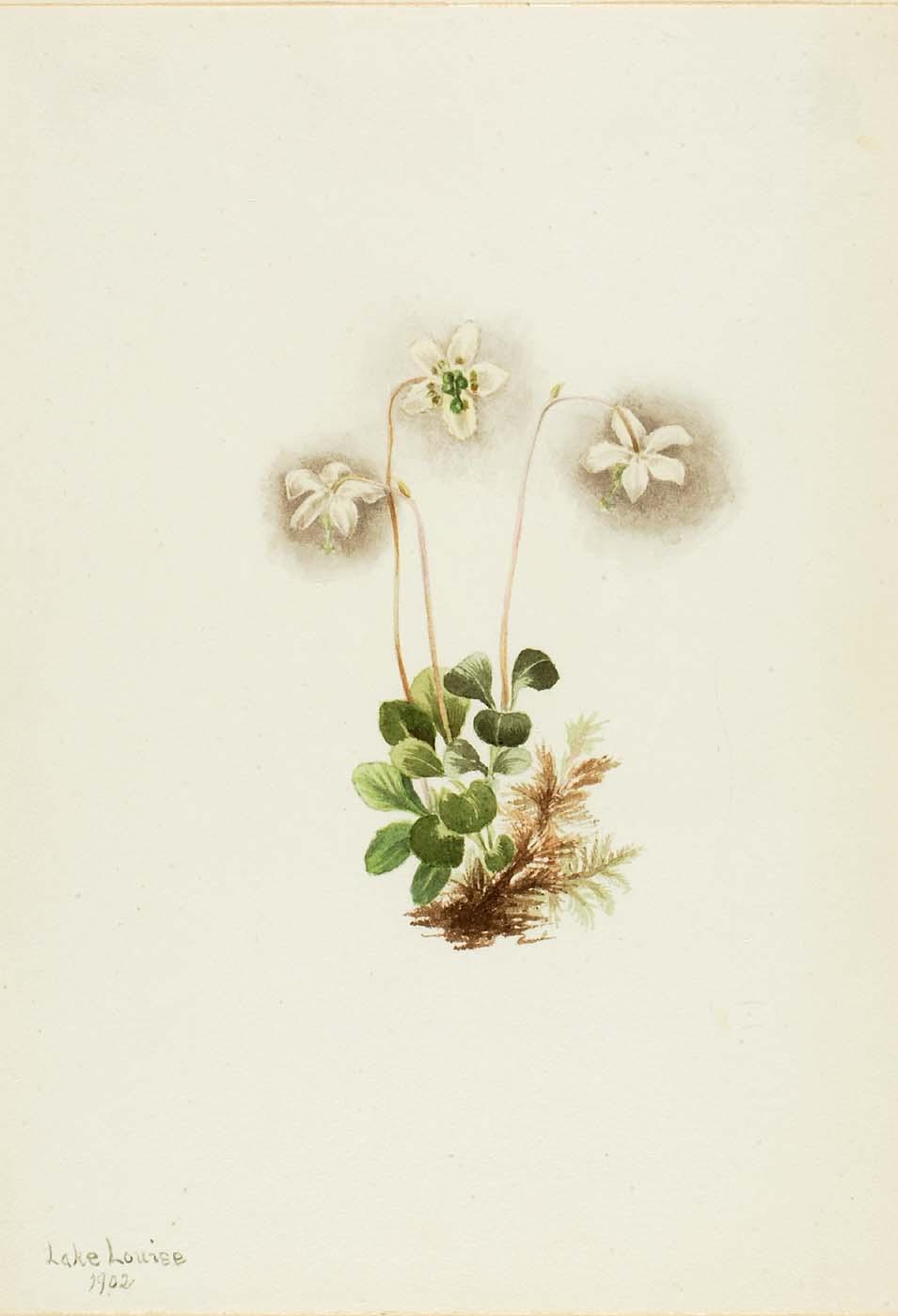
The
Smithsonian American Art Museum is home to a stunning collection of botanical artwork, including the exquisite
Wood Nymph (Moneses uniflora) by
Mary Vaux Walcott. Created in 1902, this watercolor painting showcases the artist's remarkable skill and attention to detail. The delicate white flowers, also known as
Moneses uniflora, are rendered with precision and care, set against a soft beige background.
Artistic Technique and Style
Mary Vaux Walcott's technique is characterized by her use of soft, muted colors and delicate brushstrokes. The painting's composition is simple yet effective, drawing the viewer's eye to the intricate details of the flowers and leaves. The artist's expertise in botanical illustration is evident in the precise rendering of the plant's structure and texture. For more information on
Mary Vaux Walcott's work, visit
ArtsDot.com.
Botanical Significance and Artistic Merit
The
Wood Nymph (Moneses uniflora) is not only a beautiful work of art but also an important example of botanical illustration. The painting provides a detailed and accurate representation of the
Moneses uniflora plant, making it a valuable resource for botanists and naturalists. The artistic merit of the piece lies in its ability to capture the delicate beauty of the natural world, inviting the viewer to appreciate the intricate details of the plant's structure.
- Delicate color palette: The painting features a soft, muted color scheme that adds to its overall sense of delicacy and fragility.
- Precise brushstrokes: The artist's use of precise brushstrokes creates a sense of texture and depth, drawing the viewer's eye to the intricate details of the flowers and leaves.
- Botanical accuracy: The painting provides a detailed and accurate representation of the Moneses uniflora plant, making it a valuable resource for botanists and naturalists.
Handmade oil paintings reproductions of
Wood Nymph (Moneses uniflora) are available on
ArtsDot.com, allowing art lovers to appreciate the beauty of this piece in their own homes.
For more information on the
Smithsonian American Art Museum and its collection, visit
ArtsDot.com.