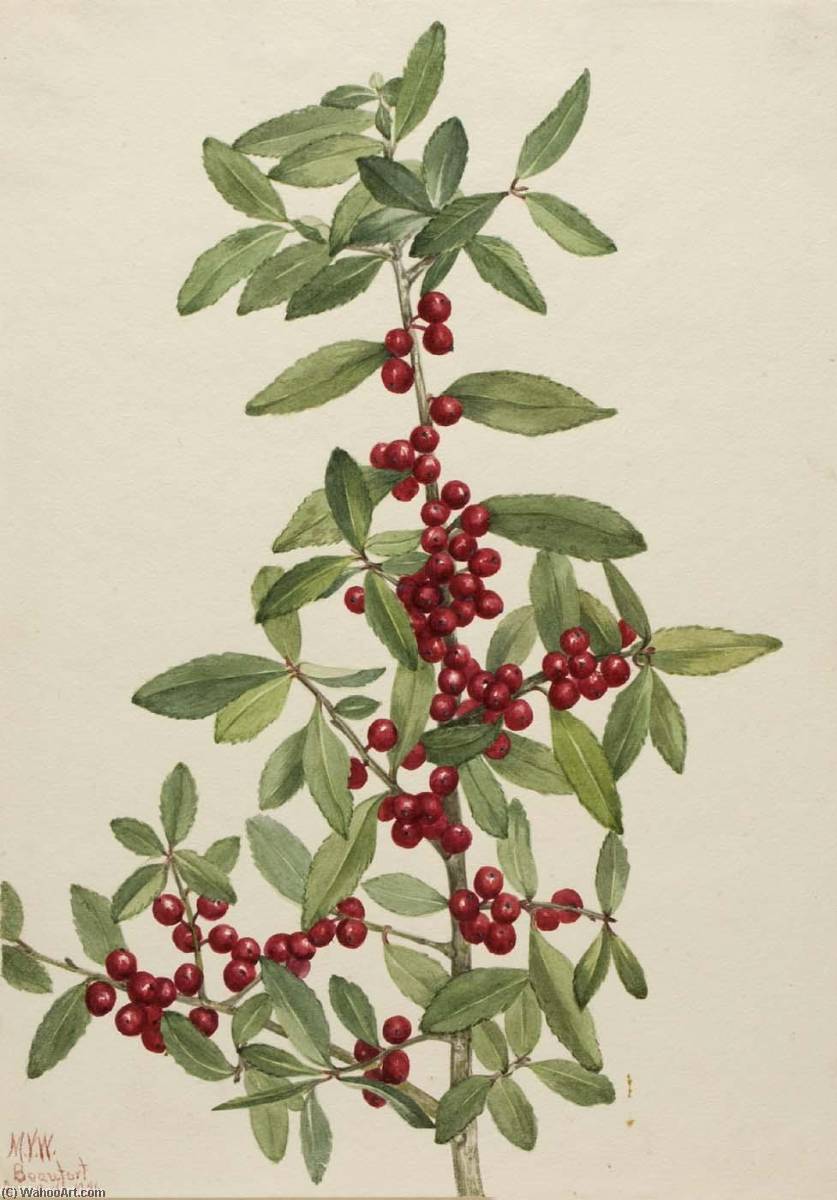
The painting
Yaupon (Ilex Vomitoria) by
Mary Vaux Walcott is a stunning representation of the natural world. Created in 1926, this watercolor on paper piece measures 25 x 18 cm and is currently housed at the
Smithsonian American Art Museum. The artwork showcases the artist's attention to detail and her ability to capture the essence of the plant kingdom.
The Artist's Inspiration
Mary Vaux Walcott was a talented artist and botanist who drew inspiration from the world around her. Her paintings often featured plants and flowers, showcasing their beauty and intricacy. In
Yaupon (Ilex Vomitoria), she has captured the delicate leaves and vibrant red berries of the yaupon tree, creating a sense of depth and dimensionality.
Key Features of the painting include:
- The use of watercolor to create a soft, ethereal effect
- The attention to detail in the rendering of the leaves and berries
- The way the artist has used color to create a sense of depth and dimensionality
The
Smithsonian American Art Museum is home to many of
Mary Vaux Walcott's works, including
Wind Poppy (Stylomecon heterophylla) and
Turtlehead (Chelone glabra). These paintings can be viewed on the
ArtsDot.com website, which offers a wide range of handmade oil painting reproductions.
For those interested in learning more about
Mary Vaux Walcott and her work, the
ArtsDot.com website is a valuable resource. With its extensive collection of artworks and artist biographies, it provides a unique insight into the world of art and the artists who create it.
In conclusion,
Yaupon (Ilex Vomitoria) by
Mary Vaux Walcott is a beautiful representation of the natural world. With its delicate leaves and vibrant red berries, it is a testament to the artist's skill and attention to detail. Whether viewed in person at the
Smithsonian American Art Museum or online through
ArtsDot.com, this painting is sure to inspire and delight all who see it.