The painting
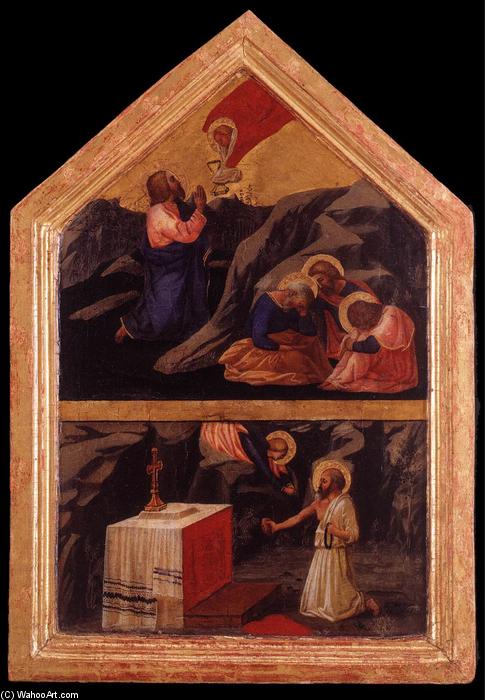
Christ in the Garden of Gethsemane is a renowned work by the Italian artist Masaccio, created in 1424. This tempera painting, measuring 62 x 44 cm, is housed at the Lindenau-Museum in Altenburg, Germany. It is a significant example of early Renaissance art, showcasing Masaccio's skillful use of naturalistic proportions and human anatomy.
Artistic Style and Composition
The painting's style is characteristic of the early Renaissance period, with a focus on realism and human emotion. The composition is divided into two distinct sections, each depicting a different scene from the biblical narrative. The upper section features a group of figures engaged in a spiritual activity, while the lower section presents an intimate moment between Christ and another figure.
Key Features of the painting include:
- The use of light and shadow to create depth and volume
- The attention to detail in the figures' expressions and postures
- The incorporation of symbolic elements, such as the altar-like structure
Artist and Historical Context
Masaccio was a prominent artist of the early Renaissance, known for his innovative use of perspective and human anatomy. His work had a significant influence on later artists, including
Master Of The Nenkerdorf Retable. The Lindenau-Museum, where the painting is housed, is part of the
Staatliche Museen zu Berlin group, which holds an extensive collection of European paintings from the 13th to the 18th centuries. BR> For more information on Masaccio and his works, visit
ArtsDot.com, which offers handmade oil painting reproductions of famous artworks, including
Christ in the Garden of Gethsemane.