Masaccio's 'The Virgin and Child Enthroned,' part of the Pisa Altarpiece, revolutionized Renaissance art with pioneering realism, perspective, and chiaroscuro—a masterpiece showcasing divine grace and human anatomy.
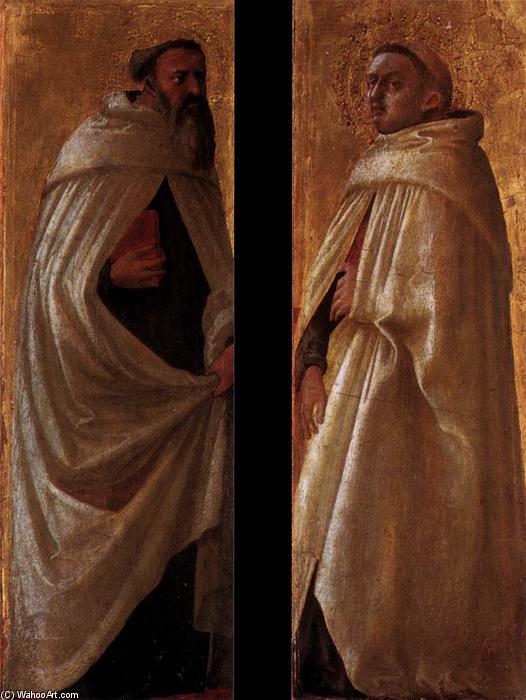
Two Panels from the Pisa Altarpiece
Masaccio’s “Two Panels from the Pisa Altarpiece,” completed in 1426, stands as a cornerstone of Renaissance art—a testament to innovation and an embodiment of humanist ideals. Commissioned for Santa Maria del Carmine in Pisa by Ser Giuliano degli Scarsi, this monumental polyptych wasn't merely decorative; it was conceived as a profound meditation on faith and divine grace.
- Subject Matter: The panels depict two figures—a man and a woman—engaged in an intimate gesture of contemplation. Their postures convey serenity and solemnity, reflecting the spiritual fervor characteristic of the era.
- Style & Technique: Masaccio’s masterful use of linear perspective revolutionized painting, creating an illusion of depth that had previously been unattainable. He achieved this through meticulous observation of geometry and shading—a technique honed by his apprenticeship with Donatello—resulting in remarkably realistic depictions of human anatomy and drapery. The egg tempera medium employed ensured exceptional luminosity and vibrancy, capturing the subtleties of light and shadow with unparalleled accuracy.
- Historical Context: Masaccio’s work emerged during a period of artistic ferment fueled by renewed interest in classical antiquity and humanist scholarship. He drew inspiration from Roman sculpture and architectural principles, reflecting the broader cultural transformation occurring across Europe. The altarpiece itself represents a deliberate departure from Gothic conventions, signaling a shift towards a more naturalistic aesthetic.
- Symbolism: The figures’ gaze—one man looking at the other—suggests dialogue and contemplation—a reflection of theological discussions about God's presence in human life. The drapery folds are rendered with painstaking detail, demonstrating Masaccio’s commitment to portraying reality faithfully.
The emotional impact of “Two Panels from the Pisa Altarpiece” is palpable. It transcends mere visual representation, inviting viewers into a realm of spiritual contemplation and conveying a sense of profound solemnity. Masaccio's achievement lies not only in his technical prowess but also in his ability to capture the essence of human experience—a feat that continues to inspire artists and captivate audiences centuries later.