The
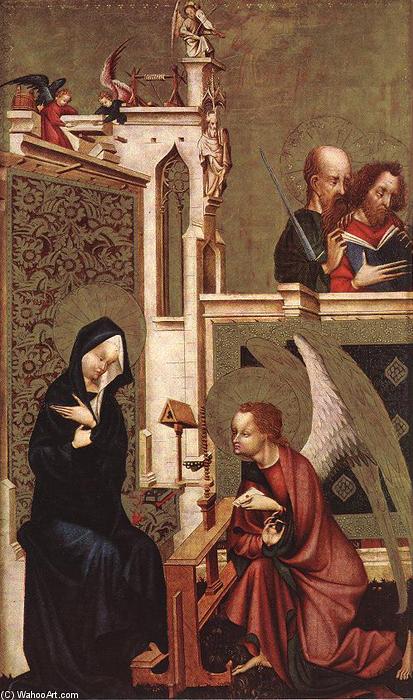
Master of Heiligenkreuz was an Austrian painter active at the beginning of the 15th century, and his work, Annunciation, is a prime example of Gothic art. This painting, dated to around 1410, is a testament to the artist's skill and attention to detail. The scene depicts the Archangel Gabriel announcing to the Virgin Mary that she will conceive Jesus Christ.
Composition and Symbolism
The composition of the painting is characterized by the use of
gold decoration and intricate details, which were typical of the International Style. The figures in the painting are proportioned with long, thin limbs and fingers, giving them an otherworldly appearance. The
Kunsthistorisches Museum in Vienna, where the painting is housed, provides a fitting backdrop for this masterpiece.
Artistic Style and Influences
The
Master of Heiligenkreuz's style is distinguished by his use of
Gothic decorative elements, which were influenced by the Franco-Burgundian goldsmith's work of the late 14th century. Some art historians have also suggested that he may have been trained in France or active at the court in Prague. The painting's style is reminiscent of other works from the same period, such as
Jacopo Di Cione's
The Annunciation and
Niccolò Di Pietro Gerini's
Virgin and Child.
The Annunciation by the
Master of Heiligenkreuz is a significant work of art that showcases the artist's skill and attention to detail. Its composition, symbolism, and artistic style make it a must-see for anyone interested in Gothic art. As a handmade oil painting reproduction, it can be appreciated in a new light, allowing viewers to experience the beauty and intricacy of this masterpiece up close.