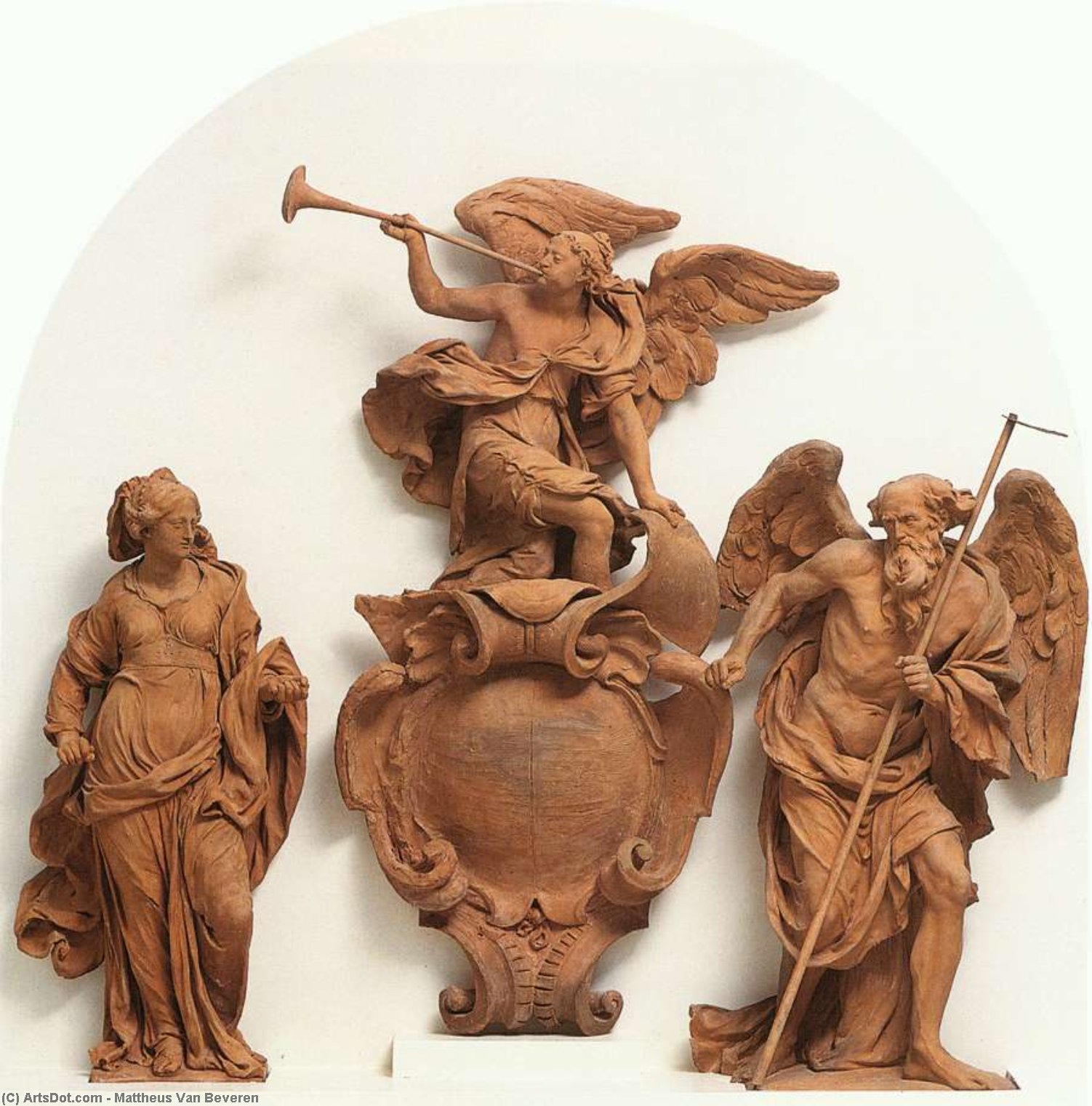
A Grand Meditation on Mortality: The Funeral Monument of Lamoral
To stand before the painted vision of the Funeral Monument of Lamoral is to be enveloped in the dramatic sweep of the Baroque era, a moment when life and death were treated with equal grandeur. Mattheus van Beveren’s masterful depiction from 1678 does not merely record an event; it captures a profound philosophical confrontation—the passage from earthly existence into eternal contemplation. The composition itself is a breathtaking tapestry woven from religious fervor and sculptural drama, inviting the viewer to contemplate their own journey through time.
Baroque Drama and Iconographic Detail
The scene unfolds with an almost theatrical intensity, characteristic of Flemish Baroque art. At its heart stands the central figure, perhaps representing the soul or the deceased, flanked by symbolic attendants that guide the narrative. To the left, a figure raises a trumpet, whose sound seems to pierce the very silence of the canvas, announcing a momentous transition. Opposite, on the right, another attendant bears a cross, the ultimate symbol of sacrifice and resurrection. These earthly pillars are overseen by two ethereal angels; one hovering above the central drama, and another positioned to the side, their presence lending an air of divine witness to the proceedings. The entire arrangement is set against a stark white background, a deliberate artistic choice that strips away distraction, forcing the eye—and the spirit—to focus solely on the weight of the symbolism.
The Hand of Mattheus van Beveren
Mattheus van Beveren, working in Antwerp during the late 17th century, was a sculptor whose genius translated seamlessly onto canvas. His deep understanding of monumental form and dramatic gesture is evident here. While his primary medium was sculpture, this painting showcases his ability to imbue painted figures with the same weighty physicality and emotional resonance found in carved marble. The technique employed suggests an exquisite attention to drapery, musculature, and the subtle interplay of light across polished surfaces—qualities that make a reproduction by ArtsDot so compelling for any collector or designer seeking authentic Baroque grandeur.
Symbolism and Emotional Resonance
This monument is rich with layers of meaning. The trumpet calls not just an end, but a calling; the cross points toward redemption. It speaks to the universal human anxiety surrounding loss, yet frames that anxiety within a structure of divine promise. Owning or displaying a reproduction of this piece is to invite a conversation about eternity into your space. It is art that demands reverence, transforming a wall from mere backdrop into a locus for deep, soulful reflection.
A Timeless Statement Piece
For the discerning collector, this work offers more than just aesthetic beauty; it offers historical narrative and spiritual depth. Its scale (73 x 89 cm) makes it an ideal focal point for a grand hall, library, or chapel-inspired interior design scheme. It is a piece that whispers of Antwerp’s artistic zenith, allowing modern sensibilities to connect with the powerful emotional currents of the Counter-Reformation art movement.