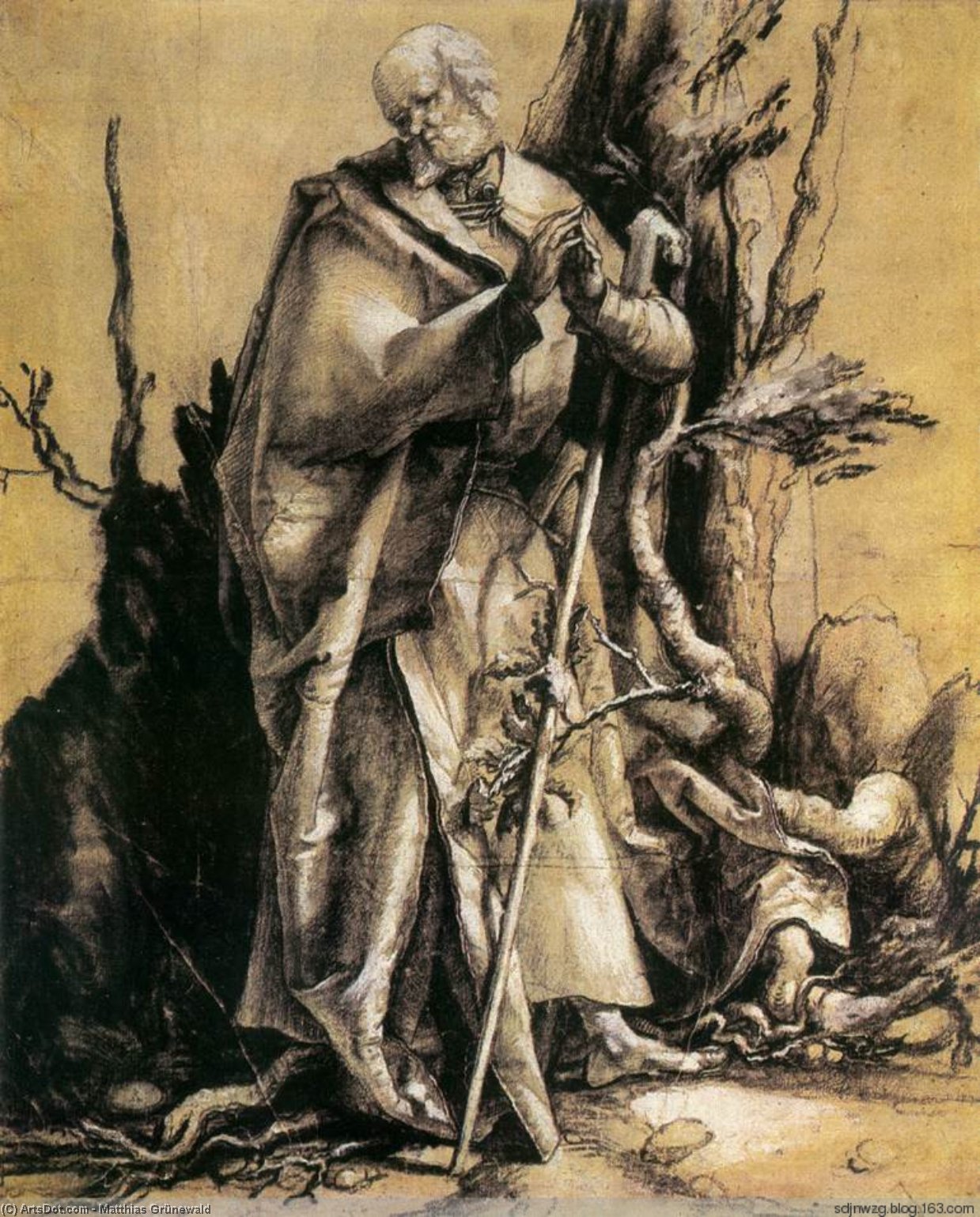
The Solitude of Scripture: Contemplating St John in the Forest
To stand before Matthias Grünewald’s depiction of St John in the Forest is to step across the threshold into a world steeped in profound contemplation. This monumental work, dating from 1515, does more than merely portray a biblical scene; it captures a moment suspended between earthly solitude and divine revelation. The composition immediately draws the eye to St. John the Baptist, whose downward gaze suggests an inner dialogue—a man wrestling with scripture amidst the quiet grandeur of nature. He stands anchored by his staff, a symbol both of pilgrimage and spiritual authority, while the surrounding forest, rendered with Grünewald’s characteristic intensity, seems to breathe with untold narratives.
A Tapestry of Northern Renaissance Emotion
Grünewald remains one of the most emotionally charged figures of the German Renaissance. While the Italian masters were embracing classical balance, Grünewald remained deeply rooted in the visceral realism and spiritual fervor of late medieval Central Europe. His technique eschews polished idealism for raw, palpable feeling. Observe the interplay between the figures—St. John at the center, flanked by companions whose presence adds layers to the mystery. The background is not merely scenery; it is an active participant in the drama, a brooding mix of gnarled trees and rugged rock formations that amplify the sense of isolation and deep thought.
Symbolism Woven into the Landscape
The forest setting itself is rich with symbolic weight. In art history, wilderness often represents the liminal space—the place where civilization ends and spiritual reckoning begins. St John, traditionally associated with asceticism and pointing toward a purer path, embodies this boundary. The presence of multiple figures suggests that while each soul walks its own solitary path, they are all connected by the overarching current of faith. Grünewald masterfully uses light and shadow not just for drama, but to guide our understanding of these spiritual encounters.
Bringing Sacred Depth Home
For the collector or designer seeking an anchor of profound artistry, this piece offers unparalleled depth. Reproducing such a monumental work allows one to integrate Grünewald’s dramatic spirituality into a modern space. The intensity and rich tonality captured in high-quality reproductions allow the viewer to feel the weight of the 16th century's devotion. It is an artwork that demands slow viewing, rewarding the observer with layers of meaning—a powerful focal point for any room meant for reflection, study, or quiet gathering.