A Surreal Echo of Isolation
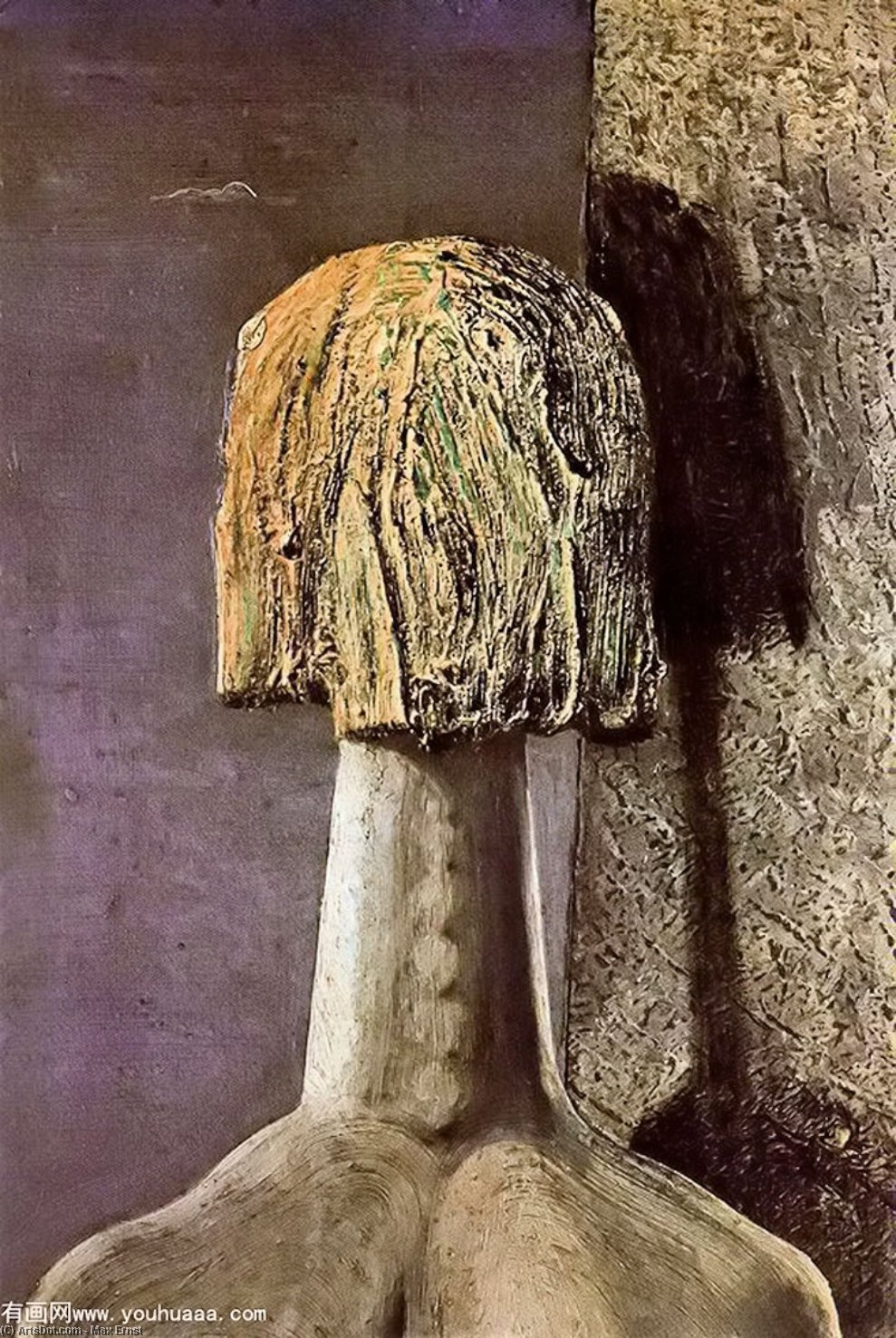
In the hauntingly beautiful landscape of Max Ernst’s 1925 masterpiece, “Eve, The Only One Left to Us,” we are invited to step beyond the threshold of rational reality and into a dreamscape defined by profound psychological depth. This oil painting, measuring a delicate 50 x 35 cm, serves as more than a mere visual representation; it is a visceral meditation on vulnerability and the lingering presence of primal instinct. At first glance, the viewer is confronted by an unsettlingly singular figure—a head with an elongated neck that appears sculpted from clay or some primordial earth. Positioned against a stark, deep blue wall, the composition creates a sense of profound solitude, as if we are witnessing the very last remnant of life in a silent, cosmic void.
The painting’s power lies in its ability to evoke an immediate emotional response, blending a sense of eerie stillness with an underlying tension. For the collector or the interior designer, this piece offers a sophisticated focal point that commands attention through its mystery rather than through overt spectacle. It is a work that does not merely sit upon a wall but breathes with the restless energy of the subconscious, making it an ideal selection for spaces designed for contemplation, intellectual stimulation, or avant-garde elegance.
The Alchemy of Surrealist Technique
To understand the impact of this work, one must look to the revolutionary techniques Ernst pioneered during his tenure within the Dada and Surrealist movements. Rejecting the rigid anatomical accuracy and traditional perspectives of the past, Ernst sought to liberate imagery from the constraints of conscious control. In “Eve, The Only One Left to Us,” he utilizes a method that feels both tactile and ethereal. The texture of the central figure suggests the use of grattage or frottage—techniques where paint is scraped or rubbed to reveal hidden textures and organic imprints.
This deliberate manipulation of surface creates a sense of "unsettling beauty," where the boundaries between the human form and inanimate matter begin to dissolve. The way the light interacts with the seemingly clay-like substance of the head adds a sculptural dimension to the canvas, inviting the eye to wander over its strange, undulating contours. This mastery of texture ensures that the painting remains visually captivating from every angle, offering a rich, sensory experience that rewards prolonged observation.
A Legacy of Psychological Depth
The historical context of this piece is deeply intertwined with the intellectual ferment of post-war Europe. Influenced by the psychoanalytic theories of Sigmund Freud and the philosophical provocations of Nietzsche, Max Ernst used his art to explore the repressed layers of the human psyche. The title itself, suggesting a solitary survivor, evokes themes of loneliness, survival, and the primal origins of humanity. The figure of Eve becomes a symbol of both the beginning and the end—a haunting reminder of our shared biological and psychological roots.
For those seeking to adorn their homes or galleries with art that tells a story, this reproduction offers an unparalleled opportunity to possess a fragment of art history. It is a piece that transcends decoration, acting as a portal into the labyrinthine corridors of the human mind. Whether placed in a modern minimalist setting or a classic study, “Eve, The Only One Left to Us” brings with it an aura of intellectual prestige and a timeless, evocative mystery that continues to captivate the modern soul.