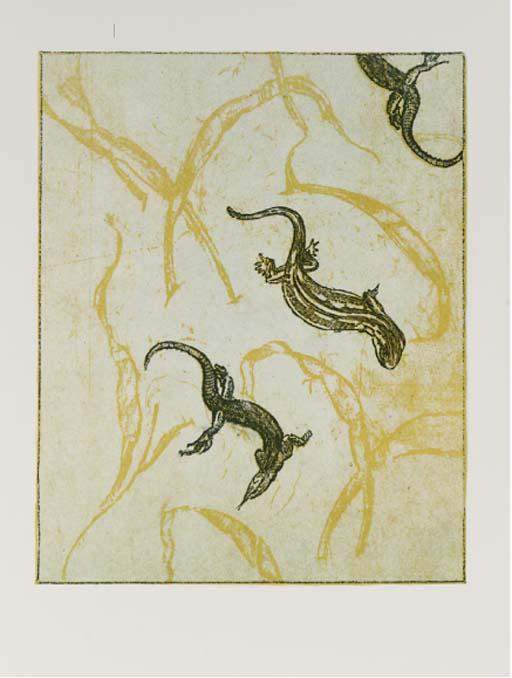
Delve into the captivating world of 'La Ballade du Soldat,' Max Ernst's iconic lithograph featuring lizards on a wall—a testament to his innovative frottage and grattage methods, reflecting his profound engagement with philosophical ideas and artistic experimentation. Discover its significance within Surrealist art history.
A Visionary Encounter with Surrealism – Max Ernst’s “La Ballade du Soldat”
Max Ernst’s “La Ballade du Soldat,” created in 1972, stands as a testament to the enduring power of surrealist imagination. More than just a depiction of lizards inhabiting a wall—though that visual element is undeniably striking—the artwork embodies Ernst's profound engagement with psychological landscapes and philosophical questioning. It’s a piece that invites contemplation, prompting viewers to consider themes of vulnerability, resilience, and the hidden narratives residing within seemingly simple forms.
The Technique: Frottage and Grattage – Embracing Chance
Ernst's distinctive approach to artistic creation—characterized by his pioneering techniques of frottage and grattage—was central to his surrealist vision. Frottage involves transferring textures from objects onto paper using pencil rubs, a method that deliberately disrupts rational control and introduces an element of serendipity. In “La Ballade du Soldat,” Ernst meticulously applied this technique to canvas, layering impressions of stone and other surfaces beneath the paint—a deliberate act designed to liberate subconscious imagery.
Symbolism Within Texture: Lizards as Embodiments of Resilience
The lizards themselves are not merely decorative elements; they function as potent symbols within the artwork. Ernst’s fascination with reptiles stemmed from their perceived ability to endure harsh conditions—a metaphor for human resilience in the face of adversity. Their varied postures—some standing tall, others scrambling across the wall—represent different facets of perseverance and adaptability. The lizards' presence underscores a broader consideration of vulnerability alongside strength.
Historical Context: Dada and Beyond – Challenging Artistic Conventions
“La Ballade du Soldat” emerged from the fertile ground of Dadaism, an artistic movement born out of disillusionment with the horrors of World War I. Dada artists rejected logic and reason, prioritizing spontaneity and absurdity as tools for critique. Ernst’s embrace of unconventional methods—like frottage—was a direct challenge to established artistic norms—a defiant assertion of individual expression against societal pressures. This rebellious spirit aligns perfectly with the Dada ethos.
Emotional Resonance: A Quiet Intensity – Capturing Inner Landscapes
Despite its seemingly understated aesthetic, “La Ballade du Soldat” possesses a remarkable emotional depth. The muted palette—primarily earthy tones—contributes to an atmosphere of contemplative stillness. However, the dynamic arrangement of the lizards and the bird creates visual tension, mirroring the internal struggles inherent in confronting existential questions. Ultimately, Ernst’s artwork invites viewers into a realm of psychological exploration—a journey toward understanding the complexities of human experience.