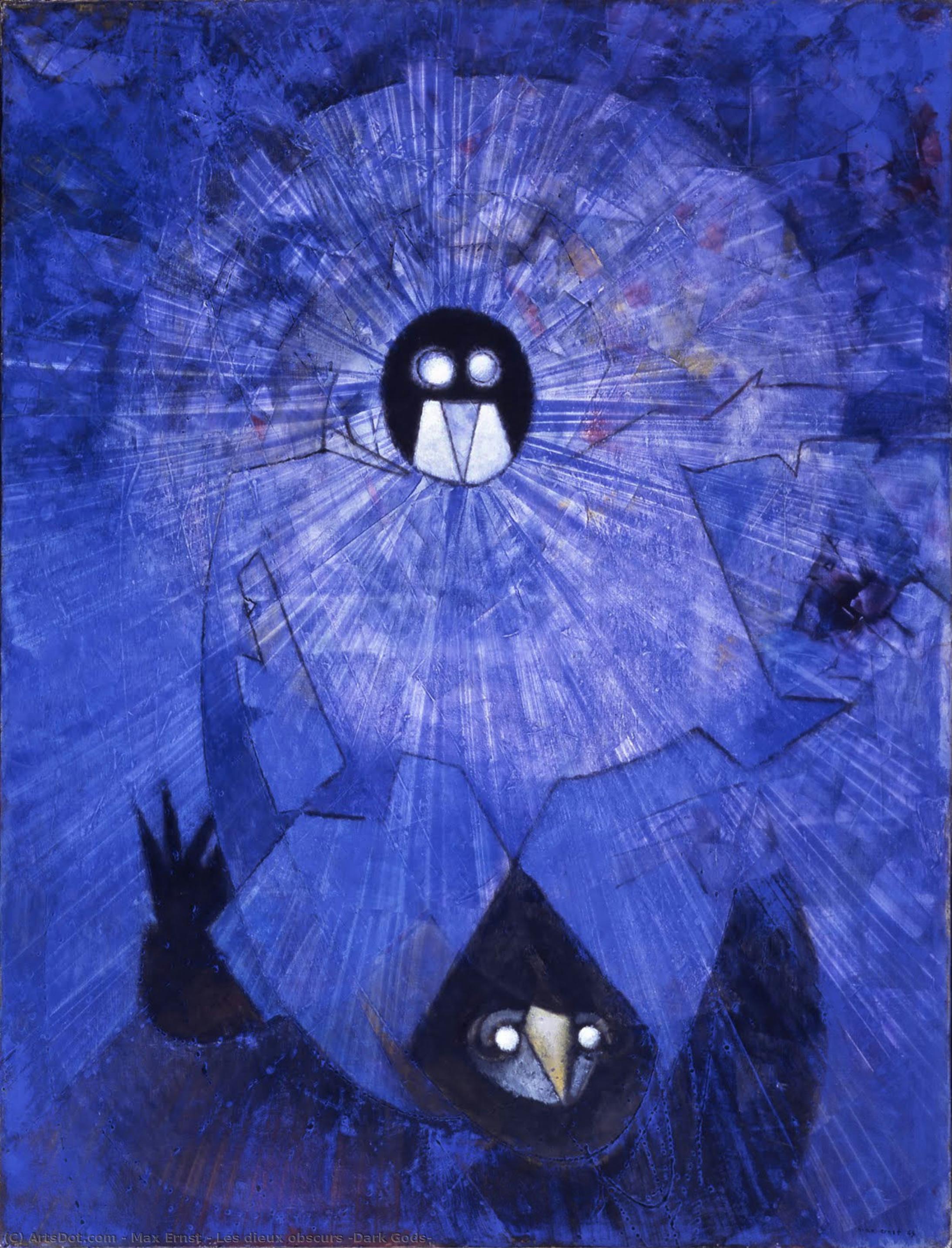
A Realm of Shadow and Form: Exploring Max Ernst’s ‘Les dieux obscurs’
This captivating work by Max Ernst, titled *Les dieux obscurs* (Dark Gods), plunges the viewer into a surreal landscape brimming with psychological weight. The painting exemplifies Ernst's pivotal role in both Dadaism and Surrealism, movements dedicated to challenging artistic conventions and exploring the depths of the unconscious mind.
Subject & Composition
The composition centers around two distinct yet interconnected figures. A colossal, shadowy form dominates the scene – vaguely humanoid but rendered with an unsettling ambiguity. Its prominent eyes suggest a watchful, perhaps even oppressive presence. Beneath this looming entity resides a smaller, bird-like figure, seemingly vulnerable and dwarfed by its counterpart. Radiating lines emanate from the larger figure, creating a dynamic sense of expansion or outward force, while simultaneously emphasizing a feeling of confinement within the canvas’s vertical orientation. The layering of shapes and directional lines contribute to a strong sense of depth and unease.
Style & Technique
*Les dieux obscurs* is deeply rooted in Expressionism, yet transcends simple categorization through Ernst's unique stylistic blend. He masterfully employs oil paint on canvas, utilizing visible brushstrokes and textural variations – from thick *impasto* to smoother blended areas – to create a rich visual experience. The interplay of geometric and organic shapes adds to the work’s chaotic energy, mirroring the turbulent inner world often explored in Surrealist art. The diffuse lighting and dramatic shadows further heighten the emotional impact.
Historical Context & Symbolism
Max Ernst (1891-1976) was a restless innovator who experimented with various techniques throughout his career, including *frottage* and collage. His work frequently draws upon mythology, dreams, and personal anxieties. The title itself, “Dark Gods,” hints at primal forces or archetypal figures lurking beneath the surface of consciousness. The bird-like figure could symbolize fragility, freedom, or perhaps a connection to the spiritual realm – often recurring motifs in Ernst’s oeuvre. Considering his experiences with war and societal upheaval, it's plausible to interpret this work as an exploration of power dynamics, vulnerability, and the darker aspects of human nature.
Emotional Impact & Interpretation
The overall emotional tone is melancholic and slightly ominous. The painting evokes a sense of mystery and invites contemplation on themes of control, submission, and the unknown. It’s a work that doesn't offer easy answers but instead encourages viewers to confront their own subconscious associations and interpretations.
For collectors, *Les dieux obscurs* represents a significant example of Ernst’s mature style.
Interior designers might find its dramatic palette and evocative imagery ideal for creating a focal point in a modern or eclectic space, adding depth and intrigue to any room. The painting's enduring power lies in its ability to resonate with viewers on a deeply personal level, prompting introspection and sparking the imagination.
Key Characteristics
- Movement: Surrealism & Dada
- Medium: Oil on Canvas
- Dominant Colors: Deep Blues & Blacks
- Themes: Power, Vulnerability, The Unconscious, Mythology
- Emotional Tone: Melancholic, Ominous, Mysterious