Explore the surrealist worlds of Max Ernst, Yves Tanguy & Urs Fischer. Swiss artist Urs Fischer creates playful sculptures, photography & more – discover his unique vision.
Explore the surreal world of Max Ernst (1891-1976), a Dada & Surrealism pioneer! Discover his innovative frottage, collages & dreamlike paintings featuring birds, landscapes & psychological themes. #MaxErnst #Surrealism #Dada
A Subversive Encounter with the Divine
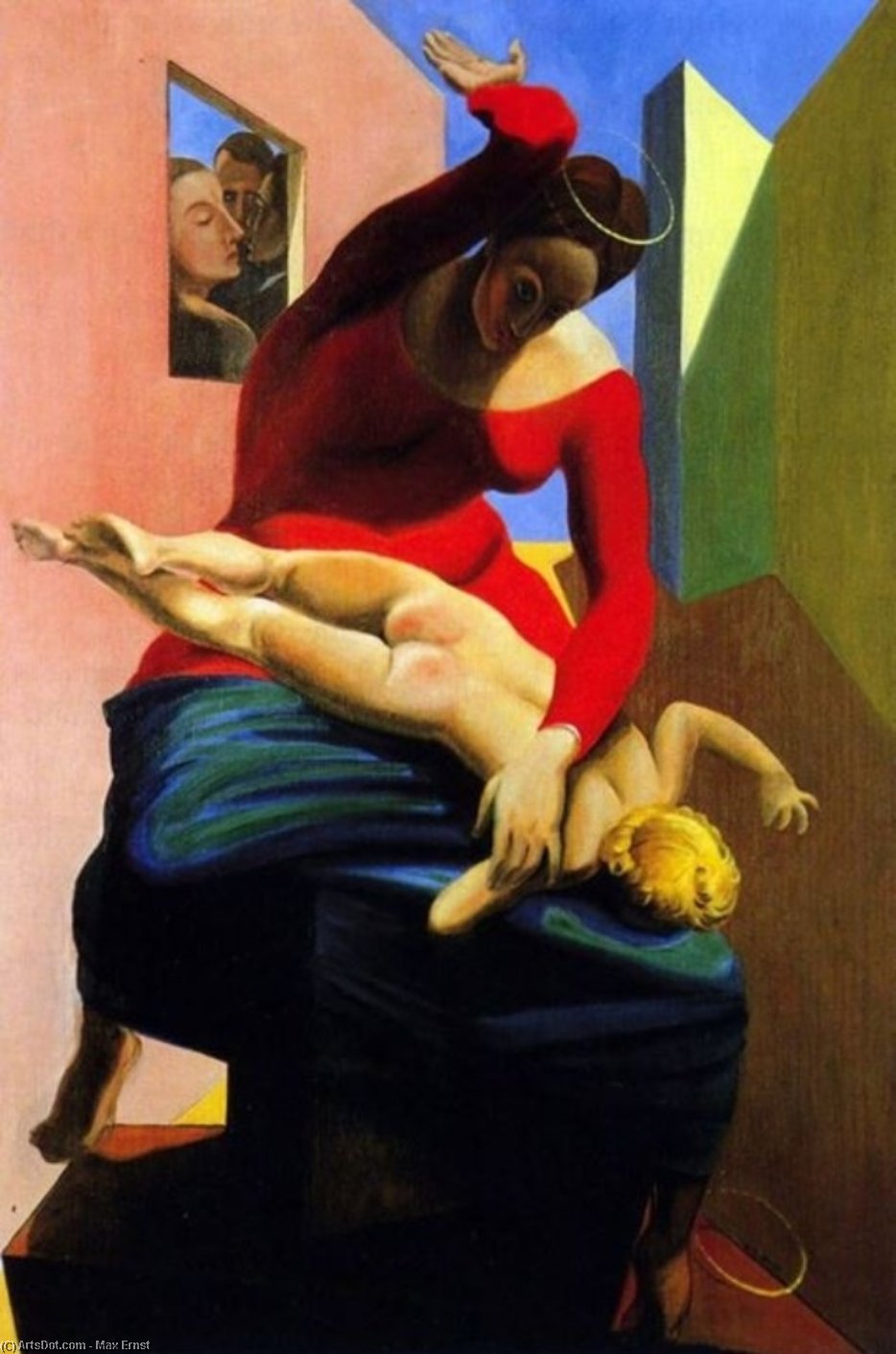
Max Ernst’s 1926 masterpiece, The Virgin Spanking the Christ Child before Three Witnesses, stands as a jarring and unforgettable emblem of Dadaist and Surrealist rebellion. In an era defined by the fragmentation of tradition following the Great War, Ernst utilizes the canvas to stage a shocking confrontation with religious sanctity. Instead of the tender, nurturing Madonna found in classical Renaissance works, we are met with a stern, almost punitive figure of Mary, wielding her hand with a forceful determination that is designed to unsettle and provoke. The Christ Child, rather than being cradled in divine peace, lies vulnerable and terrified, creating an immediate emotional friction that demands the viewer's attention. This deliberate subversion of sacred iconography transforms a familiar religious subject into a profound interrogation of societal expectations and the nature of authority.
The Texture of Dreams and Disillusionment
To truly appreciate the visceral impact of this work, one must look to Ernst’s revolutionary technical approach. As a pioneer of both Dada and Surrealism, he sought to bypass the rational mind to tap into the depths of the subconscious. Through his mastery of frottage—a process involving rubbing pencil over textured surfaces to transfer impressions onto the canvas—he achieved an ethereal, almost haunting quality. This technique imbues the scene with a dreamlike atmosphere where reality feels porous and unstable. The meticulous textures and layered impressions create a tactile landscape of anxiety and mystery, making this piece an extraordinary choice for those who seek art that invites deep, sensory exploration. For the collector, the painting offers more than just visual interest; it provides a window into the experimental spirit of the early 20th century, where the boundaries between reality and the dreamworld were intentionally blurred.
A Critique of Power and Authority
Beyond its surface-level shock, the painting serves as a profound sociological critique. The presence of the three witnesses—a bishop, a soldier, and an ass—is far from accidental. These figures represent the pillars of established power: the church, the military, and the primal or unthinking masses. By portraying Mary as an oppressive force under their watchful, approving eyes, Ernst questions the nature of blind obedience to dogma and the weight of patriarchal structures. For the discerning interior designer or art lover, this artwork offers a powerful intellectual anchor for any curated space. It is a sophisticated conversation piece that brings a sense of historical gravity and psychological depth to a room, challenging the status quo while offering an unparalleled aesthetic of intrigue and complexity.