Introduction to Max Ernst and Surrealism
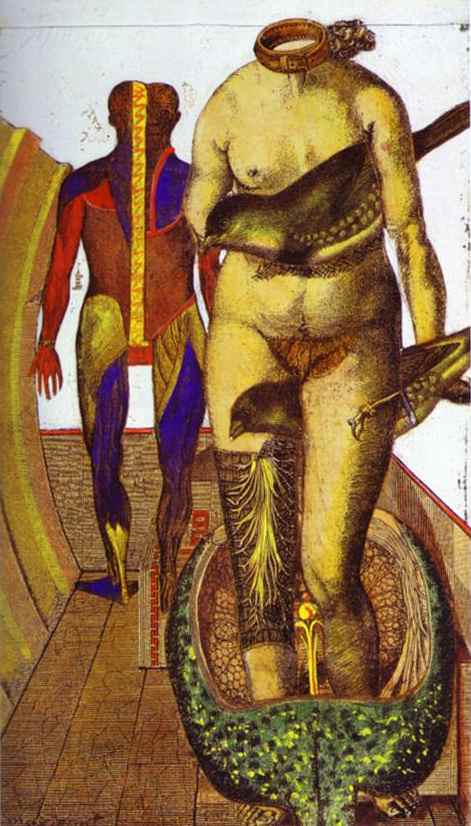
Max Ernst was a German artist who played a pivotal role in the development of both Dadaism and Surrealism. His painting,
The Word or Woman-Bird, is a prime example of his surrealist style, featuring a bird-like figure with a woman's head, surrounded by abstract shapes and patterns.
Interpretation of The Word or Woman-Bird
The meaning behind
The Word or Woman-Bird is open to interpretation, as is common in surrealist works. Some art historians suggest that the painting represents the artist's exploration of the relationship between language and identity. The bird-like figure may symbolize the human capacity for communication, while the abstract shapes and patterns surrounding it could represent the complexities and ambiguities of language.
Max Ernst's Legacy
Max Ernst's contributions to surrealism have had a lasting impact on the art world. His pioneering use of collage and frottage techniques, as well as his exploration of dreamlike imagery, continue to inspire artists today. The
Museum of Modern Art (MoMA) has an extensive collection of
Max Ernst's works, including
The Word or Woman-Bird, which can be viewed on the
ArtsDot website.
The Word or Woman-Bird is a fascinating exploration of the surreal and dreamlike, showcasing
Max Ernst's innovative approach to surrealism. The painting invites viewers to consider the complexities of language and identity, while also challenging perceptions of reality.
As with all surrealist works, the meaning behind
The Word or Woman-Bird is open to interpretation, allowing for a unique and personal viewing experience.