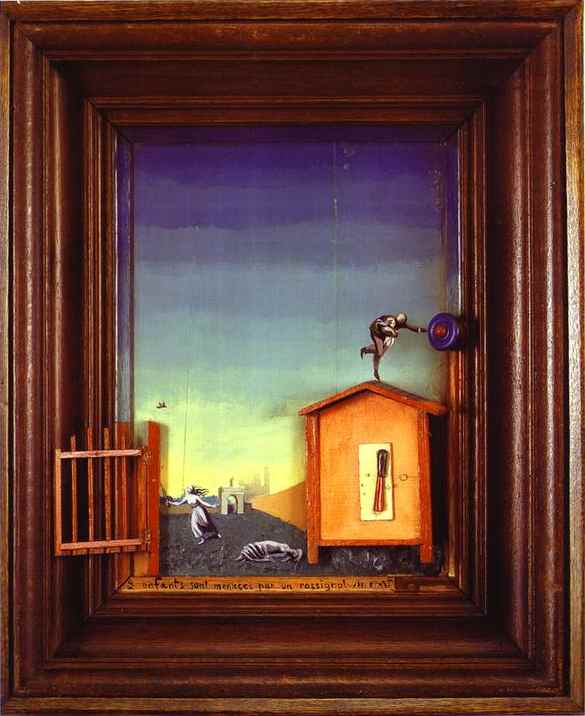
A haunting Surrealist dreamscape of two children facing a menacing nightingale by Max Ernst captures the unsettling beauty of the subconscious, inviting you to explore this Dada masterpiece for your collection.
Explore the surreal world of Max Ernst (1891-1976), a Dada & Surrealism pioneer! Discover his innovative frottage, collages & dreamlike paintings featuring birds, landscapes & psychological themes. #MaxErnst #Surrealism #Dada
A Dreamscape of Dread and Desire
In the hauntingly beautiful landscape of Max Ernst’s 1924 masterpiece, Two Children Are Threatened by a Nightingale, the boundaries between reality and the subconscious dissolve into a feverish vision. This seminal work, emerging from the radical energies of the Dada movement and the burgeoning Surrealist revolution, serves as more than just a painting; it is a portal into the unsettling depths of the human psyche. Ernst, a pioneer who prioritized philosophical inquiry over formal academic training, crafts a scene that feels less like a captured moment and more like a fragment of a fever dream. The composition presents two children positioned before a crumbling, architectural ruin, caught in a state of profound vulnerability. There is an immediate, palpable sense of unease that grips the viewer, as if we are voyeurs to a private, psychological crisis unfolding within a landscape where logic has no dominion.
The Alchemy of Collage and Texture
Technically, Ernst’s approach to this piece is nothing short of revolutionary, embodying the experimental spirit of his era. Rather than relying solely on traditional oil painting, he employs a complex, multi-layered technique that incorporates painted wood elements and cut-and-pasted printed paper onto a wooden frame. This method of collage allows for a startling juxtaposition of textures—the smooth, unsettlingly realistic surfaces clashing against the raw, tactile presence of the wood itself. By integrating disparate materials, Ernst disrupts the traditional illusion of depth, creating a physical and visual tension that mirrors the thematic conflict within the work. The use of impasto in certain areas adds a sculptural dimension, where thick layers of paint create a sense of movement and organic decay, making the very surface of the artwork feel as alive and unpredictable as the dream it depicts.
Symbolism and the Unconscious Mind
Every element within this surrealist tableau is heavy with symbolic weight, designed to provoke thought and stir the deepest anxieties. The central motif—the nightingale looming over the children—is a masterful use of metaphor. In the Surrealist lexicon, the bird often represents a bridge between the earthly and the spiritual, yet here, it carries a menacing undertone, embodying the primal fears surrounding sexuality, vulnerability, and the loss of innocence. The crumbling architecture and the wooden gate serve as thresholds to an unknown realm, suggesting that we are witnessing an entrance into the labyrinthine corridors of the unconscious. Ernst’s background in psychology and philosophy shines through here; he utilizes these symbols to challenge the viewer's perception of order versus chaos, inviting us to confront the shadows that reside within our own minds.
An Invitation to the Surreal
For the discerning collector or the interior designer seeking a piece that commands attention and sparks profound conversation, this work offers an unparalleled emotional resonance. It is not merely a decorative object but an intellectual experience that brings a sense of mystery and avant-garde sophistication to any space. The painting’s ability to evoke both dread and fascination makes it a timeless addition to a curated collection. To possess a high-quality reproduction of this masterpiece is to invite the transformative power of Surrealism into one's environment, providing a constant source of inspiration and a window into the beautiful, terrifying complexity of the human experience.