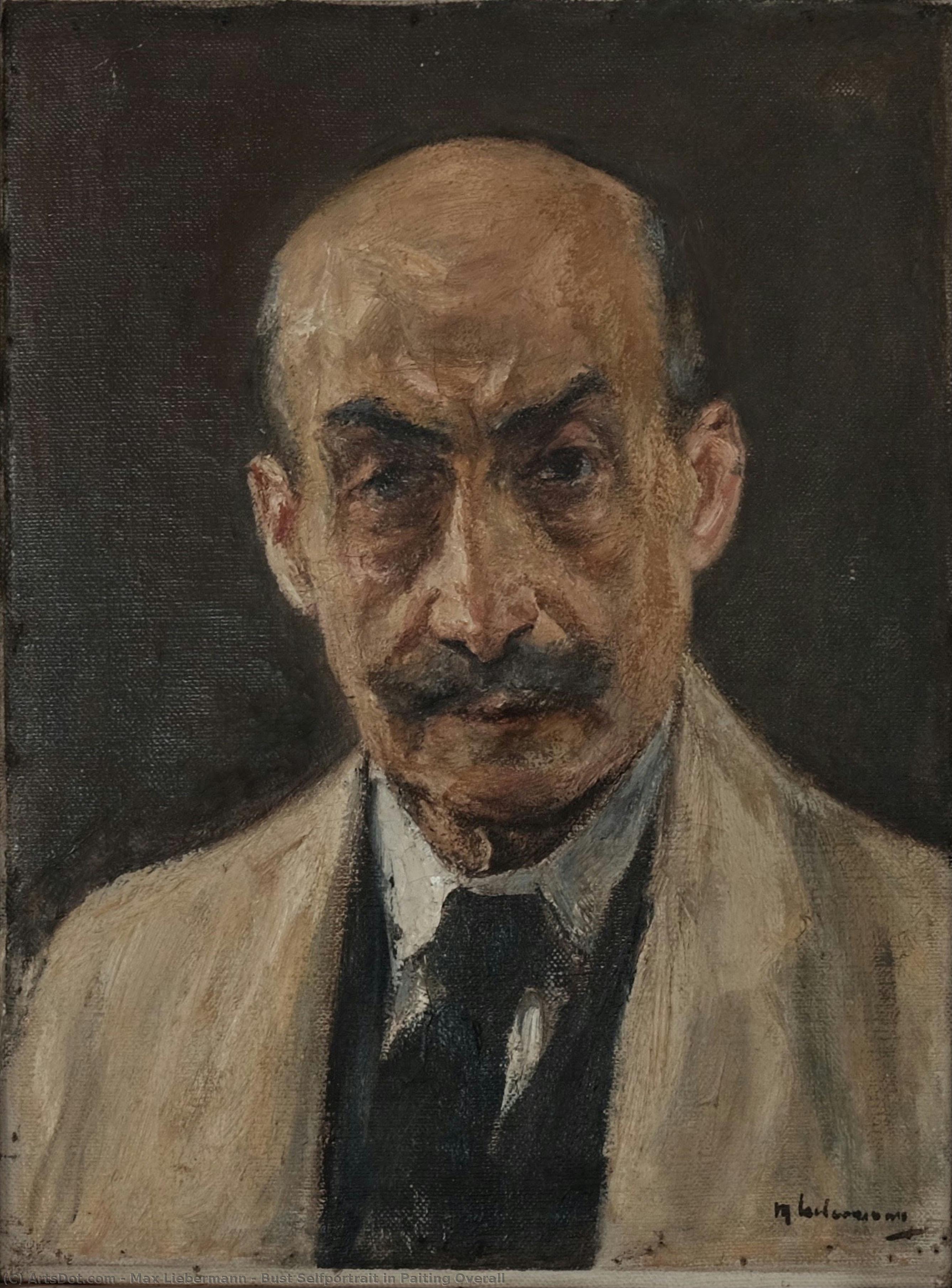
A Gaze Into the Self: Max Liebermann's Bust Selfportrait
To stand before this selfportrait is to encounter not merely a likeness, but a carefully considered meditation on identity itself. Painted in 1922 by Max Liebermann, this bust portrait captures the artist at a moment of profound introspection. The subject gazes out from the canvas with an undeniable seriousness, his mustache and beard lending him an air of intellectual gravitas. Every element—from the precise knot of his bow tie to the thoughtful set of his glasses—contributes to a persona that is both intimately familiar and strikingly composed. It speaks volumes about the artist's self-perception during this pivotal time in his life, offering us a direct line into the mind of a master.
Technique and Tonal Drama
Liebermann’s handling of paint here showcases his mastery of tonal contrast. The deliberate use of a black and white color scheme is not a limitation, but rather a powerful artistic choice that heightens the drama and focuses all attention squarely on the nuances of the sitter's expression. Observe how the light seems to sculpt the planes of his face, giving dimension to the subtle contours around his eyes and mouth. The technique employed suggests an Impressionist foundation—a sensitivity to fleeting moments—but channeled through a more formal, almost psychological portraiture lens. This stark palette strips away the distractions of color, leaving only the essential architecture of character.
Historical Echoes in Berlin
Created in 1922, this work emerges from a period when Germany was navigating immense social and artistic upheaval. Liebermann, an artist deeply connected to the vibrant cultural pulse of Berlin, captured a moment that feels both timeless and acutely contemporary. While his earlier works celebrated everyday life with Impressionistic joy, this selfportrait suggests a more internalized dialogue—a necessary turning inward amidst the roaring changes of the early 20th century. It is a testament to an artist who remained keenly observant, even when looking at himself.
Symbolism and Emotional Resonance
The act of painting a selfportrait has always been fraught with symbolic weight; it is both documentation and declaration. Here, the direct address to the viewer creates an immediate, almost confrontational intimacy. The seriousness in his eyes invites us to question: what is being observed? Is it the artist, or the enduring spirit that survives the passage of time? For collectors and those seeking art for a sophisticated interior space, this piece offers depth. It doesn't merely decorate; it prompts conversation, encouraging contemplation on self-image, intellect, and the weight of experience.
Bringing Liebermann Home
Owning a reproduction of "Bust Selfportrait in Paiting" allows one to integrate a piece of this rich artistic dialogue into your own sanctuary. The dramatic contrast inherent in the original composition translates beautifully into any setting, providing a focal point that is both intellectually stimulating and visually arresting. It serves as a sophisticated anchor for a room, echoing the thoughtful elegance of early 20th-century European portraiture while maintaining a modern, stark power.