A Study in Focus: The Presence of Dr. Ferdinand Sauerbruch
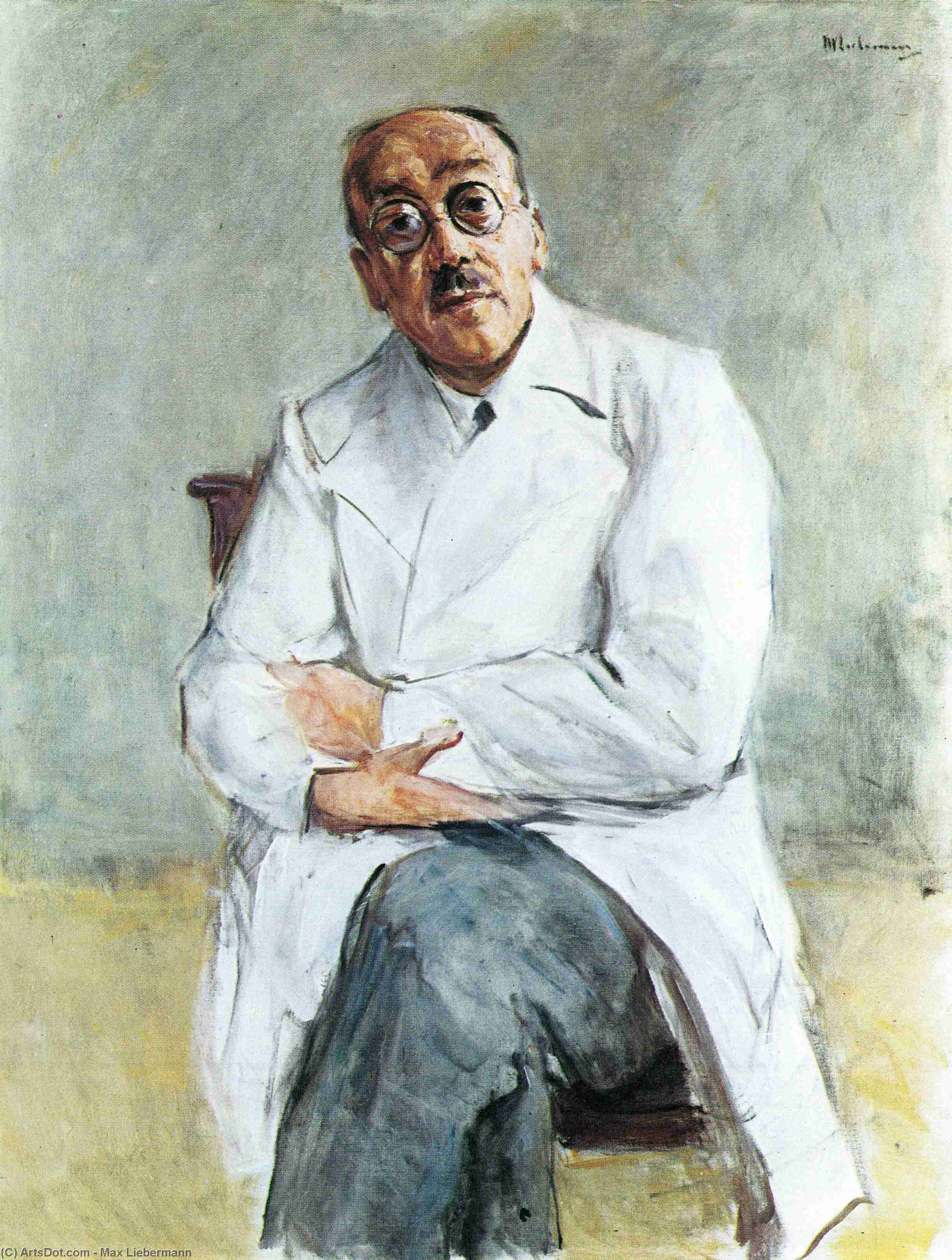
In the quiet, contemplative depths of Max Liebermann’s 1932 masterpiece, The Surgeon, Ferdinand Sauerbruch, we are invited into a moment of profound psychological stillness. The painting presents a portrait of one of the most significant medical figures of the twentieth century, captured not in the heat of surgical action, but in a state of intense, inward reflection. Clad in the stark white coat that signifies his profession, Dr. Sauerbruch sits with hands clasped, his fingers spread in a gesture that suggests both tension and deep thought. The composition is anchored by the weight of his presence, as he gazes into the distance, seemingly lost in the mental preparations required for the life-altering decisions of his craft. This is not merely a likeness of a man; it is an exploration of the intellectual burden carried by those who hold human lives in their hands.
The atmosphere of the work is thick with a focused, almost heavy intensity. Liebermann utilizes a masterful arrangement of space, where the chair upon which the surgeon sits dominates much of the frame, creating a sense of enclosure that mirrors the doctor's own mental isolation during moments of contemplation. In the background, the subtle presence of other chairs—one to the right and another receding into the shadows on the left—adds a layer of spatial depth while emphasizing the solitude of the subject. The muted, somber palette evokes the gravity of the era, grounding the portrait in a reality that feels both timeless and historically anchored to the twilight of the Weimar Republic.
The Impressionist Touch: Technique and Light
As a leading figure of German Impressionism, Max Liebermann brings a sophisticated command of light and texture to this portrait. While the subject matter is somber, the technique is vibrant with life. The artist avoids rigid, clinical lines in favor of a more fluid, painterly approach that allows light to dance across the surfaces of the white coat and the skin of the doctor’s hands. This soft, atmospheric handling of paint prevents the portrait from feeling like a static photograph; instead, it breathes with a rhythmic vitality. The interplay between the bright highlights on the surgeon's forehead and the deep, receding shadows in the background creates a chiaroscuro effect that directs the viewer's eye straight to the subject's piercing gaze.
For the discerning collector or interior designer, this piece offers an unparalleled opportunity to introduce a sense of intellectual prestige and historical weight into a space. The painting’s ability to command attention through subtle tonal shifts makes it a versatile centerpiece for a sophisticated study, a formal library, or a contemporary gallery wall. A high-quality reproduction of this work preserves the delicate brushwork and the nuanced emotional temperature that Liebermann so expertly captured, allowing the profound dignity of Dr. Sauerbruch to resonate within a modern home.
A Legacy Captured in Paint
To look upon this portrait is to witness the intersection of scientific observation and artistic sensitivity. Liebermann, who had transitioned from the study of law and philosophy to the mastery of the canvas, imbues the work with an observant eye that transcends simple representation. He captures the very essence of experience—the weight of responsibility, the solitude of genius, and the quiet strength of a man defined by his dedication to science. This painting serves as a poignant reminder of a transformative period in history, making it much more than a portrait; it is a window into the soul of an era, rendered with the exquisite grace of a master who knew exactly how to translate human emotion into the language of light and color.